
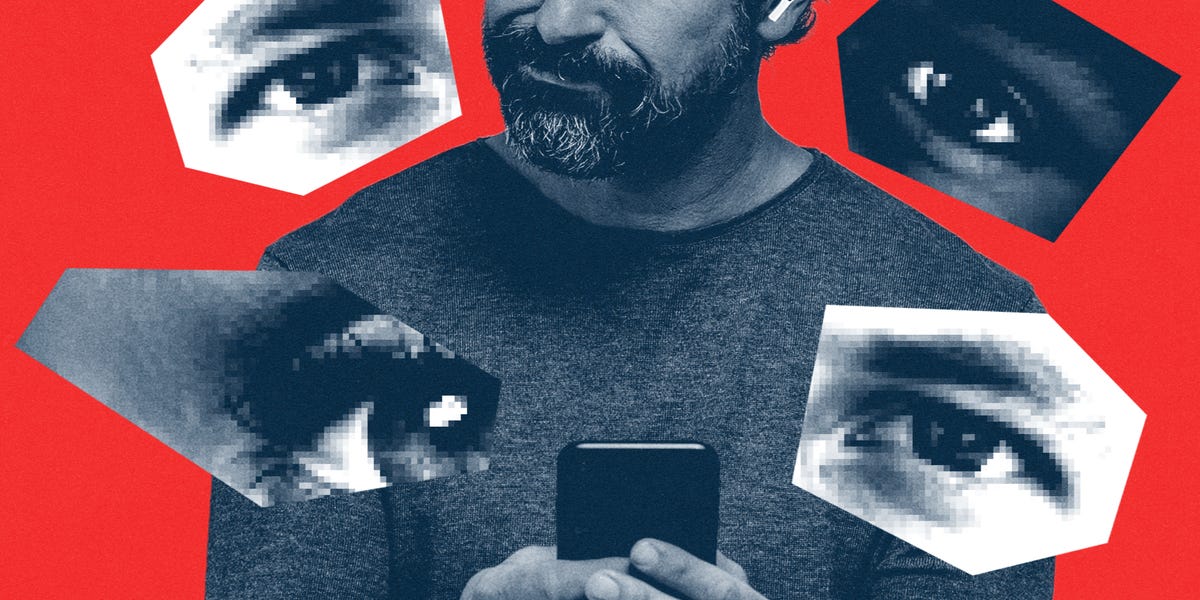
Getty Images; Alyssa Powell/BI Everyone in tech is paranoid about getting 'Huanged' Getty Images; Alyssa Powell/BI A lot of people have this 007 idea of a spy," says Catherine Marinis-Yaqub, a veteran of both the FBI and the CIA, but a spy does not always look like a spy. The spy could be Chinese, or Russian, or French, or the all-American guy wearing a Yankees hat. A foreign asset is not necessarily a foreign national. They're not necessarily beautiful either, though that certainly doesn't hurt. It could be a stranger who strikes up a conversation at a bar, or in your run club — "in the business, we call it 'a bump,'" says Marinis-Yaqub. Or the spy could already be inside the company. Nothing is out of the question, according to Marinis-Yaqub, who now helps corporations and their executives defend against such threats as part of the security consulting firm Control Risks. And yet, "people don't realize how prevalent it is."Here are a few known cases of spies in Silicon Valley from the last year alone — which is to say, the very worst of the spies, who performed poorly enough to make it into the press: In January, a former software engineer at Google was convicted of corporate espionage after he downloaded more than 2,000 pages of confidential information related to Google's supercomputers and AI models, to "help China to have computing power infrastructure capabilities that are on par with the international level," according to the Justice Department. In October, an engineer at OpenAI was arrested by the FBI after he allegedly bugged a conference room in the office; the engineer, a Saudi national, is now facing wiretap charges. In November, a federal grand jury indicted a Russian national who had been stalking employees of a technology company in Palo Alto, including identifying those who worked at a coffee shop near the office and covertly photographing their laptop screens. And then there's Jensen Huang, the CEO of Nvidia, whose career (briefly) detonated after he admitted to a series of extramarital affairs, including one with a woman who US intelligence agencies suggest is a Chinese spy."It's a war zone out there in Silicon Valley," says Mark Trott, a former FBI special agent who now works at the San Francisco security firm Concentric. Anyone who works with emerging technology — AI, chipmaking, or other R&D that could be valuable to foreign nations — could be a target. And just about anyone could be a suspect.In a previous era, tech companies focused on beefing up cyber defenses, making it harder for adversaries to hack them. But Marinis-Yaqub says that strategy can only go so far if companies aren't also looking at their vulnerabilities from what she calls a "human security perspective." At the end of the day, the weakest links are people.That's put security firms like hers in high demand. An analysis from the hiring firm Revelio Labs also found that AI firms have doubled their internal hiring for counterintelligence roles in the last year. "More and more tech companies are getting in touch, AI firms in particular," says David Kilby, the executive vice president of Strider Technologies, which helps companies defend against state-sponsored threats. Tech companies have what foreign adversaries want most, and firms like Kilby's provide what tech companies most need: instructions to make sure they don't get "Huanged."Strider advertises a range of services, including detecting when employees are being compromised by foreign adversaries, vetting vendors with suspicious affiliations, and identifying "hidden nation-state ties" in people close to employees. Kilby says these risks are not hypothetical: One client had an employee who was copying data from his work laptop and sending it to contacts in China. (Kilby declined to name the company.)People need human connection, "and intelligence services take advantage of that with sometimes socially awkward people."Earlier this year, OpenAI reportedly held training sessions to prepare employees for the potential insider threats. They focused on common scenarios, like bumping into a stranger at a bar, according to the Wall Street Journal. The easiest targets for these kinds of attempts, counterintelligence professionals tell me, follow a kind of tech industry stereotype: undersocialized men. "Espionage techniques have not changed in thousands of years," says Trott, whose firm has handled "a number of cases" with tech executives who had relationships with women who appeared to be working for Chinese intelligence. People need human connection, he says, "and intelligence services take advantage of that with sometimes socially awkward people." As Shakespeare put it, "When my love swears that she is made of truth / I do believe her, though I know she lies."The revelations about Huang's "honeypot" have cast a shadow of suspicion in the tech industry. Some of the people I spoke to were wary of falling victim to an espionage scandal of their own. "I definitely see a growing concern of backing Chinese founders, or Chinese teams," says Alyssa Tsai, the founder and managing partner at the VC firm Five Mounts Capital. Could these people be spies? Maybe. A national intelligence law in China, passed in 2017, requires all Chinese citizens to cooperate with state intelligence work; it's put some investors on edge.Tsai, incidentally, has also been on the receiving end of these misgivings. At networking events or in conversations with founders, she has been accused, playfully, of being a honeypot. "Everyone jokes about it," she says. Tsai was born in Taiwan — a fact she tries to introduce into conversation as quickly as possible, to distance herself from accusations. "I'm not offended," she says. "But I do get like if I were a white woman, that would never be a problem.""When I post on X or Instagram, I regularly get DMs from men saying things like 'I'll tell you all my trade secrets' or asking, 'Are you a honeypot?'" says Elsa Cai, who was born in China and now works for a startup in San Francisco. She told me she tried not to take it personally, but the comments had a "borderline racist" tone. "The underlying assumption is still that an Asian woman could be using her looks to gain access to something." Instead, she just wanted to be taken seriously for her work.Then again, there were a lot of suspiciously hot women at networking events in San Francisco, a person who works in the tech industry told me. "The crowd in San Francisco has changed," this person said; all of a sudden, people were "really good looking." Whether honeypots or moneypots looking to find a way into the AI industry, it was enough to rouse suspicions.In a town like San Francisco, where everyone wants something, where there may be two years or six months left to become post-economic or escape the permanent underclass, where the birth of a new AI god may bring forth everlasting miracles or or kill us, where the future is always a whisper away, the safest option might be to trust no one. Business Insider's Discourse stories provide perspectives on the day's most pressing issues, informed by analysis, reporting, and expertise. Discourse San Francisco China More Russia AI Most popular Business Insider tells the stories you want to know about the world of business, technology, and finance Business Insider tells the stories you want to know about the world of business, technology, and finance Business Insider tells the stories you want to know about the world of business, technology, and finance Business Insider tells the stories you want to know about the world of business, technology, and finance Business Insider tells the stories you want to know about the world of business, technology, and finance Business Insider tells the stories you want to know about the world of business, technology, and finance
Inside Silicon Valley's spy fever: 'Are you a honeypot?'
Full Article
Original Source
Read the full article at Businessinsider →KhanList aggregates and links to publicly available news content. We do not host full articles from third-party sources. Always verify important information with original sources.