
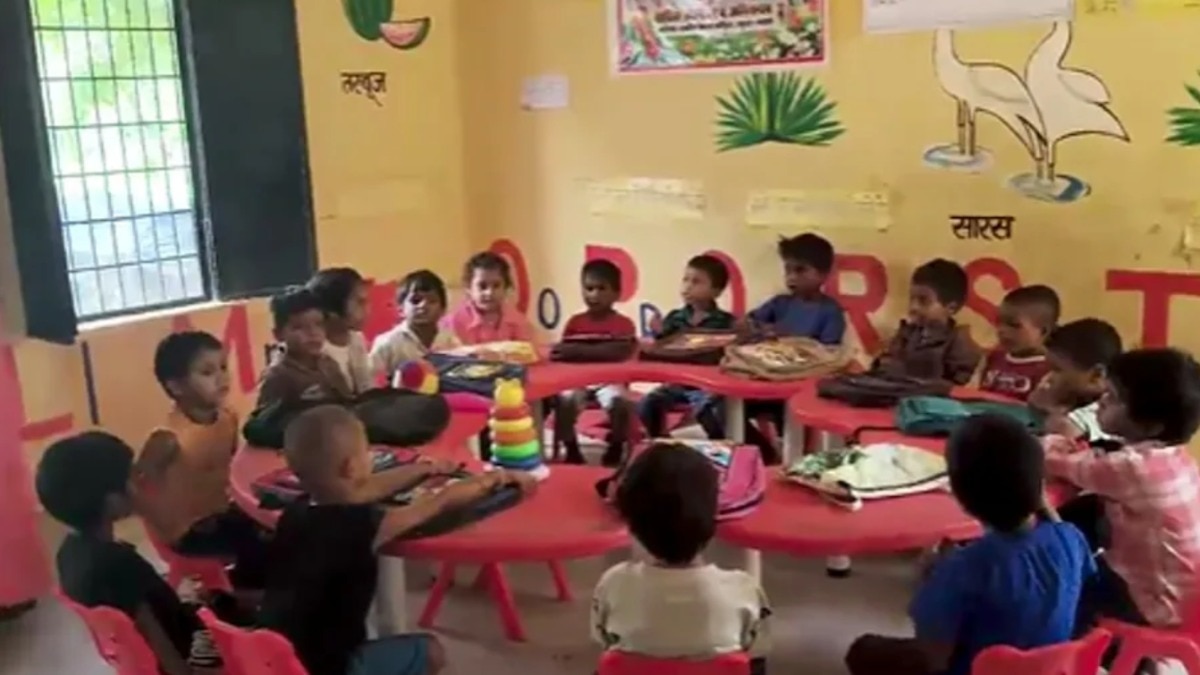
Anganwadi centres in Shravasti's Jamunaha block are combining early learning, nutrition, play and child care. Workers say the changes bring more facilities for children while adding home visits and digital monitoring to their daily duties.At the Kori Purwa Anganwadi centre, the day begins at 8 am. Children are introduced to letters, seasonal information, songs and other basic concepts before the centre closes for the morning session around noon.Shravasti,Sep 29, 2026 16:01 ISTIn the villages of Shravasti, an Anganwadi centre is becoming more than a place where children gather for a few hours each morning. At centres in Jamunaha block, the day now combines early learning, nutrition, play and basic child-care activities, while Anganwadi workers juggle classroom duties with home visits and increasingly digital record-keeping.At the Kori Purwa Anganwadi centre, the day begins at 8 am. Children are introduced to letters, seasonal information, songs and other basic concepts before the centre closes for the morning session around noon.For Shalini Arya, the work does not end when the children leave.“After 12, we do home visits. We have to visit the beneficiaries’ homes,” she said. Between 1 pm and 2 pm, she works on registers, while mobile-based work has become another regular part of the job. Arya said workers now have to make multiple entries on the Poshan Tracker app and complete face-based verification during the distribution of supplementary nutrition.But she also pointed to what she sees as a visible change at the centre. “Our children are getting all the facilities at the Anganwadi centre. We have enough chairs for them, different kinds of kits and books. There has been a lot of change,” she said, adding that an LCD screen is expected to be provided at the centre.A programme that combines nutrition with early learningAnganwadi centres are part of India's Integrated Child Development Services (ICDS) system, which brings together early childhood care and education, supplementary nutrition, health-related services and support for mothers and young children.The idea is to address several needs at once. A young child arriving at an Anganwadi centre may receive an early-learning session, participate in games and activities, and access supplementary nutrition, while families are also connected to services through home visits and community-level work.That combination is visible at Kori Purwa.Assistant worker Sarla Devi said her morning begins with cleaning the centre before children arrive. She then encourages them to follow basic hygiene practices, conducts prayers and introduces them to concepts such as the calendar and date.She said the centre now has the basic facilities needed by the children.At nearby Khalifatpur, Anganwadi worker Gauri Devi described a similar routine. The centre has 56 children, she said, and uses colours and games to make learning easier for them.“From 8 am to 12 noon, we have to teach the children. From 12 to 1, we maintain the registers,” Devi said.She also said the centre had seen improvements in painting and child-friendly facilities, and that workers' honorarium had increased.What families see at the centreFor families in the villages, the Anganwadi is also a point of access to supplementary nutrition and other basic support.Chameli Devi, a beneficiary from Kori Purwa, said children receive food supplies and mats at the centre. Another beneficiary, Pinky Devi, said families had earlier received items including pulses and oil along with supplementary nutrition.“At the moment, we are supposed to get panjiri. Earlier, we used to get dal, oil and panjiri too. Everything is being provided and the children are studying,” she said.At Khalifatpur, beneficiary Aarti said families were receiving supplementary nutrition and mats, while Gayatri said children were getting the facilities they needed at the centre.The accounts from the two centres point to a model in which early childhood education is being combined with nutrition and family outreach rather than treated as separate services.The classroom is changing tooThe most visible change is perhaps inside the classroom.Children are being introduced to letters, calendars, seasonal concepts, songs, colours and games. During a visit to the centres, children Ananya and Aryan introduced themselves and tried to teach other children.It is a small interaction, but it captures what early-childhood programmes are designed to achieve: giving children an opportunity to learn, communicate and become comfortable in a classroom environment before they enter formal schooling.The workers' role, meanwhile, has become more layered.Alongside teaching and nutrition-related work, they conduct home visits, maintain registers and use digital platforms to update beneficiary information. The Poshan Tracker has added another layer of reporting, including digital entries and face-based verification during distribution.For the workers, therefore, the changing Anganwadi is not simply about better-equipped rooms. It is also about a wider set of responsibilities.In Shravasti's villages, the centres now sit at the intersection of early education, nutrition, community outreach and digital monitoring. What happens there may last only a few hours each morning, but for the children who attend, it forms one of their first structured experiences of learning outside the home.- Ends
Inside Shravasti's Anganwadis, a new beginning for village children
Full Article
Original Source
Read the full article at Indiatoday →KhanList aggregates and links to publicly available news content. We do not host full articles from third-party sources. Always verify important information with original sources.