
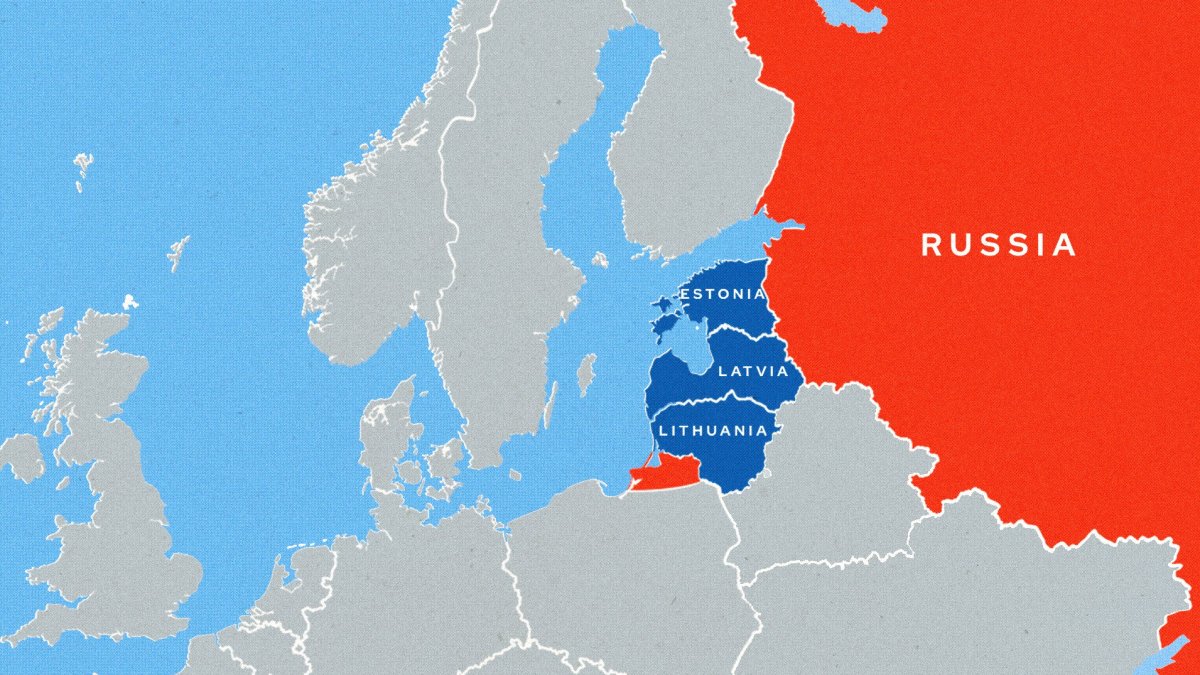
Speculation has reached fever pitch that Vladimir Putin could order an attack against Nato states on Russia’s western border. US intelligence assessments warn the Russian president could be weighing a test of Nato’s resolve by launching a limited attack on alliance territory, with the three Baltic states – Estonia, Latvia and Lithuania – the most probable targets. Some reports suggest an unusual visit by the CIA director to Moscow last month was to warn the Kremlin not to attack its allies – and the Baltics in particular. Concerns over a potential incursion into the Baltics are long-standing. But a series of incidents over recent weeks and months have increased fears. Shorts A rash of drone incursions and sabotage attacks have been reported across the continent, which the affected countries have blamed on Russia. Moscow has escalated its sabre-rattling, with state media suggesting this week that Russia could launch a new “special military operation” – its euphemism for the war in Ukraine – against Lithuania. While a land incursion appears unlikely as it would mean Russia opening up another front at a time its forces are spread thin, the Baltic countries’ size and location make them vulnerable to an attack. Estonia and Latvia border mainland Russia, and Lithuania borders the Russian exclave of Kaliningrad. Drone incursions into Baltic airspace have become more frequent in recent months, both as a result of Russian aggression and Ukrainian drones crashing during long-range missions. Last week, for the first time, Nato fighter jets shot down a drone that had entered Lithuania’s airspace. Meanwhile, a robotics factory that supplies drones to Ukraine caught fire in Tallinn, Estonia, last month, in what was believed to be a case of foreign-linked sabotage. That came after three Baltic European commissioners, along with their Polish and Finnish counterparts, wrote to the European Commission president warning of security threats due to airspace violations. The Prime Minister of neighbouring Poland, Donald Tusk, also warned this week that, according to intelligence from their allies, Russia is planning attacks by drone and missiles on eastern Nato countries that support Ukraine. Warsaw scrambled jets this week after a Russian helicopter entered Polish airspace. The Baltics have invested in defence measures including cyber security in Estonia, and drone training for civilians and children in Lithuania (Peter Kollanyi/Getty) The West appears to finally be acknolwedging the threat from Russia to European security, after years of ignoring warnings from the Baltics and Poland. France’s President, Emmanuel Macron, briefed domestic presidential candidates and party leaders last week about Russian threats, while Germany has dramatically overhauled its military policies and practices. Intelligence experts across Europe are warning that there is an urgent need to invest more in defence. But the delays in recognising the threat have left many governments playing catch up. The Baltic states have always recognised the danger from Russia. They have historic reasons for anxiety, with the Soviet Union invading and occupying all three states in 1940, and they did not gain independence until 1991. The countries endured decades of repression under Soviet control, including the deportation of tens of thousands of Baltic citizens to Siberia, mass killings, arrests and the Sovietisation of politics and culture. A bridge over the Narva River at the border crossing point with Russia in Narva, Estonia. The Baltic states have always recognised the danger from Moscow (Photo: Ints Kalnins/Reuters) Poland also has a bitter history to learn from. Hitler’s Nazis and Joseph Stalin’s Soviets invaded the country at the start of the Second World War and divided it between them. A Soviet communist government was installed until 1989. Tusk’s warning came on the 87th anniversary of the Soviet invasion. The recent sense of danger is amplified by new Western European insecurity, particularly as a result of the rise of the far-right Alternative für Deutschland – Alternative for Germany or AfD – in Germany, which has a declared policy of cutting aid to Ukraine and is open to normalising relations with Russia. The party won local elections this year in the Saxony-Anhalt district of eastern Germany and Mecklenburg-Western Pomerania bordering the Baltic Sea. There are fears that the election results could weaken the German, European and Nato response to Russian aggression. Whilst the Baltics have warned of further hybrid attacks, officials are also clear that they do not see evidence of imminent invasion or serious threats to Nato. Russia is still struggling to take land in Ukraine’s eastern Donbas region, where it has been fighting since 2014. With winter on the way, it seems unlikely that Russia could launch a major new invasion. A German ammunition factory in Unterluess, in the north of the country. The far-right AfD party has proposed cutting aid to Ukraine (Photo: Ronny Hartmann/AFP) More probable is an escalation through drone warfare and hybrid attacks, including sabotage and disinformation – a tactic recently used to sow tensions between Poland and Ukraine. The Baltic states and Poland have a history of leading European preparations against the threat from Russia, investing in defence and military capabilities even before the full-scale invasion of Ukraine in 2022. Poland spends the highest proportion of GDP on defence of Nato members, at 4.48 per cent. The Baltics are not far behind, spending with 4 per cent in Lithuania, 3.73 per cent in Latvia and 3.38 per cent in Estonia, according to data from 2025. The Baltics have invested in defence measures such as cyber security for the public in Estonia, and drone skills for civilians and children in Lithuania. Vilnius recently revealed evacuation plans for vulnerable citizens in emergency scenarios. Poland has similarly stepped up its defence, announcing the expansion of its warning siren network in the east, from 350 to more than 1,000 by the end of the year. Warsaw and the Baltic states have promoted volunteer civilian defence networks that have surged in membership during the Russia-Ukraine war. The lesson of the Baltic experience is not to dismiss threats as paranoia, nor is it to assume that every drone, cyber attack, or act of sabotage is the beginning of a wider war. The Baltic states are trying to prepare without allowing it to dictate their societies. They want the rest of Europe also to prepare in protecting infrastructure, and training civilians. The Baltics have spent years learning to live with that uncertainty. Now, as the threat reaches further into Europe and Germany faces its own political difficulties, the rest of the continent is having to learn the same lesson.
Inside Putin’s growing threat to the Baltics
Full Article
Original Source
Read the full article at Inews →KhanList aggregates and links to publicly available news content. We do not host full articles from third-party sources. Always verify important information with original sources.