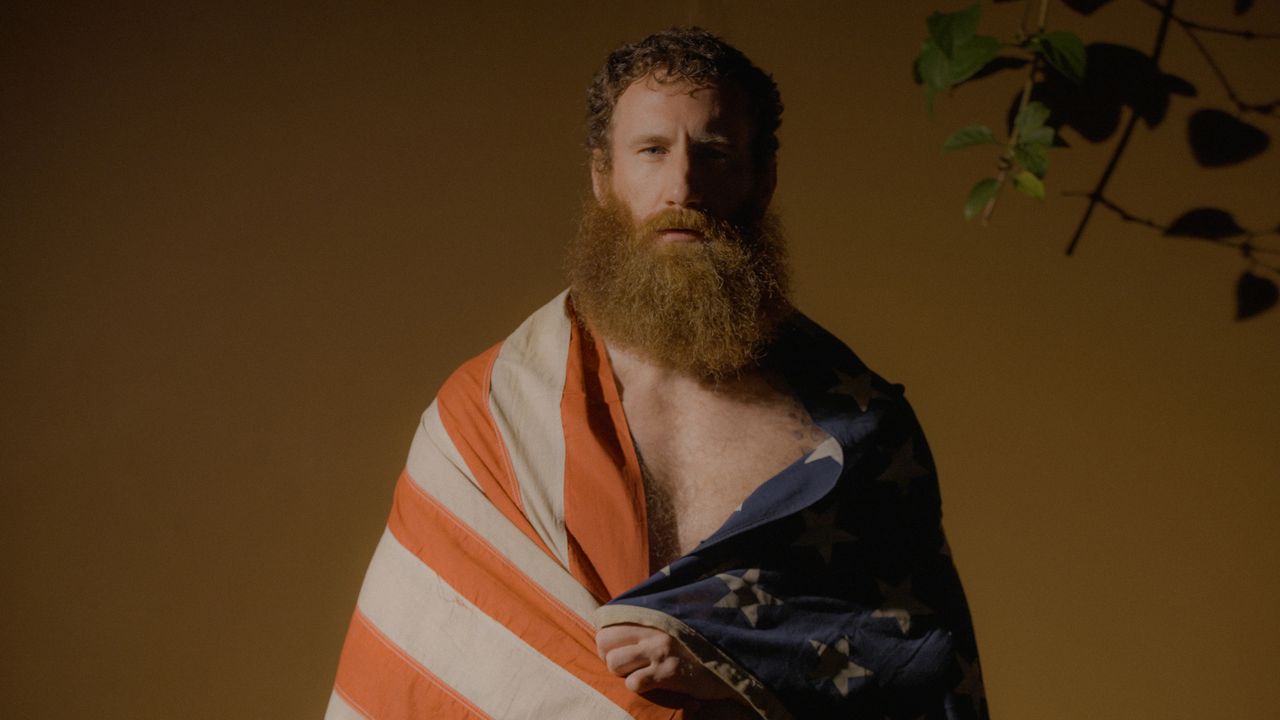
Spencer Phipps, the designer behind the cult menswear label Phipps, is an optimistic guy. You can sense it in his brief, quietly confident videos, where he often tells his audience that he’s building “the next great American heritage brand.” And you can see it in the clothes he makes: honest, hardwearing staples crafted from high-quality materials.Phipps, now 40, originally founded his label in Paris in 2018, following a stint at Dries Van Noten. His offbeat vision of Americana resonated in Europe: Phipps was a finalist for the prestigious LVMH Prize in 2019, and showed his spring-summer 2020 collection at Paris Fashion Week that same year. He relocated the label to Los Angeles in 2022 and was named a runner-up for the CFDA/Vogue Fashion Fund a couple of years later, all while taking on the occasional gig as a stylist (including a layer-happy cover shoot for this very publication).Phipps crafts familiar clothes that are more complex and thought-provoking than they might seem on the surface. Lift up the hood on his boxy plaid shirts, corduroy short shorts, and suede-paneled vintage Levi’s, and you’ll see that these are pieces that speak to some intrinsic contradictions—tensions between the traditions they’re drawing from and the audience they’re meant for, spinning a particular fraternal homoeroticism into the hypermasculinity of Americana.That’s an especially potent juxtaposition right now, as a deeply polarized nation celebrates its 250th birthday. Below, Phipps discusses his burgeoning brand, and the way America—imagined and real, idealized and complicated—weaves its way into his collections.GQ: What were the founding principles of Phipps?Spencer Phipps: When I started in fashion, I had a short list of the designers that I wanted to work for. There was Marc Jacobs, I did that. Dries Van Noten was number two, I did that. And number three was Alexander McQueen, who passed away. So once I had done the Dries thing, I was at a bit of a loss. I felt really disconnected from the industry.I started thinking about what I wanted out of the industry, what I wanted to work on, the way that I would want to see myself reflected in the clothing and the products that I wanted to make, and I struggled to find that, and that essentially became the foundation of the brand. I'm making clothes that are projecting the person that I'd like to be, that reflect the values that I have about the things that I make.Did working for Dries and living outside the US solidify your aesthetic and the way you dress?I’d be lying if I said it didn’t. I never thought of myself as “the American” until I was not living in the US. All of a sudden, I’m in this room that's very foreign, and they’re all dressed so elegantly. They’re in these pristine white shirts with embroidery, and the women are all in heels, and everyone's so cool and exotic to me. And I’m there in my dirty lifeguard hoodie and my Doc Martens. I never considered myself a cultural ambassador for the US by any means, and suddenly I’d be brought in specifically for that thing.And when you launched Phipps in Europe, the response was very positive.I think it was the exoticism. I think if I had done it in the US at the start, I don’t think I would have gotten the same reaction. But I was doing this Marlboro Man thing in Paris Fashion Week—no one else was really doing that, so we stood out. And the Europeans found it very charming in a way. They didn’t understand a lot of the references, but they understood that the quality was nice, and it was a fashion product.But there were certain lost-in-translation things that are very funny. I did a project with Smokey Bear pretty early on, and for me, that’s like doing a project with Santa Claus. And the French people were like, “Oh, zis bear, he’s very cute, yes, he’s nice.”Are there parts of American culture that you try not to include in your work?I mean, I’m trying to avoid anything really directly political. We put the American flag on some stuff every once in a while, but that’s a cultural symbol more than anything. I know it is literally representing the politics of the United States, but, [otherwise] not really.Has your attitude towards America and Americana changed or evolved over the years?I was a hater on Americana and American design and the culture for most of my early formative years. I discovered fashion when I was like 13, and I really was drinking the Kool-Aid that all good creativity comes from Europe, and I worked my ass off to get there, and then I found myself there in a room full of people that I had admired. I sat in this room and said, “Wait a minute, I’m from somewhere really cool, and it’s culturally very, very powerful. So powerful that it even permeates most of the language that menswear uses today.”I suddenly had this clarity, where it was so much more interesting for me to look honestly at where I came from and not try and hide from it or pretend it wasn’t a relevant thing in my life.So would you say there’s a patriotism to your work?I guess so. It feels like a patriotism that, in my mind, is for everyone. I don’t think that the flag is something that can be co-opted by a particular side. I know there’s a lot of discourse around that, but I don't necessarily see that grounded in something that can’t be changed with just a thought shift.Letting someone else own the symbols of the country that you live in is—you're just as welcome to [those symbols]. Being on the left, being on the right, being a trans person, the most like left queer, whatever, and the most right-wing. Everyone can wear the flag. We all live in this country. It’s more of a location stamp.How would you respond to critics that say you really can’t disentangle yourself from the politics of making clothes that feature the American flag, and in doing that you’re complicit with, yes, the things that are great about America, but also the things that America is doing that are not great?I would say I think that you can. I think there is a way to do it, and I think what I’m trying to do is discover that way. I don't know if I'm necessarily successful in it, but I’m trying to in my own way.Phipps’s take on Americana feels very optimistic. Do you feel optimistic about America?I do. I mean, I’m pretty optimistic in general. Call me delusional or not, I don’t know. It might be complicated—that’s right now. I like to think I always look for the good in humanity, for better or worse. That's definitely hit me in the ass before.But I’m an optimist in general. Yeah, maybe it’s complicated today, but there is definitely hope and definitely a future in which things get less complicated—or they stay complicated, and maybe life has always been complicated.So the world’s not ending for you?I don’t think so, no.Courtesy of Phipps
Inside Phipps’s Radically Optimistic American Menswear
Full Article
Original Source
Read the full article at Gq →KhanList aggregates and links to publicly available news content. We do not host full articles from third-party sources. Always verify important information with original sources.