
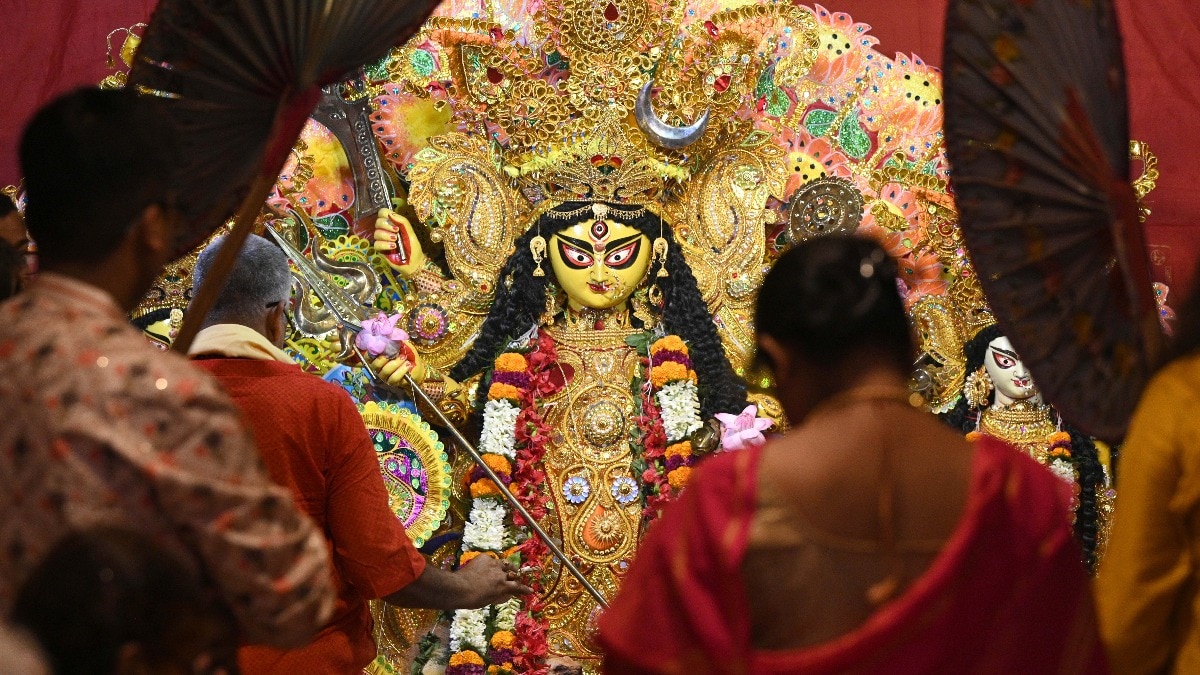
In West Bengal, Durga Puja brings the joy of pandal-hopping, dhunuchi dance, delicious food and new clothes. But beyond these familiar festivities, another centuries-old tradition unfolds inside ancestral homes.Durga Puja celebration at Bonedi Bari (Photo: Getty)New Delhi,Oct 15, 2026 12:30 ISTThe “Dugga Dugga” chants are echoing all around, and the fragrance of shiuli fills the air. We don’t need to tell you why.The pandal-hopping plans are taking shape in group chats, already. Comfortable shoes? Check. An ambitious list of stops? Check. Enough room for phuchka, rolls and whatever else smells too good to skip? Always.Every year, the outings bring together a little bit of everything: seeking the goddess’s blessings, soaking in the festive spirit, admiring the idols and marvelling at the craftsmanship that turns a neighbourhood pandal into a world of its own. That’s precisely what a typical Durga Puja celebration looks like, right? A jalalipi-themed pandal in Kolkata (Photo: PTI) But beyond this, there’s another way to experience Durga Puja, tucked away in the ancestral homes of West Bengal. Known as Bonedi Barir Durga Puja, the tradition dates back several centuries. Bonedi Bari loosely translates to an aristocratic or wealthy ancestral home in Bengal. Here, the goddess is welcomed with rituals, recipes and customs passed down through generations. Celebrated by Bengal’s old aristocratic, zamindar and merchant families, these festivities come with stories of their own, with the ancestral home being as much a part of the experience as the rituals themselves.What is Bonedi Barir Pujo?Long before Kolkata’s elaborate themed pandals became attractions, wealthy households hosted grand celebrations in their thakur dalans (courtyards), the pillared spaces built for worship. Durga Puja preparations at late Ramgopal Saha's home. (Photo: Getty) While the story of the emergence of this tradition deserves a history lesson of its own, to be brief, it began with zamindars, merchants and affluent Bengali households hosting Durga Puja in their homes. During the colonial period, their homes welcomed foreign officials, traders and travellers, and also became places to network with the upper echelons of society, making the celebrations quite a social occasion.Today, these celebrations are a heritage in their own right, with generations of families keeping the traditions alive. What makes them even more fascinating is that every bari has its own way of welcoming the goddess. While some are known for the intricate craftsmanship of their idols, others stand out for the ornate jewellery adorning the goddess or their distinctive bhog. Some ancestral homes of affluent Bengali families welcome Maa Durga every year. (Photo: Getty Images) For instance, Darjipara Mitra Bari is known for offering 108 aparajita flowers instead of the lotuses usually associated with the ritual. Every home has its own rituals, customs and stories that make its celebrations unique.From the homes of Mughal-era zamindars to those with close ties to the British, these baris remain an integral part of Bengal’s Durga Puja celebrations. Today, many also feature on heritage walks and tourism itineraries, giving visitors a chance to explore their ancestral courtyards and discover the family stories behind the festivities. These homes are custodians of rich history and culture. (Photo: Getty) Bonedi Barir tourismFancy a little bonedi barir pujo hopping without having to do the boring bit of itinerary planning and mapping it all out? Now you can easily book slots for heritage walks and tour operators that offer guided walks and bus tours connecting ancestral homes, with stories about the families, architecture and rituals.Options range from short neighbourhood walks to day-long bus tours and more in Bengal. While it can roughly can range from Rs 1000 and above, prices vary by operator and inclusions. Every home prepares for the festivities for months. These heritage homes carry their own history and rituals.(Photo: Getty) Some of Kolkata’s iconic bonedi baris include Shobhabazar Rajbari, known for its grandeur and colonial connections; Sabarna Roy Choudhury Aatchala Bari in Barisha, celebrated for its centuries-old Puja traditions; Chhatu Babu–Latu Babu Bari, where Durga’s companions, Jaya and Bijaya, feature on the distinctive idol; and Shib Krishna Daw Bari in Jorasanko, famous for the goddess’s elaborate jewellery and adornment.These are just a handful of the many Bonedi Baris across West Bengal where Maa Durga’s arrival brings generations together. Each thakur dalan holds its own stories, rituals and memories, as families await the goddess’s homecoming every year with the beats of dhaak and much more.- Ends
Inside Kolkata's bonedi bari Durga Puja, where traditions outlive generations
Full Article
Original Source
Read the full article at Indiatoday →KhanList aggregates and links to publicly available news content. We do not host full articles from third-party sources. Always verify important information with original sources.