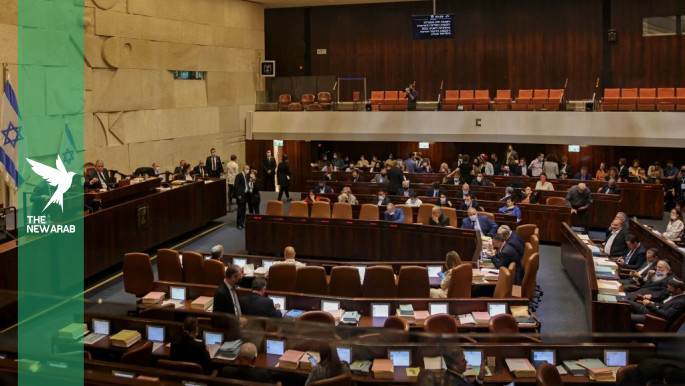
Israel has enacted a controversial broadcasting overhaul after a Knesset vote [GETTY]The Israeli Knesset approved a controversial bill on Thursday that will see a sweeping overhaul of Israel's media landscape, giving the government broader powers and involvement in the industry, which comes amid mounting criticism from opposition figures and organisations who see it as a threat to media independence. Lawmakers voted 53–48 in favour of the legislation, spearheaded by Communications Minister Shlomo Karhi, during the coalition's final legislative push before the Knesset is due to dissolve on Friday ahead of the 27 October election. Following the vote, Karhi thanked Israeli Prime Minister Benjamin Netanyahu from the Knesset podium for entrusting him with advancing the reforms. "Mr. Prime Minister, I want to thank you and tell you that the mission you gave me four years ago — to deliver right-wing reform of the media — was today successfully completed," Karhi said. The New Arab examines what the reforms will change in practice and why they have sparked widespread concern. What does the new law change? Karhi's media overhaul dismantles several longstanding regulatory safeguards, including minimum journalistic standards, obligations for broadcasters to invest in original Israeli productions, and restrictions on cross-ownership. It also gives the government greater influence over television ratings and the allocation of state advertising. Critics argue the reforms could weaken press freedom while benefiting right-wing media outlets such as Channel 14 and disadvantaging broadcasters viewed as critical of the government. Shortly after the legislation was passed, several government watchdog organisations and opposition parties petitioned Israel's High Court of Justice, requesting an interim injunction to halt implementation before the court considers striking down the law altogether. The legislation also establishes a single regulatory authority, replacing both the Second Authority for Television and Radio and the Council for Cable and Satellite Broadcasting. The new body will oversee audiovisual content across all broadcasting platforms under a unified framework. According to the Israel Democracy Institute, the reforms eliminate safeguards designed to uphold journalistic quality while granting the new regulator extensive enforcement powers that could undermine journalistic professionalism. The new authority will consist of a nine-member council whose representatives will be selected by the communications minister, prompting critics to argue that appointments will become politicised rather than independent. Why are critics concerned? The Movement for Quality Government in Israel has also petitioned the High Court, warning that parts of the legislation take effect immediately and could "cause irreversible damage to the media market" in the run-up to the 27 October election. Opposition leaders, including former prime minister Naftali Bennett, have accused the government of attempting to tighten its grip on the media ahead of the vote. "In a democratic country, it is forbidden to silence the free press," Bennett said in a statement. "In its final days, the government is passing absurd and dangerous laws whose sole purpose is to preserve its own political survival," he added, pledging to repeal the legislation, along with other laws passed this week, if elected. Yaniv Goldberg of the Movement for Quality Government also criticised the reforms. "The communications minister himself declared that his goal is to 'crush the left's monopoly on the media' — in other words, to subordinate the press to the government," Goldberg said. Karhi has defended the legislation, arguing that it is intended to correct what he describes as a media landscape overwhelmingly biased against the government. Prime Minister Netanyahu attended the Knesset during the vote and later celebrated the bill's passage in a social media post. "After a determined struggle against every possible element from the deep state, tycoons, attorneys, officials and fearmongering networks – we managed to pass the right-wing media reform." Critics have also questioned the way the legislation was advanced, arguing it was fast-tracked in the closing days of the government's term despite not receiving approval from the Attorney General's Office. The measure comes as the Knesset this week also gave final approval to legislation aimed at limiting the powers of the attorney general, advancing another key element of the government's wider judicial overhaul agenda. The law removes the binding status of legal opinions issued by the attorney general, reducing them to non-binding recommendations that ministers are free to ignore. Further reports in Israeli media said the Association for Civil Rights in Israel has petitioned the Supreme Court against the legislation, arguing that it threatens human rights, weakens the rule of law, and undermines an important safeguard against the unlawful exercise of government power.
Inside Israel’s controversial new media overhaul law
Full Article
📰 Original Source
Read full article at Newarab →KhanList aggregates and links to publicly available news content. We do not host full articles from third-party sources. Always verify important information with original sources.