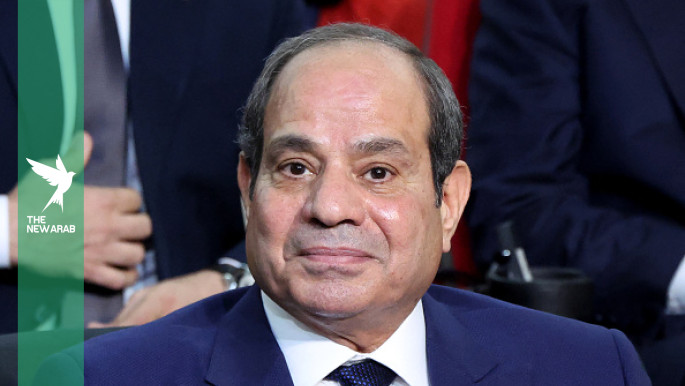
Talk about a new constitution is seen by many as an attempt to ensure Sisi can remain president past his term limit in 2030 [Getty]Fresh calls by establishment figures for Egypt to draft an entirely new constitution come as political parties have been quietly encouraged to expand their public activity, with analysts telling The New Arab the developments could mark the early stages of a broader discussion over the country's political future beyond President Abdel Fattah al-Sisi's current term in 2030. According to Egyptian sources who spoke to The New Arab, representatives of several political parties recently attended a meeting with a state body overseeing political affairs, where they were encouraged to increase their parliamentary and media activity. The sources said parties were urged to organise more public events and media appearances, while allowing limited criticism on some issues within the state's "red lines". Although constitutional reform was reportedly not discussed directly, they said the overall tenor of the meeting suggested the issue could enter wider political debate in the coming months. The latest public intervention came on Tuesday, when senator and Free Egyptians Party leader Essam Khalil argued that Egypt should draft a new constitution rather than continue amending the 2014 charter. In a statement, Khalil said the "New Republic" taking shape under Sisi required "a serious national dialogue on building a modern constitutional and legislative system capable of keeping pace with the needs of the Egyptian state over the coming decades, away from the logic of patchwork solutions or merely addressing individual issues." He added that "Egypt needs a constitution that expresses the philosophy of the New Republic... thereby achieving institutional stability while giving the legislative authority the necessary space to develop laws in line with society's needs and changing circumstances." Khalil's remarks followed similar comments by Khaled al-Qadi, president of the Court of Appeal, during a seminar at the Bibliotheca Alexandrina. Al-Qadi argued that the 2014 constitution had been drafted under exceptional circumstances and that Egypt now required a constitutional document reflecting its current stage of development. The interventions revive constitutional debate in a different form from previous years. Following the adoption of the 2014 constitution, discussion largely focused on amendments to individual articles, particularly those governing presidential terms. Amendments approved in 2019 extended presidential terms from four years to six and allowed Sisi to remain in office until 2030. The latest proposals, however, go beyond revising specific provisions and instead advocate replacing the constitution altogether. Robert Springborg, an Egypt expert and adjunct professor at Simon Fraser University, said the interventions should not necessarily be viewed as evidence of a settled debate within the regime, but could instead represent an attempt to gauge elite opinion. "There may be a difference between 'a genuine debate' and 'debate'," he told The New Arab. "It might be the Sisi inner circle sounding out elite opinion about possible steps toward extending his presidency past its present expiration in 2030." He said the discussion ranged from drafting an entirely new constitution to a narrower amendment focused on Article 140, which currently prevents Sisi from seeking another term after 2030. More broadly, he said, the key question was "what further constitutional changes Sisi and his supporters see as necessary to solidify his 'New' or 'Second' Republic and extending its life past that of Sisi himself; and whether such changes are politically acceptable". Springborg said the timing was also significant. He noted that constitutional amendments require approval by two-thirds of parliament followed by a public referendum under Article 226, meaning any reform would require careful political preparation. "The Sisi regime always wants to convey the impression of legality and competence, so having to rush through constitutional changes would violate this carefully crafted image," he said. Constitutional law expert and Nasserist politician Hamed Gabr questioned the timing of the recent interventions. "Why now? Do these calls reflect a direction within the executive, or are they merely personal initiatives? And does the president have reasons to adopt such a proposal?" he told The New Arab. Gabr argued the 2019 amendments had already settled presidential terms while significantly expanding executive authority, leaving the principle of separation of powers "little more than ink on paper". He warned that if a new constitution were intended to remove limits on presidential terms, it would "effectively extinguish hope for a transfer of power and undermine any path towards genuine democratic life". However, he added: "I do not think, at least for now, that those proposing changes to the constitution have been instructed to do so." He argued that a new constitution could provide a legal and political route around the current charter's restrictions and described the recent interventions as "the beginning of introducing the idea into the public sphere" before wider political and media discussion. Although the presidency, government and parliament have yet to endorse the idea, the public interventions by establishment figures, coupled with behind-the-scenes efforts to encourage greater political engagement, have fuelled fresh speculation over how Egypt's constitutional framework could evolve before Sisi's current term expires in 2030.
Inside Egypt's new constitution debate and Sisi's future
Full Article
Original Source
Read the full article at Newarab →KhanList aggregates and links to publicly available news content. We do not host full articles from third-party sources. Always verify important information with original sources.