
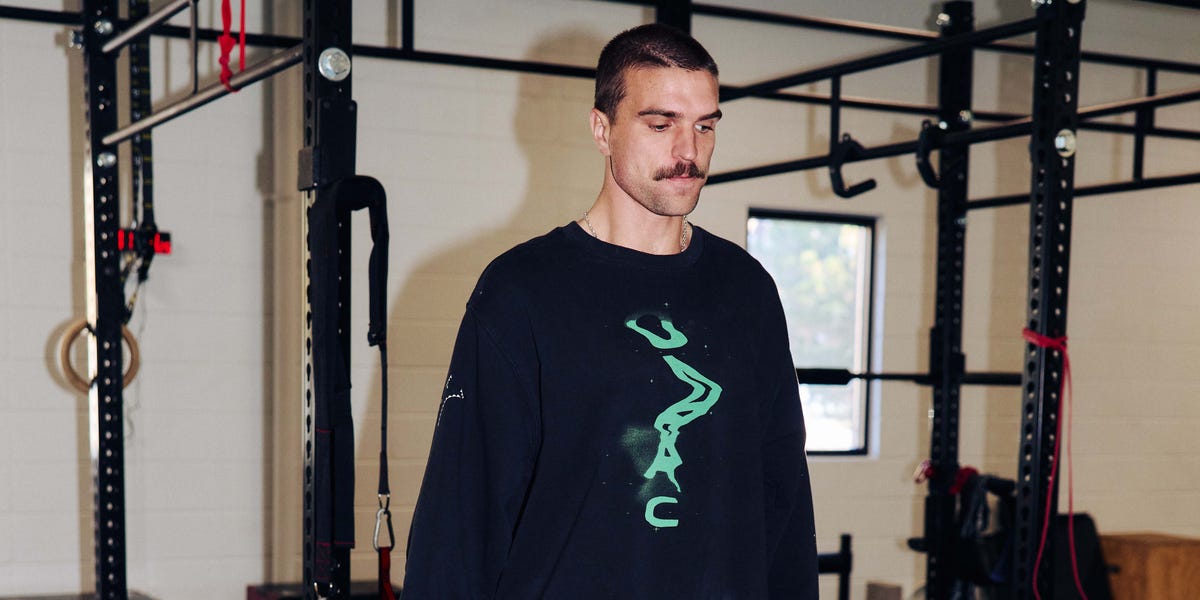
Six years ago, when Joe Klecker was named to the inaugural class of the On Athletics Club (OAC) in Boulder, Colorado, his goals were all about racing fast on the track. But based on his physiology, his tenacity, and even his genes, coach Dathan Ritzenhein already knew Klecker was destined to become a marathoner—and probably a very good one.When the team now known as OAC Global formed in the summer of 2020, it featured eight postcollegiate runners chasing Olympic berths from 1,500 to 10,000 meters. The OAC sent several runners (including Klecker) to the Tokyo Olympics and brought home medals from Paris.But track success was only the first step of what Ritzenhein envisioned. In the years since, he and coach Laura Thweatt have built an elite marathon program, too.Kenyan great Hellen Obiri, four-time Major Marathon winner and current women’s New York City Marathon course record holder, put OAC on the marathon map after joining in 2022. The progression of Klecker (with a marathon PR of 2:05:56 from Boston), along with newer teammates Ryan Ford (2:05:46 marathon PR) and Patrick Kiprop (59:14 half marathon PR), has helped to solidify the team’s presence on the roads.As all four prepare for the NYC Marathon, we went behind the curtain at the OAC Global Training Facility in Boulder to learn what has fueled their success.1. Play Off Other Runners’ Strengths in TrainingWhen On recruited Obiri to Boulder in 2022, the two-time Olympic silver medalist at 5,000 meters was about to move up to the marathon. That meant shifting from pure track speed and relatively low mileage (80 miles per week) to 120- to 125-mile weeks and grinding sessions like 25K tempo runs.With no other marathoners on the team, she did portions of her long runs with 10,000-meter runner Alicia Monson and some longer tempo efforts and fartleks with Klecker. All three benefited.Obiri became one of the best marathoners in the world, winning New York and Boston twice and an Olympic bronze medal in Paris; Monson broke the American 5,000- and 10,000-meter records in 2023, and Klecker got a taste of what marathon training was all about, which gave him proper perspective as he was about to begin his first marathon build.“[Obiri’s] level is so high that, on a lot of our long runs and even some fartleks, we would overlap for a good chunk of those workouts,” Klecker, 29, tells Runner’s World. “And for me, it was harder than I thought. When you’re racing on the track, a long run is kind of a chill day because all of your hard work is on the track. But when you’d see her go out and do her long runs, she was just hammering from the start, and so I knew I really had to wrap my head around this new way of training for the roads.”As Klecker got closer to his marathon debut last fall, the OAC signed Ford as his primary training partner. They developed a synergy, but weren’t entirely aligned in their schedules because Ford was building up to the Chicago Marathon and Klecker was preparing for New York a month later. But they did sync up for all of their training (including harder workouts) as they prepared for Boston, and that paid off with better racing execution and significant time drops.The team recently added an even faster teammate in Kiprop, a 25-year-old Kenyan and former University of Arkansas star, after big wins at the Lilac Bloomsday 12K and Peachtree Road Race 10K. He ran 59:14 in his half marathon debut in January in Houston and moved to Boulder in early August to join Klecker and Ford at the start of the 12-week New York buildup.Klecker admits his marathon debut was mostly about surviving 26 miles. He trained to run a measured race holding 5:00 pace the whole way. That meant he fell off the lead pack when surging began along First Avenue, but his strength allowed him to reel in runners who were fading in the final miles.This year, the trio of Klecker, Ford, and Kiprop have been able to push each other on hard long runs and marathon-specific workouts aimed at mimicking the surges and inconsistent pacing at the front of the pack in New York City.“This year, the goal is to be up front and try to race for that podium and not just catch the people who die. You can’t do that from two minutes back late in the race,” Klecker says. “Now, based on the training we’ve done through a natural progression of workouts, it feels I should be ready to go with some moves. That's kind of been the whole focus of the past year, to be more competitive throughout the race.”Training with the team has worked well for Obiri, 36, who is coming off a personal best 2:15:53 runner-up effort at the London Marathon in April. But at times, she has had a penchant to run too hard in training with faster teammates, which is why OAC has recruited seasonal training partners closer to her pace from Kenya over the past two years. (This year, it is Dennis Kipkosgeu, a 2:13 marathoner.)She heads to New York as the defending champion after what she considers her best buildup yet.“The growth of our road running team feels amazing because I have runners to train with every day,” she says of the OAC team. “When I joined in 2022, I was the only marathoner, and that was hard. This gives me confidence because there are four of us working so hard together.”2. Rely on Trusted GuidanceBy early 2025, Ritzenhein wanted a coach to lead the road program day to day while he and assistant coach Kelsey Quinn stayed focused on the track group that included Yared Nuguse, bronze medalist in the 1500 at the Paris Olympics.Thweatt, a longtime Boulder runner, had just retired from her own pro career and posted on Instagram that she was looking for new opportunities. Two days later, Ritzenhein called her. Within about two weeks, she was the OAC’s marathon coach.A 2:25:38 marathoner who twice finished fifth at the U.S. Olympic Trials (in the marathon in 2020 and 10,000 meters in 2016) and notched top-10 finishes in London and New York, Thweatt admits she initially wasn’t sure what she could offer runners much faster than her. But early in the New York build, she ran with Obiri several days a week; as the workouts got faster, she paced her from a bike.Thweatt quickly learned the role of a coach is more than just explaining and monitoring workouts and more about sharing experiences, reducing stressors, instilling confidence, visualizing race-day situations, keeping athletes focused on the process, and making sure they run easy enough on their easy days—all key elements of marathon training.The runners are doing the work in training, but a coach is the glue that brings it all together, Thweatt says, and that’s true for any level of runner.Kiprop says he has relied on the experience of his coaches and teammates during this first marathon build, so much so that he believes his entry into racing 26.2 miles might be easier than most. He heads to New York with a new level of fitness and plenty of firsthand course knowledge and pre-race logistics from Klecker, Obiri, Ford, Thweatt, and Ritzenhein, who all ran their first marathons on the five-borough course.“At first, I didn’t know if I could handle the training for the marathon,” he says. “But with time, as you train together, you build that confidence, you build the courage to face the marathon.”Asa Fletcher3. Look Beyond Your Run WorkoutsRitzenhein signed on as the OAC’s first coach just weeks after his last pro race in early 2020, eager to build a program that would span more than a single Olympic cycle. He knew that would require patience, a supportive team atmosphere, and top-tier facilities.Today, the OAC Global roster has 20 athletes from eight countries and operates out of its own 10,000-square-foot training center eight miles north of downtown Boulder, opened in 2024. It’s the nerve center for everything the team does: training, fueling, strength work, and communications. But it also serves as a place to develop camaraderie and team chemistry, which can help athletes thrive in a marathon training block, instead of just surviving.“I think coming up with this facility was a genius idea,” Kiprop says. “It has everything we need. It’s nice to have your team around you here. When we’re together, it feels like family.”The facility has two antigravity treadmills, eight Woodway treadmills, an underwater treadmill, and e-stim machines—most of which they use when there’s inclement weather and for rehab. There are treatment tables for massage therapists and physiotherapists, meeting space for sessions with coaches, dietitians, and mental strength counselors, and a lounge with a mini kitchen stocked with drinks, snacks, and supplements.They also have a full gym with space for strength training, drills, and strides, an important part of their training, as marathon preparation is more than just running for the OAC crew. The team’s strength coaches, Jason Ross and Joslynn Peterson, have the runners do a wide range of running-specific and general strength exercises twice a week.Most of the strength workouts focus on tissue health with longer isometrics (holding an exercise in one position as you would in a plank) at the beginning of a training cycle and then progress to increased weight and fewer reps, Ross tells Runner’s World. While each athlete has individual exercises to tackle, some of the common strength moves include weighted box step-ups, single-leg bent-knee hamstring isometric holds, trap bar deadlifts, landmine single-leg Romanian deadlifts, seated calf raises, and weighted standing calf raise isometrics.“You cannot be complacent on that side of things,” Thweatt says. “It makes a huge difference. It’s an equal part of training. You need to make sure that everyone’s staying healthy and strong.”4. Practice Your Fueling StrategyWorking alongside sports dietitians, each OAC marathoner has dialed in an individual fueling plan based on sweat testing and data from training. They know how many calories they burn on their long runs and hardest sessions, how much fluid and sodium they lose in their sweat, and exactly what they need to replace during a long run or hard session so they finish strong instead of fading late.The exact details of what each runner needs are slightly different, Thweatt says, but they’re adept at consuming gels on the run and have practiced grabbing bottles off of tables, so they know how long they need to carry them and drink from them for optimal fueling.“Fueling is one of the biggest things we drive home during training,” Thweatt says. “We’ve gone through the fueling plan in almost every training session that we do and we practice it like it’s going to be on race day. They know what’s going into their bottles on race day, so hopefully when we get to race day, it’s not even something they really have to think about because it’s what they’ve been doing for the last 12 weeks.”5. Operate on a 9-Day Training CycleWhile most runners prepare for marathons on a seven-day cycle, the OAC marathon group mostly used a nine-day schedule during this year’s 12-week buildup to both Boston and New York. No two weeks start or finish the same, but it’s a cycle with room for three long or hard sessions with two or three days of easier running in between—especially important while training at 5,400 feet, Thweatt says.“The nine-day schedule just made sense because at altitude, with as hard as they’re running our harder sessions, we just need to make sure that we’re absorbing that training—not losing the recovery piece of it,” she explains.At the peak of the New York build, the OAC runners logged 118 to 135 miles per week, depending on each runner’s preference and background. Klecker started his training early in July to boost his volume and eventually pushed his max to more than 130 miles a few times this fall. Ford and Obiri found their sweet spot around 120, and Kiprop, who previously averaged 100, settled in at about 110.The biggest pieces of that volume were 35K (22-mile) and 40K (25-mile) long runs, including a couple of them at 8,500 feet on Magnolia Road west of Boulder. On the four 40K runs late in the block, Klecker, Ford, and Kiprop started at about 5:45 mile pace and worked down to 5:30 through 20K, then progressed to 5:20 for most of the final 20K, often closing near 5:00 pace.6. Run Slower to RecoverThweatt calls those long runs the bread and butter of the OAC training, but the key is balancing that volume and the harder, faster workouts with slower running on easy days.After those key long runs, the OAC athletes typically run about six miles “super easy,” Thweatt says, which for them usually means as slow as 7:15 pace but as fast as 6:45 pace. Thweatt has been trying to make sure the athletes (especially Klecker and Obiri) run at those paces on their easy days to ensure they’re optimizing recovery.The next day, the runners log double sessions of 10 miles in the morning and five miles in the afternoon, followed the next day by 12 miles in the morning and six miles in the afternoon. Those low-key maintenance runs give the mind and body a break, setting them up for one of their signature spicier workouts.“So between big long runs or bigger sessions, we usually give them three easy days,” Thweatt says. “So you’re not touching those faster paces for three days, but you’re still getting that good quality time on feet and making sure the body is absorbing that last hard session before we hit it again with another one. Recovery is so important and it’s a piece not everyone likes to talk about as much because it's not as flashy as the big workout days.”7. Train How You Want to Race—Not Just for the Finish TimeTwo other staples of the team’s NYC build-up included 10- to 12-mile tempo runs and long, hard fartleks. The tempo runs usually start at 5:00 pace and get faster (Kiprop recently closed one at 4:45 pace), while a sample fartlek alternates “1K on” (2:50-2:55, or 4:35-4:40 mile pace) and “1K off” (3:10, or 5:05 mile pace).“It’s about being uncomfortable for long periods of time and still trying to shift gears at the end to remind them what it’s going to be like in the marathon,” Thweatt says. “We’re trying to mirror the surges of a marathon in our workouts.”In the final weeks, the runners also did several VO2 max sessions on the track, including two sets of 1600, 1200, 800, and 400 meters at about 5K pace, which for the OAC’s men comes out to 4:20, 3:12, 2:06, and 1:02, with the second set slightly quicker.That kind of work has been a big change for Ford, but it has paid off.“I was somebody that would try to approach marathon training by running at marathon pace and get really comfortable with that. But I think that only works to a certain extent,” says Ford, who just turned 29. “When I was running 2:08 to 2:09, I’d kind of be off of the pack running my own race. Now I am able to stay with the front pack and compete better.”Unlike Chicago, Berlin, London, or Valencia, which involve mostly flat courses you can run at an even pace, the New York City Marathon is on a rolling course and pace surges play a big role in how the race plays out, Thweatt says.Ritzenhein and Thweatt believe runners aiming for success in New York have to be able to tap into quicker-cadence running on a moment’s notice to match the terrain and competitive pickups. For example, while runners will do much of the first 16 miles at an even pace, it’s not uncommon for the lead packs to get split apart by frontrunners ratcheting up the pace (often sub-4:25 for men and sub-5:15 for women) on the 3.5-mile rolling, slightly uphill section along First Avenue on the way to the Bronx.“Those fast track sessions in the middle to the end of a build allow us to spike the system so you can have that speed in the well for the moments you need to shift gears in a race,” Thweatt says. “With the marathon, especially with where the event is at right now with the depth and fast times, you have to touch that speed in training if you want to be competitive in the race. You can increase your volume and do longer workout sessions, but you can’t just do everything at threshold or marathon pace. It’s really important to keep that system firing and to keep it sharp so you have that speed when you need it.”Ford credits the faster workouts for lowering his half marathon PR by 71 seconds in January (59:48) and his marathon PR by more than two minutes in Boston. He recently ran a 25K version of the 1K on/1K off fartlek, clocking a 1:03 half marathon in the middle of it.“The reality is you’ll spend time running slower than marathon pace and you’ll spend time running faster [in New York],” he says. “Now that I’ve kind of reached this new level with the faster training with these guys, the approach is more like, ‘Let’s go to New York and try to compete with that front group.’”Brian Metzler is a Boulder, Colorado, writer and editor whose work has appeared in Runner’s World, Sports Illustrated, ESPN, Outside, Trail Runner, The Chicago Tribune, and Red Bulletin. He’s a former walk-on college middle-distance runner who has transitioned to trail running and pack burro racing in Colorado.
Inside an Elite Running Group’s Marathon Training Strategies That Get Them to the Front of the Pack
Full Article
Original Source
Read the full article at Runnersworld →KhanList aggregates and links to publicly available news content. We do not host full articles from third-party sources. Always verify important information with original sources.