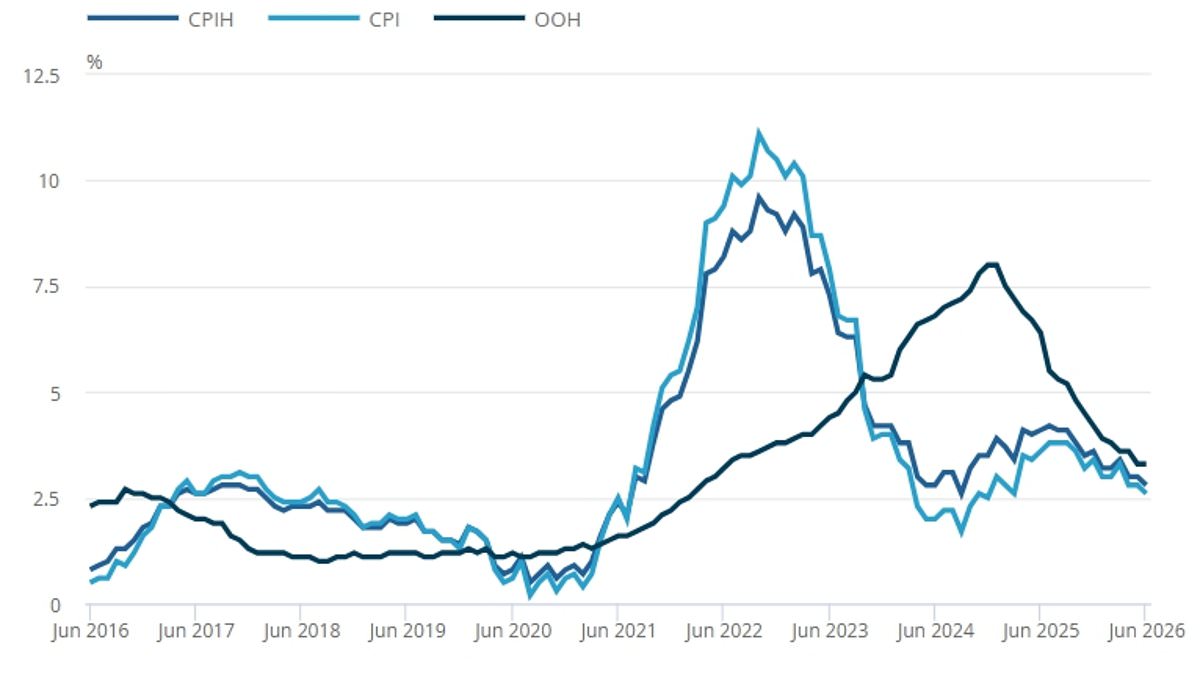
UK inflation eased last month to its lowest rate in 15 months in a temporary boost for the new Prime Minister ahead of a jump in the household energy price cap.The Office for National Statistics (ONS) confirmed today that the rate of Consumer Prices Index (CPI) inflation fell to 2.6 per cent in June from 2.8 per cent in May.This was the lowest level since March 2025 and comes after food and fuel prices dropped in an early encouragement for the cost-of-living-focused Andy Burnham.The drop is bigger than expected, given most economists had predicted a sharp fall in petrol and diesel prices would have helped pull the rate down to 2.7 per cent.But the Conservatives said the inflation rate remaining above the 2 per cent target was 'deeply concerning for families' and condemned Mr Burnham for having 'already made billions of pounds of spending commitments without any plan to pay for them'. The rate of food and non-alcoholic drink inflation was 1.7 per cent, down from 2.2 per cent the previous month amid 'intense competition between supermarkets'. Average petrol prices declined by 2.1p per litre between May and June, while diesel prices dropped by 10.7p per litre. This marked the first time petrol had eased since the start of the Middle East conflict in February, which sent oil and gas prices soaring.But while prices were lower month-on-month, overall motor fuel prices remained 21.3 per cent higher in the year to June - showing how the war has hiked the UK's cost of living.The RAC previously said the average price of a litre of diesel at UK forecourts dropped by more than 16p from the start to end of June – the largest fall since records began in 2000.This was driven by news of an interim ceasefire deal between the US and Iran, prompting oil prices to fall below pre-crisis levels.While energy prices have dropped, economists are viewing this as temporary relief before Ofgem's new energy price cap took effect at the beginning of July. The latest cap was up by 13 per cent compared with the previous rates, meaning the typical household's gas and electricity bill will increase by £221 to £1,862 a year.Tensions in the Middle East have also flared again and Brent crude oil prices have been rising during July.ONS chief economist Grant Fitzner said: 'A fall in motor fuel prices, particularly diesel, helped ease inflation in June.'Food prices fell this month, driven by products including chocolate, margarine and beef. Clothing prices also fell with the start of summer sales, with bigger discounts than last year.'The cost of raw materials dipped for the first time since January, mainly due to the lower price of crude oil, while the increase in the costs of goods leaving factories slowed again.' The latest data comes two days after Andy Burnham took the reins and formed a new Cabinet.Mr Burnham announced yesterday that electricity bills will be VAT-free from October 1, saving households about £45 a year as part of the new Prime Minister's promise to ease cost-of-living pressures.Cutting VAT from 5 per cent to 0 per cent is estimated to reduce CPI inflation by around 0.1 percentage points when it comes into effect, according to the Government.This morning, Mr Burnham also announced that single bus fares across England would be capped at £2 from January.Newly appointed Chancellor John Healey said: 'Falling inflation is news families want to hear but there is much more to do to give people the breathing space they need.'That is why yesterday we cut VAT on electricity bills and today we're announcing a £2 cap on bus fares from January.'We have chosen to focus on the cost of living in our first week, signalling that concern for working people will be at the heart of everything we do. 'Both these changes are a win-win. They help keep inflation down while helping people afford the essentials.'But shadow chancellor Mel Stride tweeted: 'Inflation remaining above target at 2.6 per cent is deeply concerning for families.'Labour's tax hikes and reckless borrowing stoked inflation, and Andy Burnham has already made billions of pounds of spending commitments without any plan to pay for them.'Conservatives are the only party that have set out a credible plan to cut spending, cut taxes and get Britain working again.'Investors expect the Bank of England to keep its benchmark interest rate at 3.75 per cent next week as it continues to assess the impact of the Middle East conflict.Some policymakers who voted to increase borrowing costs in June are worried about the risks of inflation persistently overshooting the 2 per cent target.Financial markets yesterday priced in one or possibly two quarter-point interest rate increases by the end of in 2026.Responding to the inflation figures, British Retail Consortium economist Harvir Dhillon said: 'The drop in both headline and food inflation is good news for households, who are benefitting from summer deals.'Food inflation had a particularly notable drop, its lowest in almost two years, with prices falling on the month. 'This was driven largely by intense competition between supermarkets, trying to entice their customers during a warm spell of weather, despite supply chain pressures.'He added: 'Retailers are already facing immense financial pressure, squeezed by higher National Insurance, the triple packaging tax, and other input cost increases tied to the conflict in Iran. New Chanceller John Healey and Prime Minister Andy Burnham at Downing Street on Monday'If retailers are to keep prices affordable for consumers in the long run, the Government needs to take practical steps to lower the everyday cost of doing business.'Thomas Pugh, chief economist at RSM UK, said falling oil prices after the interim ceasefire agreement were the 'main drag on inflation in June'.'However, oil prices have rebounded in July as tensions escalate which means inflation is still likely to peak at around 3.4 per cent in November,' he added.He cautioned that food prices could 'rebound later this year, as higher energy and fertiliser prices due to the conflict in the Middle East make their way through supply chains'.Sanjay Raja, chief UK economist for Deutsche Bank, said to expect a 'bumpy path' ahead.'While we're nowhere close to the peaks seen during the height of the Iran conflict, the energy disinflation path remains uncertain,' he said.He also warned that food price rises could be on the horizon.
Inflation eases to 2.6 per cent thanks to drop in fuel prices - but it is set to spike higher next month after re-start of US-Iran war
Full Article
Original Source
Read the full article at Dailymail →KhanList aggregates and links to publicly available news content. We do not host full articles from third-party sources. Always verify important information with original sources.