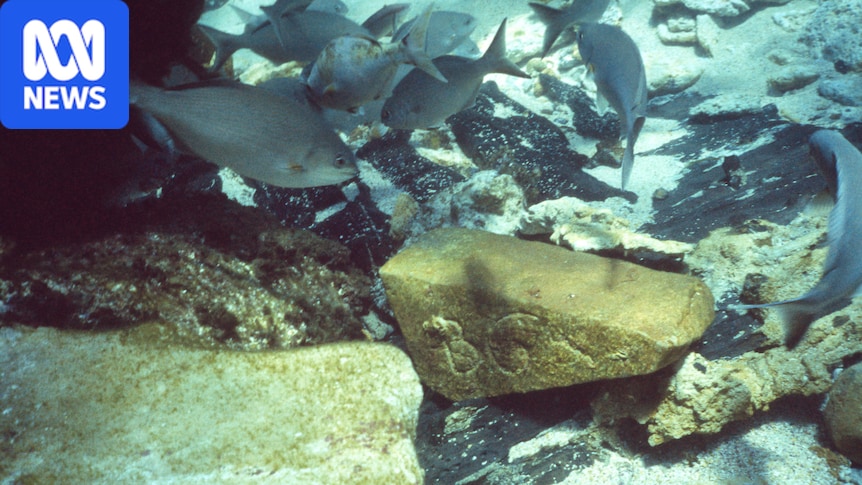
An analysis of cargo from one of Western Australia's best-known shipwrecks has revealed complex global trade routes from nearly 400 years ago.The Batavia, carrying 341 people, was wrecked at the Abrolhos Islands on its maiden voyage in 1629, and a deadly mutiny followed.The wreck was not discovered until 1963, when all that remained was the ship's hull, along with scattered cargo including stone blocks and bricks.More recently, Curtin University researcher Anthony Clarke led a forensic analysis of identical-looking sandstone blocks, which found they came from multiple quarries in Europe.Sandy 'fingerprint'Dr Clarke said his research team examined the microscopic sand grains, finding their age and chemical fingerprint to compare them against potential sources."When we did that, we found our match," he said.Dr Clarke said the stones came from "a variety of different" quarries in Germany, including sites that had been mined since Roman times.Rocks from the shipwreck were forensically 'fingerprinted'. (Supplied)He said the findings revealed a "surprisingly" sophisticated global supply chain, dating back nearly 400 years."That really opens up lots of exciting questions."'Building blocks of an empire'Dr Clarke said the Dutch East India Company, which owned the Batavia, kept "meticulous records" of the people and cargo on board, but not the origins of the stones.Stone blocks on Beacon Island, after being recovered from the Batavia wreck site in 1973. (Supplied: WA Museum)The prefabricated blocks were likely to be used at the company's main headquarters in Jakarta, before the Batavia met its infamous demise at the Abrolhos Islands."It seems they were not picky in where their blocks were from," Dr Clarke said."They were sourcing them from all over wherever they were available and then centralising them prior to shipment to Batavia."Dr Clarke said the researchers mapped a previously unknown pre-16th- and 17th-century trade network, not captured in written records."There's almost like a cliche that history is written in the rocks," he said."But in this case, looking at the rocks and what they can tell us really did reveal … the building blocks of an empire."Anthony Clarke says there are human stories hidden in the rocks. (Supplied: Curtin University)Study helped discover 'where we come from'Dr Clarke said the study, which took more than a year, helped to answer "questions of the human"."Where we came from, how Western Australia was built, our history, those are the questions that really, really, really, really interest me," he said."I think that's kind of amazing that all of this cool stories are hidden in rocks that were at the bottom of the ocean."The hull of the Batavia shipwreck is on display at the WA Shipwrecks Museum in Fremantle, WA. (Remains of the Batavia hull at the WA Shipwrecks Museum (Western Australian Museum))Dr Clarke said the partnerships formed with the Western Australian Museum and the Geological Survey of Germany would carry forward into future research."The west coast of Australia was, and still is, really treacherous water," he said."There are hundreds, thousands of shipwrecks and artefacts waiting to be analysed from all over our coast."
Infamous shipwreck cargo reveals 400-year-old global trade secrets
Full Article
Original Source
Read the full article at Abc →KhanList aggregates and links to publicly available news content. We do not host full articles from third-party sources. Always verify important information with original sources.