
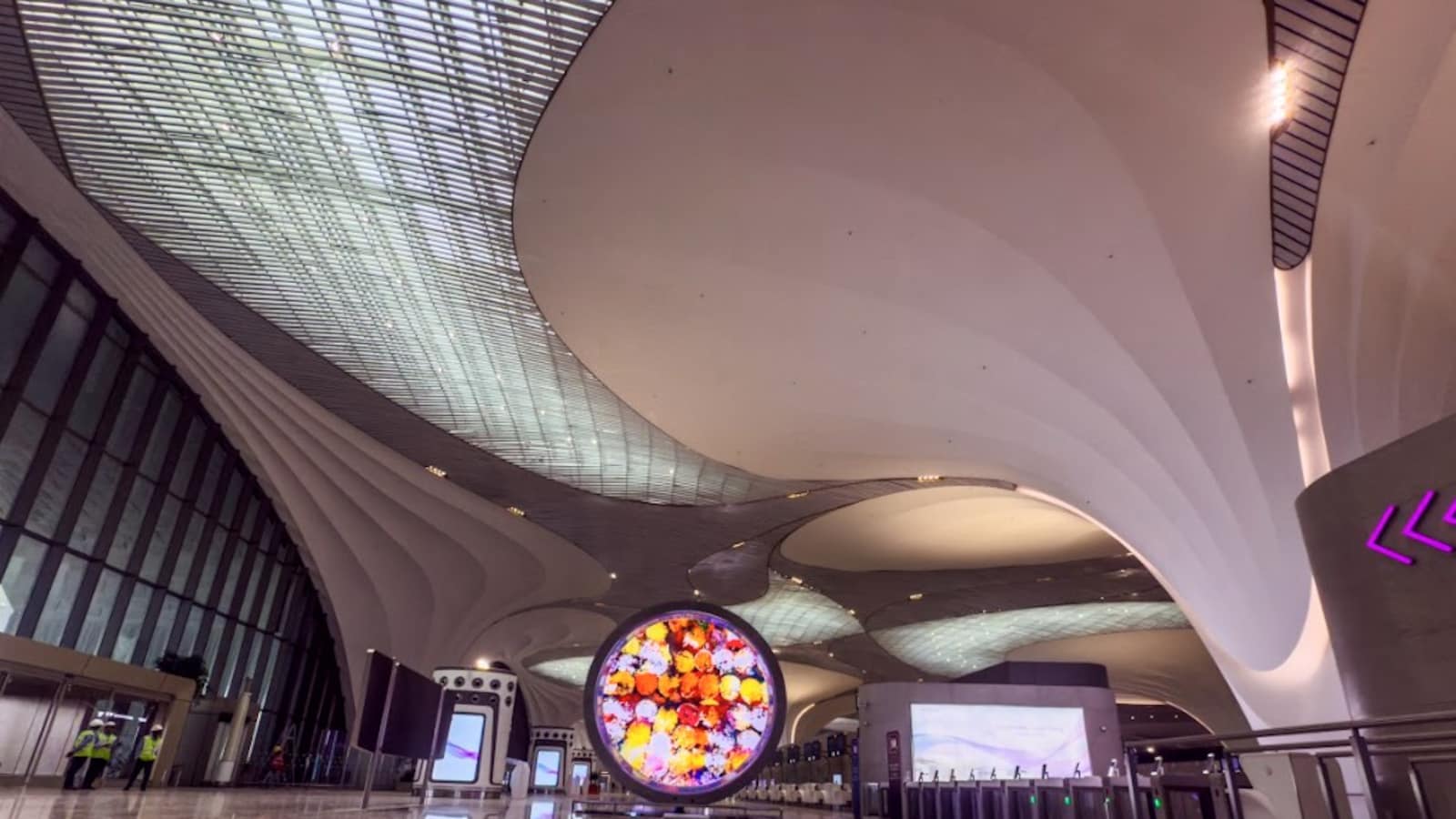
New Delhi: IndiGo and the Air India Group will progressively shift selected domestic and international flight operations from Mumbai's Chhatrapati Shivaji Maharaj International Airport (CSMIA) to Navi Mumbai International Airport (NMIA), paving the way for the redevelopment of Terminal 1 at CSMIA and strengthening Mumbai's dual-airport system.Air India Express plans to begin four daily domestic flights from NMIA in December 2026, followed by the phased transition of its West Asia operations from January 2027. IndiGo plans to commence international operations from the new airport in February 2027, progressively transferring 12 daily international departures from CSMIA and expanding its network to 12 destinations by July 2027. The transition follows nearly 18 months of consultations between the airport operator and airlines, according to the broader redevelopment perspective provided by the airport side. It is intended to ease capacity constraints at CSMIA, create room for the redevelopment of Terminal 1 and allow airlines to expand operations as Navi Mumbai builds its international network.Which Flights Will Move To Navi Mumbai?IndiGo plans to transfer its existing international services from CSMIA to Bahrain, Riyadh, Dammam, Jeddah, Madinah, Kuwait, Ras Al Khaimah, Fujairah, Muscat, Dhaka and Jakarta. It will also introduce a daily service to Kathmandu, taking its international network at NMIA to 12 destinations between February and July 2027.The airline will also transition the domestic connectivity required to support these international operations, enabling onward connections between domestic and international flights at NMIA.The move will free up capacity at CSMIA for IndiGo to introduce additional international services across Asia, Africa and Europe in 2027, using its expanding Airbus A320/A321 fleet and A321XLR aircraft.Air India Express will progressively transition services to Jeddah, Riyadh, Dammam, Doha, Muscat and Sharjah, with the process expected to be completed by the IATA Northern Summer 2027 season. Its planned Kuwait services from NMIA are subject to the requisite approvals. The airline has outlined a January 2027 timeline for the planned Kuwait services and existing Oman operations.The airlines have said final operating dates and service adjustments will depend on project coordination and the necessary approvals.How Will The Shift Facilitate T1 Redevelopment?The relocation of selected airline operations is intended to create the capacity required for the phased redevelopment of CSMIA Terminal 1, which is targeted for completion by 2030.The modernised terminal is expected to increase annual passenger-handling capacity from 15 million to 20 million, a rise of approximately 33 per cent. Planned improvements include upgraded passenger facilities, enhanced safety measures, digital systems and more efficient passenger-processing infrastructure.The airport redevelopment aims in its initial phase to shift approximately five million passengers to NMIA, including around 3 million passengers accounting for approximately 70 per cent of the traffic targeted for relocation in that phase.Around 9 per cent of CSMIA's annual traffic of 55 million passengers is expected to be temporarily transitioned as part of the Terminal 1 redevelopment programme, with approximately 91 per cent continuing to operate from Mumbai airport.The transition will also support IndiGo's share of the capacity reductions required for the redevelopment. IndiGo and Adani Airport Holdings Limited (AAHL) have said that any further adjustments required to IndiGo's operations at CSMIA Terminal 1 will be accommodated at Terminal 2.Air India Group has said its phased move is aligned with the wider transition programme for Indian and international airlines. It also aims to preserve the historicity of its existing operating slots at CSMIA while allowing the group to continue serving Mumbai efficiently.Why Is Navi Mumbai Important To The Plan?NMIA is being developed as an additional aviation gateway for the Mumbai Metropolitan Region, helping distribute traffic between the two airports as passenger demand grows.Its Terminal 1 is designed to handle 20 million passengers annually, with future expansion planned to raise capacity to 90 million. The airport is equipped with modern passenger-processing infrastructure, including digital systems, Digi Yatra and automated baggage handling, intended to support more efficient passenger journeys and airline operations.Road connectivity is also being strengthened. Three bridges built by the City and Industrial Development Corporation of Maharashtra (CIDCO)-SBR-9, BR-4 and BR-5-across Panvel Creek and the Gadhi River are expected to improve connections between NMIA, Atal Setu, Ulwe Coastal Road, Amra Marg and NH-4B. Planned multimodal transport links are expected to further improve access from urban centres and business districts across the region.The airport's cargo facilities, cold-chain infrastructure and proximity to ports and industrial hubs are also intended to support its longer-term logistics potential.What Does The Dual-Airport Model Mean For Passengers?The phased transition is intended to give Mumbai additional capacity for aviation growth while allowing CSMIA to modernise its existing infrastructure. Passengers could benefit from a broader choice of international destinations, improved domestic-international connections and additional services as airlines expand at NMIA.For airlines, distributing operations between the two airports could provide greater scope for network expansion and more predictable planning during the Terminal 1 redevelopment. IndiGo's planned expansion across Asia, Africa and Europe is one example of how capacity released at CSMIA could support further growth.(Disclaimer: New Delhi Television is a subsidiary of AMG Media Networks Limited, an Adani Group Company.)
IndiGo, Air India Group To Shift Flights To Navi Mumbai Airport
Full Article
Original Source
Read the full article at Ndtv →KhanList aggregates and links to publicly available news content. We do not host full articles from third-party sources. Always verify important information with original sources.