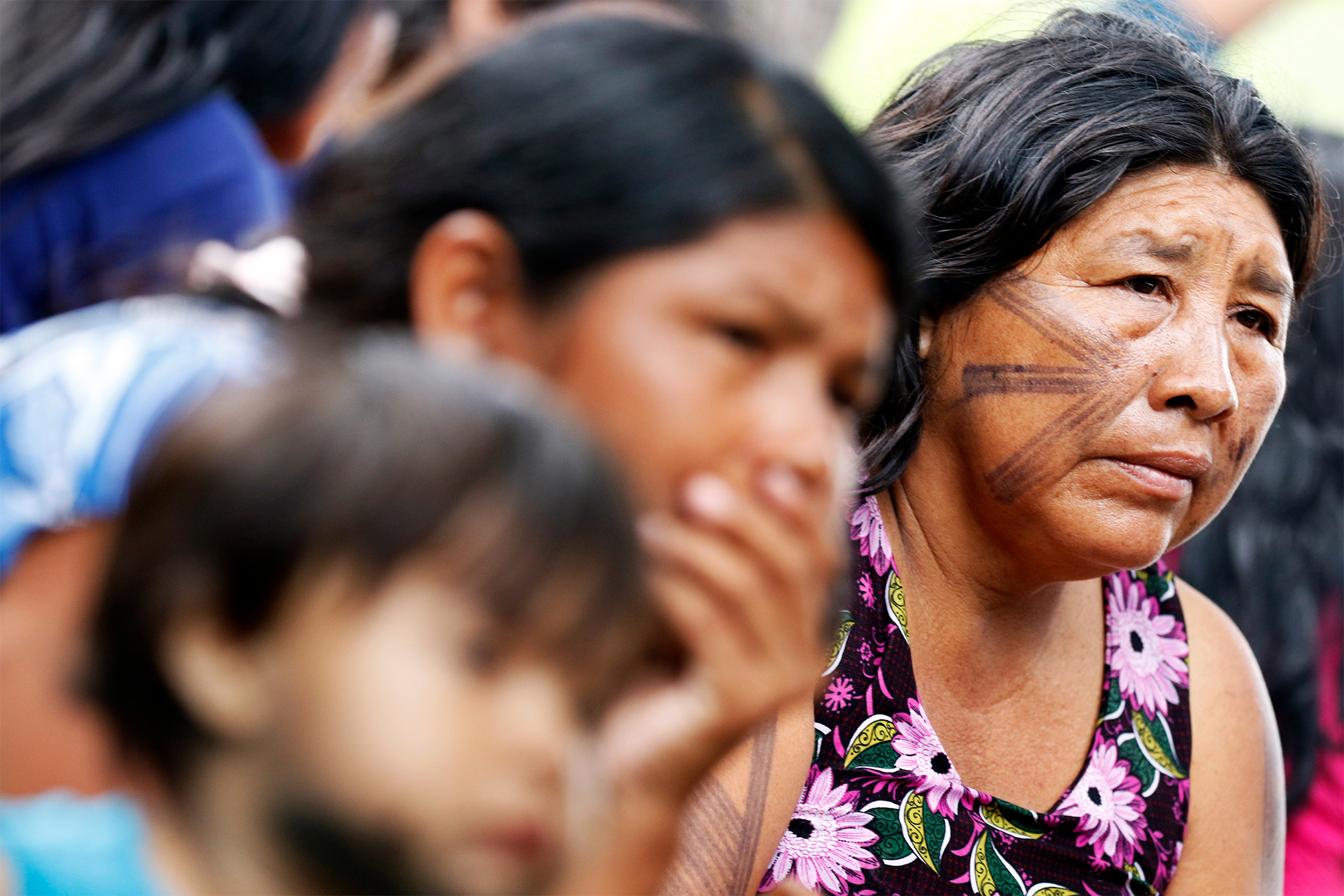
The Parakanã Indigenous people are reoccupying their territory in Pará state after the eviction of around 3,000 invaders by federal forces.The intruders, however, are ready to come back if Brazil’s next administration carries a new anti-environmental agenda in 2027.Experts compare illegal activities such as gold mining to powerful bacteria that may return even stronger if you don’t use the proper antibiotic.Also in Pará, the state administration has the challenge of keeping deforestation under control after a successful operation in the Triunfo do Xingu Environmental Protection Area. For years, the Parakanã Indigenous people were restricted to less than a third of their territory, isolated in the middle of a vast pasture area occupied by around 100,000 heads of cattle. Illegal gold mining, illegal logging and land grabbing also proliferated inside their land, the Apyterewa Indigenous land, located in Brazil’s River Xingu basin, in Pará state. “It is historically the most deforested Indigenous territory in Brazil, and perhaps in the world,” said Wallace Lopes, an environmental analyst in Brazil’s federal environmental agency, IBAMA. The peak of deforestation happened amid the administration of far-right president Jair Bolsonaro (2019-2022), who dismantled the country’s environmental enforcement. In 2022, an area nearly the size of Paris (102.23 kilometers squared or 25,261 acres) was cleared inside the Apyterewa land, according to Brazil’s space agency, INPE. “It was a massive deforestation,” Wenatoa Parakanã, the president of the Tato’á Association, which represents the Parakanã, told Mongabay. “All we can see now is pasture.” The invaders were estimated at 3,000 individuals, more than four times the Indigenous population (730). After two failed attempts by previous administrations to remove the intruders in 2013 and 2017, they felt confident enough to build a small village inside the Indigenous land, with two gas stations, bars, churches and even a school. The task force in Apyterewa Indigenous land to remove invaders counted on the support of Brazil’s Federal Police, Army and the National Force. Image by the Indigenous People Ministry (MPI). Things started to change in 2023, when leftist President Luiz Inácio Lula da Silva took office and put in motion a large eviction operation. The task force, which fulfilled a Supreme Court order, included the seizure of illegal cattle, the destruction of machinery, and the invaders’ illegal village. Around 300 agents from several governmental bodies, such as IBAMA, the Federal Police, the National Force, the Army, and the Indigenous agency (FUNAI), worked on the ground. The efforts significantly reduced deforestation to 7.5 km² (1,853 acres) in 2025, and Apyterewa dropped several positions in the Amazon Indigenous lands’ deforestation ranking: From the first to 12th. According to Wenatoa, many families are now moving back to the areas previously occupied by the invaders: “Our plan is to take care of our land, of the forest we still have left.” The proximity of Brazil’s general elections, however, heightens fears of being once again abandoned by authorities. In October, Brazilians will choose the new president, state governors, senators and deputies. So far, polls indicate a fierce competition between President Lula and Senator Flávio Bolsonaro, the older son of Jair, who can’t run after being sentenced to prison in a coup d’État trial. “The invaders always tell us that they’re just waiting for this government to leave so they can come back [to the territory],” Wenatoa said. Lopes, who analyzed the eviction operation in Apyterewa for his doctoral dissertation, has closely observed the impact of official discourse on the behavior of environmental offenders. “Current political leadership plays a very significant role in the dynamics of the deforestation rate,” said Lopes, who saw deforestation in the Amazon skyrocket under Jair Bolsonaro’s administration and then be controlled again under Lula. The Parakanã Indigenous people are establishing new villages in the areas previously occupied by the invaders. Image by Breno Peres/Agência Brasil. Territories reclaimed by authorities after long and costly raids may be quickly reoccupied by invaders at the least sign of complacency, Lopes said. And they may come back stronger than before. “Because now they [the invaders] understand how the government operates,” he said. “They know which roads are used, what the strategy is, whether cattle will be removed, whether a bridge will be demolished … It’s like a kind of bacteria that adapts to the antibiotics you keep giving it.” According to André Villas-Bôas, from the Brazilian nonprofit Instituto Socioambiental (ISA), elections by themselves tend to intensify land disputes. Local politicians, he said, may support land grabbers’ demands to win votes. If a member of Bolsonaro’s family comes to power in 2027, he believes the situation will be even worse. “It is a government that holds prejudiced views toward Indigenous peoples, that supports agribusiness initiatives without much discernment, and that views the illegal appropriation of public lands as part of the region’s development.” Deaths and ambushes Those expelled from the Apyterewa territory have been sending clear signs that they will not give up easily. At least nine attacks have been registered since December 2024, when federal forces concluded their large-scale presence in the territory and made the symbolic return of the land to the Indigenous people. In December 2025, a cowboy hired by IBAMA to remove cattle from the area was killed in an ambush, while two Indigenous people and one employee of the Tato’á Association escaped shooting attacks in early 2026. The fear of a backlash in the Apyterewa land led Indigenous organizations to issue statements urging the federal administration to investigate those still threatening the territory. “The Apyterewa Indigenous Territory is in a highly vulnerable situation, surrounded by people and groups who refuse to accept the removal of intruders,” stated the Rede Xingu+, a network of 53 organizations representing Indigenous peoples, riverine communities and civil society groups in the Xingu River basin. Villas-Bôas, who also acts as the executive secretary of Rede Xingu+, said the government’s presence on the ground should be more effective given the severity of the conflict. “When tensions flare up, the government steps in more forcefully, and then pulls back.” Before the eviction operation, non-Indigenous people were occupying 70% of the Ayterewa Indigenous land. Image by the Indigenous People Ministry (MPI). In an email to Mongabay, the Indigenous People Ministry (MPI) stated that “all indigenous lands that have undergone eviction operations benefit from ongoing territorial protection activities.” According to MPI, it also developed maintenance plans for the removal of unauthorized occupants, including security, inspection, and monitoring measures. “Unfortunately, the resources are stretched thin,” Lopes said. “The large number of personnel we had during the clearance operation is no longer there. You will no longer find the same number of staff, the same availability of aircraft, personnel, supplies and equipment.” According to Lopes, the long-term success of evictions depends on keeping intelligence agents on the ground, ready to report any unusual movement in the territory. “The structure of the illegal market is not visible in satellite imagery,” he said, adding that illegal activities such as gold mining require the movement of heavy machinery. “This requires an unusual flow of people within the Indigenous territory, which is only visible if intelligence personnel are present.” Indigenous people want an easy and direct communication channel with federal authorities, so they can report any suspicious activity right away, Lopes said. Since Lula took charge, his administration has led evictions in 11 Indigenous territories, according to MPI: Alto Rio Guamá, Karipuna, Kayapó, Araribóia, Munduruku, Sai Cinza, Trincheira Bacajá, Apyterewa, Yanomami, Uru-Eu-Wau-Wau, and Sararé. Fixed bases in a deforestation hotspot A similar situation happened in the Triunfo do Xingu environmental protection area (APA Triunfo do Xingu), which stretches more than 1.7 million hectares (4.2 million acres), the equivalent of 11 cities of São Paulo. Managed by the Pará state government, the land sits in one of the Amazon’s deforestation hotspots and has historically been a preferential target of land grabbers and illegal gold miners, loggers and ranchers. “It is located between two municipalities that are among those with the highest rates of deforestation in the state of Pará: São Félix do Xingu and Altamira,” said Larissa Amorim, coordinator of the Deforestation Alert System (SAD) in the Imazon research institute. Like in the Apyterewa Indigenous territory, clearances surged within the APA Triunfo do Xingu in the early 2020s, with the rise of the Bolsonaros, according to SAD. In 2021, it reached 421.80 km² (104,231 acres), more than four times the size of Miami in the U.S. state of Florida. In February 2023, the state government, led by Helder Barbalho, started the so-called Curupira operation. Three fixed inspection bases were established at strategic points, and employees from Pará environmental and animal health agencies started inspecting the transport of cattle, machinery and people. The Pará state established three fixed bases to inspect around the Triunfo do Xingu environmental protection area. Image by Marcelo Seabra/SECOM-PA. The operation sparked rage among local ranchers, who complained about its economic consequences. The deforestation rates, however, dropped to 48.07 km² (11,880 acres) in 2025, according to SAD, almost nine times lower than in 2021. Still, APA Triunfo do Xingu remains the most pressure-protected area at risk for deforestation in the Amazon in 2026, SAD shows. One explanation for the persistence of deforestation is the economic dependence of local communities on illegal logging and cattle ranching. Another reason is the nature of its status. APA Triunfo do Xingu is a less-protected type of conservation unit, in which certain sustainable activities are allowed by law. “However, deforestation in this area has already been so extensive that it cannot be said that this land use is sustainable,” Amorim said. One of the three initial bases and a fire brigade remain in the territory, the Pará Department of Environment, Climate, and Sustainability stated to Mongabay in an email. According to the department, this “ensures the government’s ongoing presence for environmental monitoring, enforcement, and protection efforts.” In March 2025, Pará’s administration granted a 10,300-hectare (25,451-acre) area in APA Triunfo do Xingu to a consortium of private companies committed to generating carbon credits through forest restoration. The future of the APA Triunfo do Xingu is also at stake in October’s election. Barbalho, a Lula ally with agribusiness ties, has been in Pará’s state administration for eight consecutive years and is not allowed to run again. He is supporting the vice-governor, Hana Ghassan, in a race against the mayor of the municipality of Ananindeua, Daniel Santos. Banner image: For years, the Parakanã Indigenous people had their territory exploited by around 3,000 invaders. Image by Bruno Peres/Agência Brasil. Crackdown lets rainforest reclaim illegal road in rare win for the Amazon FEEDBACK: Use this form to send a message to the author of this post. If you want to post a public comment, you can do that at the bottom of the page. Cite this articleFernanda Wenzel (2026). Indigenous Parakanã fear election U-turn may spark new invasions in Brazil. Mongabay Conservation news. DOI: https://doi.org/10.66709/news-324673 Credits Topics
Indigenous Parakanã fear election U-turn may spark new invasions in Brazil
Full Article
Original Source
Read the full article at News →KhanList aggregates and links to publicly available news content. We do not host full articles from third-party sources. Always verify important information with original sources.