
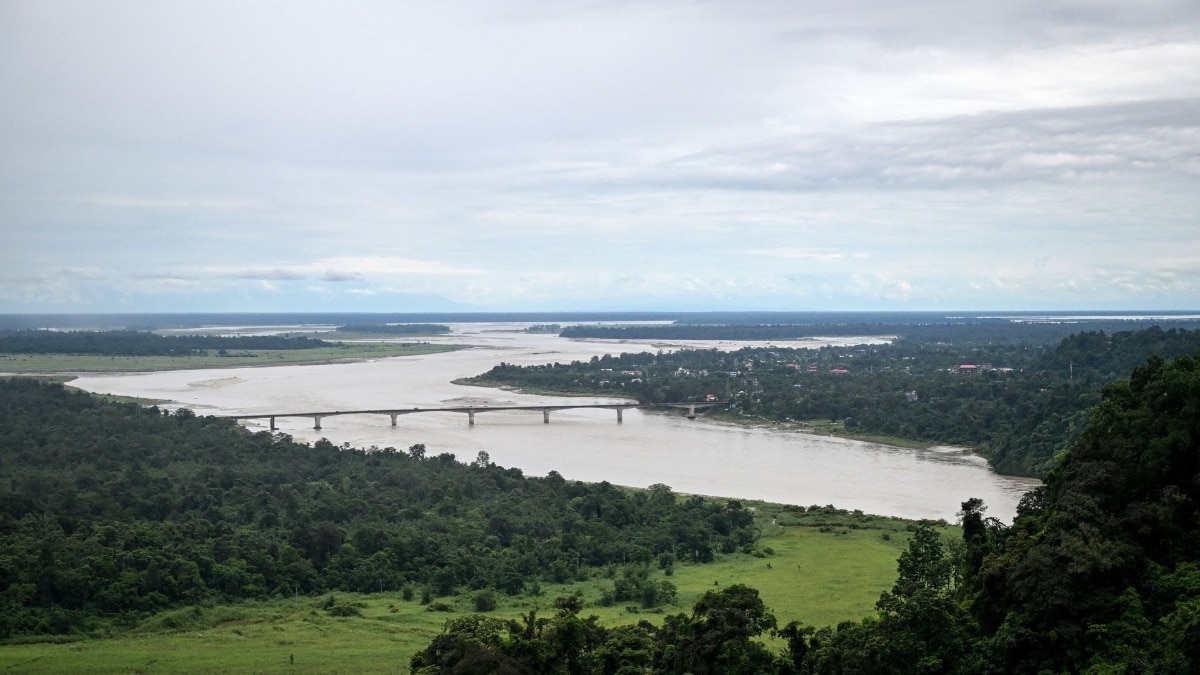
China’s construction of a massive hydropower project on the Yarlung Tsangpo River in Tibet has sharpened India's concerns over water security, downstream flood risks and the strategic implications of upstream control of the Brahmaputra.India's proposed 11,200 MW (11.2 GW) Siang Upper Multipurpose Project (SUMP) in Arunachal Pradesh is being considered as a potential strategic buffer, with water storage and flow regulation emerging as key objectives alongside electricity generation.The project has gained renewed significance amid concerns that changes in upstream river flows could affect communities, agriculture and infrastructure in Arunachal Pradesh and Assam.However, its construction has not been approved, and its feasibility and potential benefits remain under assessment. CHINA'S MEGA DAM AMBITIONChina announced the start of construction of its Yarlung Tsangpo hydropower project on July 19, 2025.According to its state news portal, the project will comprise five cascade hydropower stations, with an estimated investment of 1.2 trillion yuan, or approximately $167.8 billion at the time of the announcement. The project is widely reported to have a planned capacity of around 60,000 MW (60 GW). It is located in the lower reaches of the Yarlung Tsangpo, which flows into India as the Siang before becoming part of the Brahmaputra river system.Its location near the Indian border has raised concerns in New Delhi over the potential effects of upstream water management, including possible changes in seasonal flows and the risks associated with sudden releases.The precise downstream impact will depend on the project’s design and operation, as well as hydrological conditions.WHY INDIA'S SIANG PROJECT MATTERS?The proposed Siang Upper Multipurpose Project is envisaged as a large storage-based project on the Siang River in Arunachal Pradesh. Its proposed installed capacity is 11,200 MW.Arunachal Pradesh Deputy Chief Minister Chowna Mein said on October 5, 2026, that the project’s central purpose was to store, regulate and manage water in the Siang basin, particularly in the context of concerns surrounding China’s upstream project.According to Mein, the proposed project would have a dam height of approximately 280–300 metres and around 9.2 billion cubic metres of live storage.He said such storage could help regulate downstream discharge and reduce flood risks during sudden upstream releases or extreme flows.These are the stated objectives of the proposed project, not yet demonstrated outcomes of an operational dam. The proposed storage capacity could potentially help India manage seasonal variations in river flows.It could also support electricity generation and strengthen the region's energy infrastructure.However, the project's actual ability to mitigate floods or compensate for upstream changes would depend on detailed engineering studies, operating rules, available storage and the timing and magnitude of river flows.INDIA'S CONCERNS ROUTED DIPLOMATICALLYThe Indian government has publicly stated that it is monitoring China’s plans and has urged Beijing to ensure that downstream interests are not harmed.In a written response to the Lok Sabha on March 27, 2026, the Ministry of External Affairs said India had raised concerns about transparency and consultation with downstream countries through diplomatic channels and the institutionalised Expert Level Mechanism established in 2006.The government also highlighted the need for cooperation on trans-boundary rivers, including the resumption of hydrological data sharing by China.Such information is important for flood forecasting, river-flow monitoring and planning in downstream areas.INDIAN PROJECT STUCK AT FEASIBILITY STAGEDespite its strategic importance, the Siang project faces significant technical, environmental and social challenges.Residents in parts of the Siang region have opposed survey work, citing concerns over displacement, the submergence of land and the potential effects on local communities.Arunachal Pradesh Chief Minister Pema Khandu reiterated in September 2026 that the immediate priority was to complete the Preliminary Feasibility Report (PFR). He said the project would not be taken forward if experts concluded that it could not be built.Several stages of technical assessment, consultation and statutory clearances would be required before a final construction decision.STRATEGIC SIGNIFICANCE OF SIANG PROJECTThe proposed Siang project reflects India’s effort to strengthen its capacity to manage the Brahmaputra basin amid uncertainty over China’s upstream hydropower development. Its potential importance extends beyond electricity generation to water storage, seasonal flow management and flood-risk mitigation.For India, the immediate priorities remain robust hydrological monitoring, reliable data sharing, cross-border engagement, flood preparedness and a scientifically assessed decision on the proposed Siang project.Status of India’s Proposed Siang ProjectIndia’s proposed 11.2 GW Siang Upper Multipurpose Project in Arunachal Pradesh remains at the feasibility-study stage and has not yet been approved for construction.Its Preliminary Feasibility Report (PFR) is being prepared to determine whether the proposed project is technically and economically viable.Arunachal Pradesh Chief Minister Pema Khandu said in September 2026 that completing the PFR was the immediate priority. He also indicated that the project would not proceed if experts found it technically unviable.Deputy CM Chowna Mein said on October 5, 2026, that the proposed project could have a dam height of approximately 280–300 metres and around 9.2 billion cubic metres of live storage.These figures remain part of the project’s proposed design and have not yet been validated through a final approved project.PRE-CONSTRUCTION CHALLENGES FOR INDIABefore the Siang project can move forward, authorities would need to complete and approve the feasibility studies and undertake further assessments covering the following areas:Dam design and geological stabilityHydrology and downstream flow managementEnvironmental and forest impactsSeismic risksLand acquisition and rehabilitationEffects on local communities and cultural sitesEconomic viability and financingPublic consultation and statutory clearancesLocal opposition has also emerged in parts of the Siang region, particularly over possible displacement, land submergence and the impact of survey and construction activities.The project has gained importance because China began construction of a major hydropower project on the Yarlung Tsangpo in Tibet in July 2025. India is concerned about the possible effects of upstream water management on downstream flows, flood risks and water security.India's proposed Siang project is therefore being discussed not only as a power project but also as a possible water-storage and flow-regulation facility.Its ability to reduce flood risks or respond to changes in upstream flows, however, cannot be established until its final design, storage capacity and operating rules are approved.- Ends
India's Siang project vs China's 60 GW mega dam ambition: What's on the line
Full Article
Original Source
Read the full article at Indiatoday →KhanList aggregates and links to publicly available news content. We do not host full articles from third-party sources. Always verify important information with original sources.