
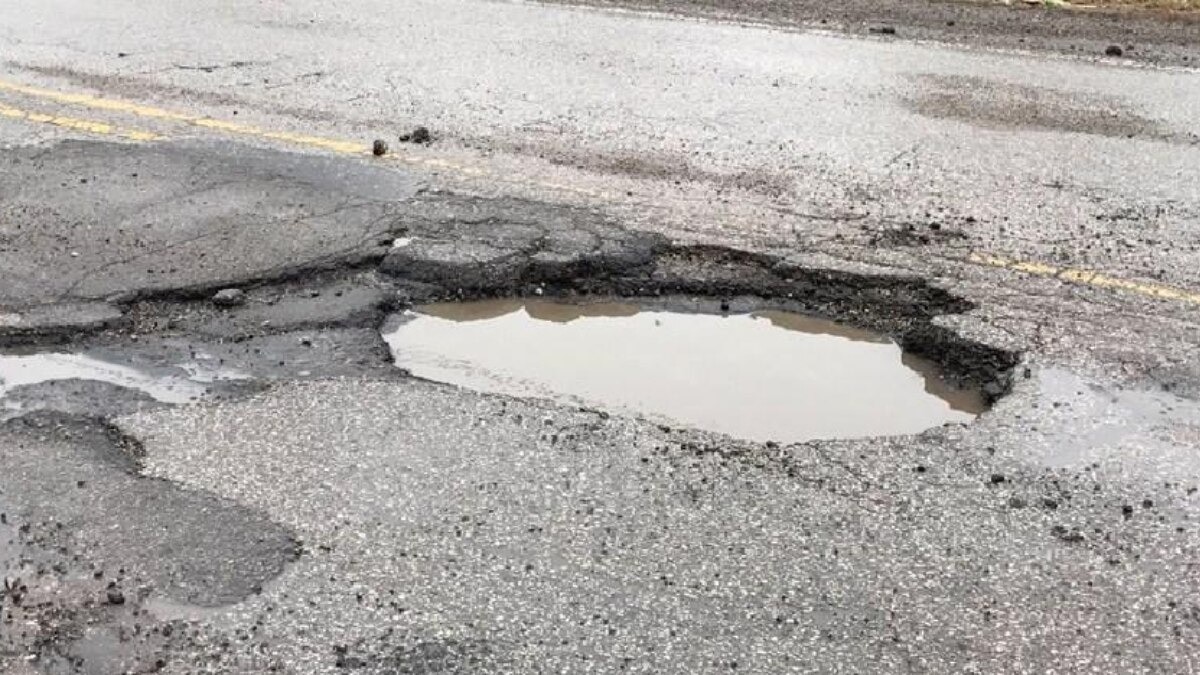
Andhra Pradesh is testing Danish fibre technology on a pothole-prone road in Nandyal. The fibre-reinforced roads are designed to resist cracks and ruts and could offer a new approach to India's pothole problem.Andhra Pradesh is testing Danish fibre technology to build more durable, pothole-resistant roads. Here is how fibre-reinforced asphalt works and why it could matter for India. (Photo- Representational)For years, potholes have been a familiar problem on Indian roads, especially after heavy rain and prolonged traffic. Now, Andhra Pradesh roads are being used to test a different approach: instead of repeatedly repairing cracks and potholes, can roads be strengthened before they develop?The state is testing Danish fibre technology on the Mudigedu-Sanjamala road in Nandyal district, a stretch that carries heavy freight traffic from the region's cement and granite industries. The pilot uses fibre-reinforced asphalt, a technology already used on infrastructure projects outside India.HOW DOES DANISH FIBRE TECHNOLOGY WORK?The technology comes from Danish Fibres A/S. Its Wiking asphalt fibres combine aramid and polyolefin, creating a web-like reinforcement inside the asphalt.The fibres are mixed into hot bitumen at less than 1 kg per tonne. Once distributed through the asphalt, they help spread tensile stress across the road rather than allowing it to concentrate at one point and develop into a crack. WHY IS ANDHRA PRADESH TESTING IT?The Mudigedu-Sanjamala stretch was chosen because it faces a tough combination of heavy freight traffic and monsoon conditions.The road lies in the Nallamala foothills and serves areas linked to cement and granite activity. Officials are treating it as a real-world test for whether fibre-reinforced roads can handle the pressure that conventional roads often struggle with. The pilot was inaugurated on July 4, 2025, by the Andhra Pradesh Roads and Buildings Department. Officials said the technology could be expanded across the state if the trial performs well through the monsoon.CAN IT ACTUALLY REDUCE POTHOLES?The technology is designed to reduce cracking and rutting rather than simply repair potholes after they appear.Tests cited by the manufacturer report a reduction of more than 50 per cent in rut depth. Andhra Pradesh officials expect the reinforced road to potentially last up to 50 per cent longer than a conventionally built road, which could also reduce repeated maintenance.But these are expectations and test results, not proof that every road in India will become pothole-free. The Nandyal trial will be important in establishing how the technology performs under Indian traffic and weather conditions.WHY THIS MATTERS FOR INDIAIndia has tried several approaches to its pothole problem, from plastic-modified roads to recycled-material solutions and technology that maps damaged roads.The Danish approach is different in one key way: prevention rather than repeated repair.If the Andhra Pradesh trial performs well, the data could help other states assess whether reinforcing asphalt from within is worth considering, particularly on roads facing heavy trucks, rain and repeated maintenance.For now, the Nandyal road is a test. But if the experiment survives the monsoon and heavy traffic, it could offer Indian road agencies another tool in the long-running fight against potholes.- EndsPublished By: vaishnavi parasharPublished On: Sep 15, 2026 12:27 IST
India's pothole problem gets a Danish fix. Here's how the technology works
Full Article
Original Source
Read the full article at Indiatoday →KhanList aggregates and links to publicly available news content. We do not host full articles from third-party sources. Always verify important information with original sources.