
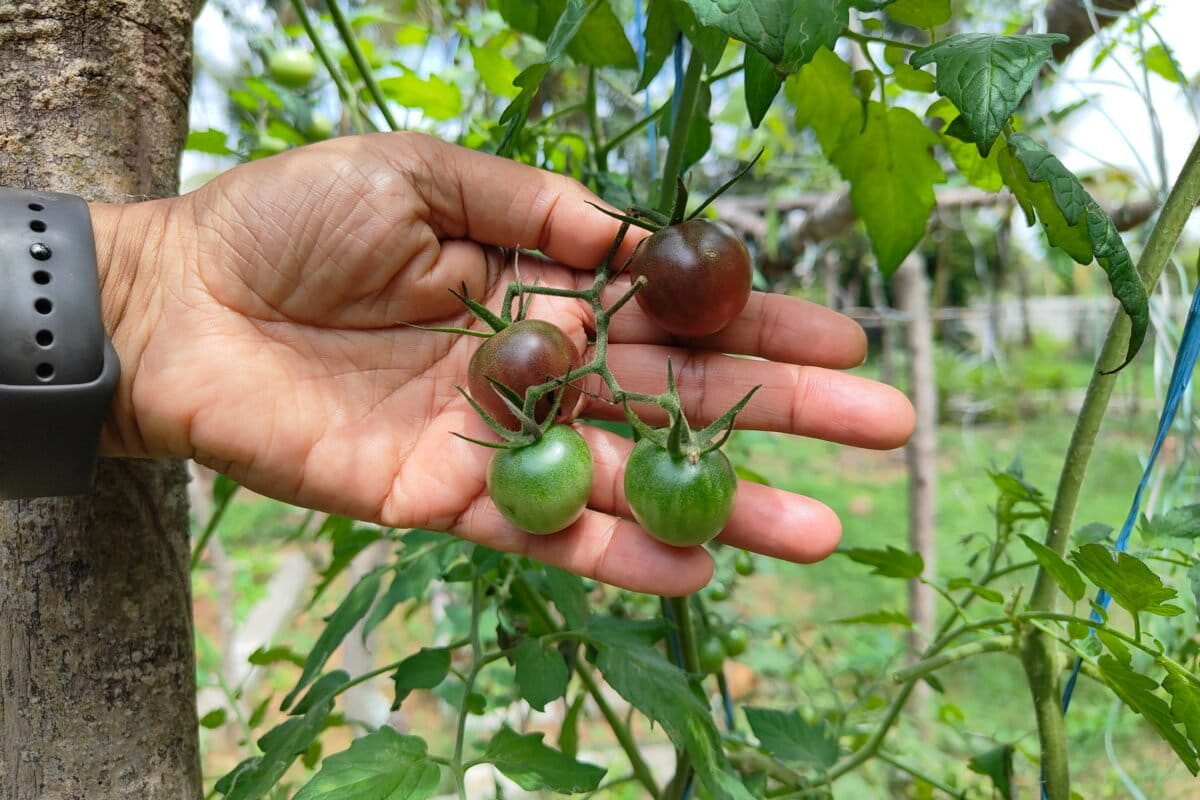
The world is eating a smaller variety of vegetables as diets become increasingly uniform, reports contributor Sharmila Vaidyanathan for Mongabay India. In India, Indigenous crops such as the clove bean and the Yerengere white long eggplant have largely vanished from commercial markets as hybrid varieties dominate supply chains. Prabhakar Rao, a natural farmer and founder of Hariyalee Seeds in Bengaluru, conserves hundreds of heirloom seed varieties to prevent their extinction. “People are all eating the same few vegetables, and the loss of vegetable biodiversity has not received a lot of attention,” Rao said. “Sadly, this loss is happening under the radar.” Recent research has confirmed this loss of vegetable diversity is global. In a paper published in PNAS in July, researchers compiled a list of 1,482 vegetable species in a new global data set, though they note the true number of local and wild varieties is substantially higher. Many wild vegetable varieties are threatened, they write: approximately 24% of the wild relatives of 79 major vegetable species are currently at risk of extinction. “A major consideration that prompted this article is that many of the vegetable species are not conserved in national and international gene banks,” said lead author Maarten van Zonneveld, head of the gene bank at the International Potato Center in Lima, Peru. “There are so many vegetables that need to be rescued before they completely disappear. And the end goal is not just conservation, but also ensuring that this diversity is utilised.” Some reasons for the eroding diversity are rapid land-use change, market homogenization, and shifting agricultural priorities. These in turn undermine efforts to build climate-resilient and nutritionally secure food systems, the researchers write. Commercial market dynamics also favor aesthetics, according to Elizabeth Yorke, a chef, food researcher, and co-founder of the food systems collective Edible Issues. “Bright red tomatoes, perfectly shaped onions and dark green leafy vegetables — we associate good quality and good flavor with a certain visual, and then one variety becomes the representative for the entire category,” Yorke said. It’s not just the decline in vegetable diversity; in India, consumers are also eating far fewer fruits and vegetables than what’s recommended by food security standards under the Food and Agriculture Organization and the World Bank. Grassroots groups and international organizations are spearheading targeted interventions. In India’s Meghalaya state, the North East Society for Agroecology Support (NESFAS) has integrated underutilized wild and regional vegetables into meal programs across 26 schools. Globally, institutions like the WorldVeg Genebank maintain more than 65,000 genetic samples, while the Crop Trust has identified key “opportunity crops” for climate adaptation. Building long-term agricultural resilience will require supporting smallholder growers and strengthening supply chains for non-standardized crops, according to Colin Khoury, global conservation lead at the Crop Trust. “It’s simply a matter of prioritizing vegetables.” Read the full story by Sharmila Vaidyanathan here. Banner image: Chocolate cherry tomato, an heirloom tomato variety at Prabhakar Rao’s farm. Image by Sharmila Vaidyanathan. Credits Topics
India’s forgotten vegetables offer a glimpse into what global diets are missing
Full Article
Original Source
Read the full article at News →KhanList aggregates and links to publicly available news content. We do not host full articles from third-party sources. Always verify important information with original sources.