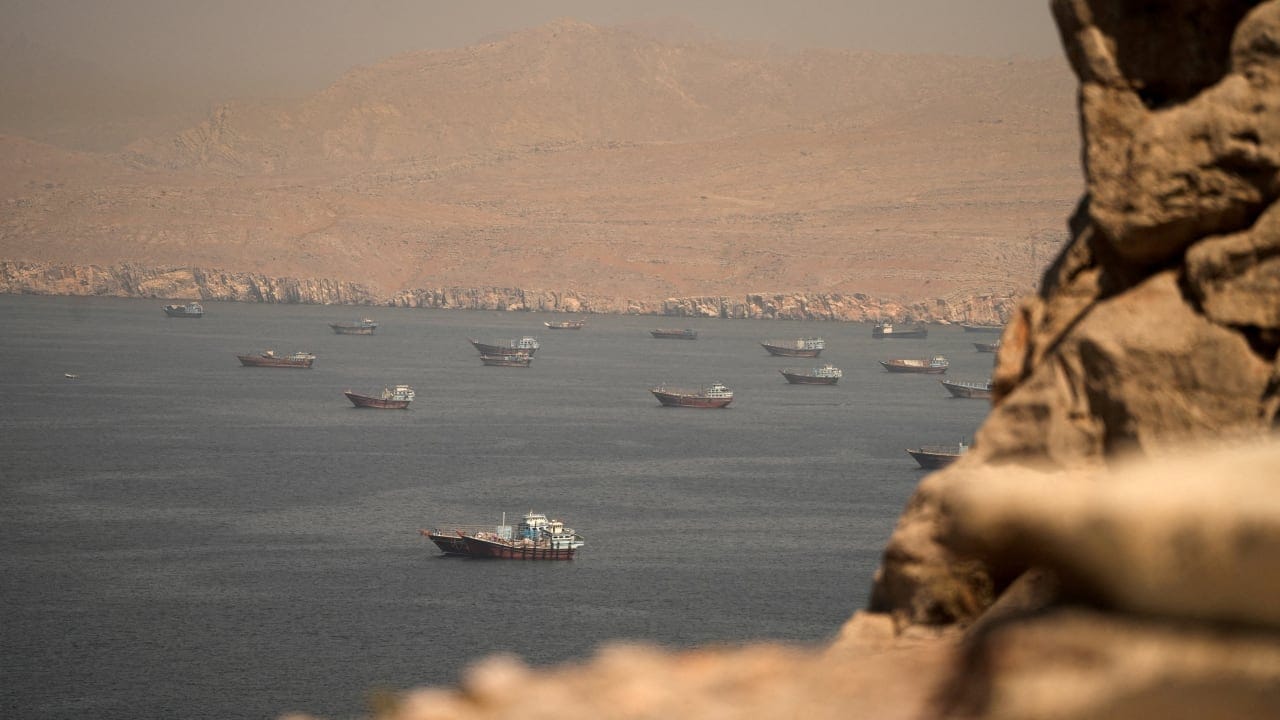
ByPAUSHALI LASSJULY 19, 2026 09:14Updated: JULY 19, 2026 10:01For decades, global security discussions have focused on who controls the world’s most important maritime chokepoints: the Strait of Hormuz, Bab el-Mandeb, and the Strait of Malacca. These narrow waterways connect the energy resources of the Middle East, the manufacturing centers of Asia, and the consumer markets of Europe and North America. Yet the deciding question of the coming decades may not be who controls these routes, but who can help keep them open.This is precisely where India’s role is becoming increasingly important.For Israel, the United States, and the EU, India is not simply a story of economic growth or a rising defense superpower. It is emerging as a strategic partner capable of strengthening the global maritime system at a time when trade routes, energy security, and geopolitical stability are under mounting pressure, particularly in the aftermath of the recent US-Israel-Iran war.A glance at the world map makes India’s greatest advantage immediately clear: its geography. Located at the center of the Indian Ocean, India sits between the energy-producing regions of the Middle East, the emerging economies of Africa, and the manufacturing powerhouses of East Asia. Its western coastline faces the maritime routes connecting the Persian Gulf and the Red Sea, while the Andaman and Nicobar Islands (belonging to India) provide strategic access to the Strait of Malacca, which is the gateway between the Indian Ocean and the Pacific.Few countries are positioned so naturally to influence the movement of global trade.Ships are seen anchored in front of a refinery on Singapore's Bukom Island, through the Malacca Strait, July 6, 2014 (credit: REUTERS/TIM WIMBORNE)This geography matters because the modern economy depends on maritime connectivity. A disruption in the Red Sea affects European shipping. Instability around the Gulf affects global energy prices. Threats in the Indian Ocean affect Asian supply chains. The attacks on commercial shipping in the Red Sea by the Houthis have demonstrated this reality. A conflict thousands of kilometers away can rapidly increase shipping costs, disrupt supply chains, and remind countries around the world of their vulnerabilities.Growing capabilitiesIndia is increasingly positioning itself as a country capable of addressing these challenges.Economically, India is already one of the most important energy markets in the world. It is the third-largest oil consumer globally, one of the largest LNG importers, and a major refining power. India currently has approximately 258 million metric tones per annum of refining capacity, with plans to expand this to around 310 million tones by 2030.The Gulf states depend on reliable energy markets, and India represents one of the largest and fastest-growing destinations for their exports. India–Gulf Cooperation Council trade reached approximately $178 billion in 2024-25, demonstrating the depth of economic interdependence between India and the Middle East.However, what is interesting to note is that India's importance extends beyond being an energy consumer, as it is also becoming a stabilizing force in the maritime domain.Since beginning sustained anti-piracy operations in the Gulf of Aden in 2008, the Indian Navy has helped secure international shipping routes, protecting thousands of merchant vessels and tens of thousands of seafarers. During the increase in maritime attacks in 2024, India deployed more than 30 naval ships, responded to numerous incidents, rescued hundreds of people regardless of nationality, and escorted commercial vessels carrying billions of dollars of cargo.Furthermore, India is upgrading military infrastructure in the Nicobar Islands to strengthen its position near the Strait of Malacca and counter China's Indian Ocean ambitions. These operations demonstrate an important reality: India is not simply benefiting from global trade. It is increasingly contributing to protecting it. For Israel, Europe, and the United States, this distinction matters.The future of security will not only depend on advanced weapons systems or military alliances. It will also depend on robust supply chains, secure energy routes, and the ability of trusted partners to maintain freedom of navigation. The ongoing US-Iran tensions in the Strait of Hormuz underscore this reality.India is uniquely positioned because it combines several strategic advantages, besides its geographic location. It has a large economy, an expanding navy, a growing industrial base, and relationships across multiple regions. It maintains strong ties with Gulf countries, deepening relations with Israel, a long-term partnership with the United States, and increasing engagement with Africa and Europe. While India's continued trade and diplomatic relations with Iran and Russia may not always align with the preferences of Western partners, this strategic autonomy can also be an asset. India's ability to maintain dialogue with competing powers gives it a degree of diplomatic flexibility that few other major economies possess.Few countries can operate across these different strategic spaces simultaneously.India-Israel cooperationThis is particularly significant for Israel.The relationship between India and Israel has evolved far beyond traditional defense cooperation. Israel has become an important technology partner for India, while India provides Israel with industrial scale and manufacturing capacity. The recent announcement that Rafael plans to manufacture Iron Dome interceptor systems in India reflects this evolution: a partnership moving from purchasing capabilities to jointly developing and producing strategic systems. This model reflects a broader shift in modern defense.The significance of this partnership extends beyond India and Israel. It illustrates a broader shift in modern defense, as innovation alone is no longer enough. Countries also require production capacity, robust supply chains, and the ability to scale technologies rapidly. The same logic applies to maritime security.A MIG-29K fighter jet sits on the flight deck of India’s aircraft carrier ‘INS Vikrant’ during the International Fleet Review 2026 off the coast of Visakhapatnam, India. (credit: ALEX WINSTON)Reducing global dependence on vulnerable chokepoints such as the Strait of Hormuz does not mean replacing existing routes overnight. It means creating greater resilience. Diversified energy supplies, stronger maritime partnerships, expanded infrastructure, and secure alternative corridors reduce the ability of instability to disrupt global commerce.As India expands its maritime partnerships across the Indian Ocean, the Horn of Africa deserves greater strategic attention. At its center lies the Bab el-Mandeb Strait, one of the world's most important maritime chokepoints, linking the Indian Ocean to the Red Sea and the Mediterranean. Yet it is already under pressure from the Islamic regime's regional proxies. Dr. Habtom Ghebrezghiabher, an expert on Horn of Africa and Red Sea security and a member of the Eritrean diaspora, warns that the regime's proxies would be willing to disrupt shipping through the Bab el-Mandeb Strait and parts of the Indian Ocean.The Horn of Africa could become an important arena for cooperation between India, Israel, and like-minded partners. I recently had the opportunity to meet some members of the Eritrean diaspora in Jerusalem, including Dr. Ghebrezghiabher, who envision an Eritrea more closely integrated into the global economy and working with India, Israel, and European partners to strengthen maritime security and regional connectivity. Such a partnership would enhance the security of the Bab el-Mandeb Strait and help safeguard the maritime routes on which all three regions depend.A more diversified maritime and energy network would also reduce the strategic leverage created by dependence on the Strait of Hormuz, currently a huge point of contention with the world's attention on it. When alternatives exist, the ability of Iran or any other single power to threaten global commerce becomes more limited, ensuring that global trade routes remain resilient regardless of political tensions.Securing the maritime corridor stretching from the Indo-Pacific through the Indian Ocean and Red Sea toward Israel and Europe will be essential for the next phase of global economic connectivity. India, given its strategic position at the center of this network, will play a critical role in safeguarding these routes. A more secure corridor would link Indian manufacturing, Gulf energy, Israeli technology, European markets, and African development opportunities.The twenty-first century will be shaped by those who can protect connectivity.For Israel, the United States, and their partners, recognizing India’s maritime importance is not simply about supporting another rising power. It is about investing in a more secure, diversified, and resilient global order.India’s maritime moment is not only about India. It is about the future of a world in which the oceans remain open, secure, and resilient against coercion and conflict.Follow us on Google
India’s expanding maritime power is becoming indispensable to Israel and the West - opinion
Full Article
📰 Original Source
Read full article at Jpost →KhanList aggregates and links to publicly available news content. We do not host full articles from third-party sources. Always verify important information with original sources.