
Governments across the world are expanding policy support for bioeconomy development, with India offering the clearest example of how demand and supply can grow together, the World Economic Forum (WEF) said on Tuesday.In its Bioeconomy Policy Index report, prepared in collaboration with Capgemini Invent, the WEF said India's policy approach places strong emphasis on enabling conditions, research and development (R&D), and institutional capacity. It pointed to the country's Ethanol Blended Petrol Programme as an example of how government support for production can be matched with measures to create demand.The report analysed 935 bioeconomy policy instruments across seven geographies: India, China, Japan, the United Kingdom, Germany, the United States and Brazil. It called on governments to design policy portfolios that create demand, address specific barriers to commercialisation and build in ways to measure results from the outset.It also recommended common reporting standards to make outcomes comparable across policy instruments, sectors and countries. INDIA'S POLICY PORTFOLIO HAS STRONG FOCUS ON ENABLING CONDITIONSIndia has a rapidly expanding bioeconomy supported by targeted national initiatives, including the Biotechnology for Economy, Environment and Employment (BioE3) Policy, the report said."India has the most cross-cutting portfolio, with 48 per cent of policy instruments supporting enabling conditions such as research and development (R&D), tax incentives and institutional capacity rather than individual sectors," it added. The report found that India also has the highest combined share of three types of policy instruments — financial incentives, infrastructure and capability development, and regulatory and legal measures — at around 76 per cent. The UK followed at 69 per cent and Brazil at 68 per cent, while the US was close behind at 67 per cent.This points to India's reliance on policy support that builds the conditions for bioeconomy activity, rather than instruments focused only on individual sectors.However, the report also highlighted a wider challenge: demonstrating whether these policies are delivering measurable outcomes. Of the 935 instruments assessed across the seven geographies, only 128 had qualifying outcome evidence after the WEF's review.India had seven such instruments out of 86 assessed, or around 8 per cent. The report's measure reflects the availability of publicly documented, instrument-specific evidence of results; it should not be read as a measure of whether India's policies have succeeded or failed.ETHANOL PROGRAMME SHOWS HOW DEMAND AND SUPPLY CAN GROW TOGETHERThe WEF identified India's Ethanol Blended Petrol Programme as the clearest example of demand and supply expanding together.The programme was supported by concessional finance for new distillery capacity through the Ethanol Interest Subvention Scheme. This meant that production capacity expanded alongside mandated demand for ethanol blending."Production expanded alongside mandated demand, supporting 20 per cent ethanol blending five years ahead of the original 2030 target," the report said.The Ministry of Petroleum and Natural Gas has reported cumulative emissions savings of 95.2 million tonnes of carbon dioxide from the programme. However, the WEF noted that this figure has not been independently evaluated.The example illustrates how demand-side measures, such as blending mandates, can work alongside supply-side support, including financing for production capacity.WEF CALLS FOR POLICIES THAT CREATE DEMAND AND MEASURE RESULTSThe report said governments need to go beyond supporting research, infrastructure and production if they want bio-based products and technologies to reach commercial markets.It called for policy portfolios that create bankable demand through measures such as procurement commitments, offtake guarantees and mechanisms that provide greater revenue certainty to producers.It also recommended that governments tailor policy instruments to the specific commercialisation challenges faced by industrial, pharmaceutical and agricultural biotechnology.Another priority, according to the WEF, is to design policies so that their outcomes can be evaluated from the beginning. This would require clear targets, baselines and ways to verify results.The report said common reporting standards would help governments compare the impact of policy support across sectors and countries, including on emissions reductions, jobs, private investment, company formation, commercialisation and market uptake.The broader message is that policy support for the bioeconomy needs to translate into measurable outcomes and viable markets. India's ethanol programme offers an example of how coordinated demand and supply measures can help move that process forward.- Ends
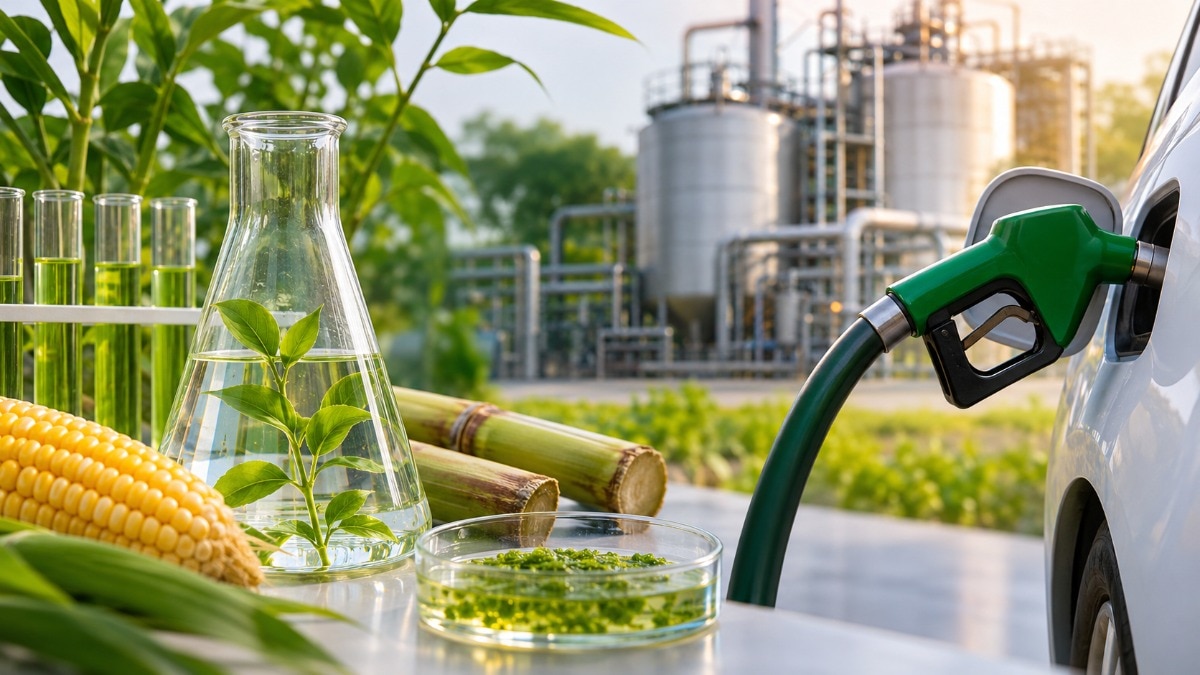
India's ethanol push offers bioeconomy policy model, says World Economic Forum
Full Article
Original Source
Read the full article at Indiatoday →KhanList aggregates and links to publicly available news content. We do not host full articles from third-party sources. Always verify important information with original sources.