
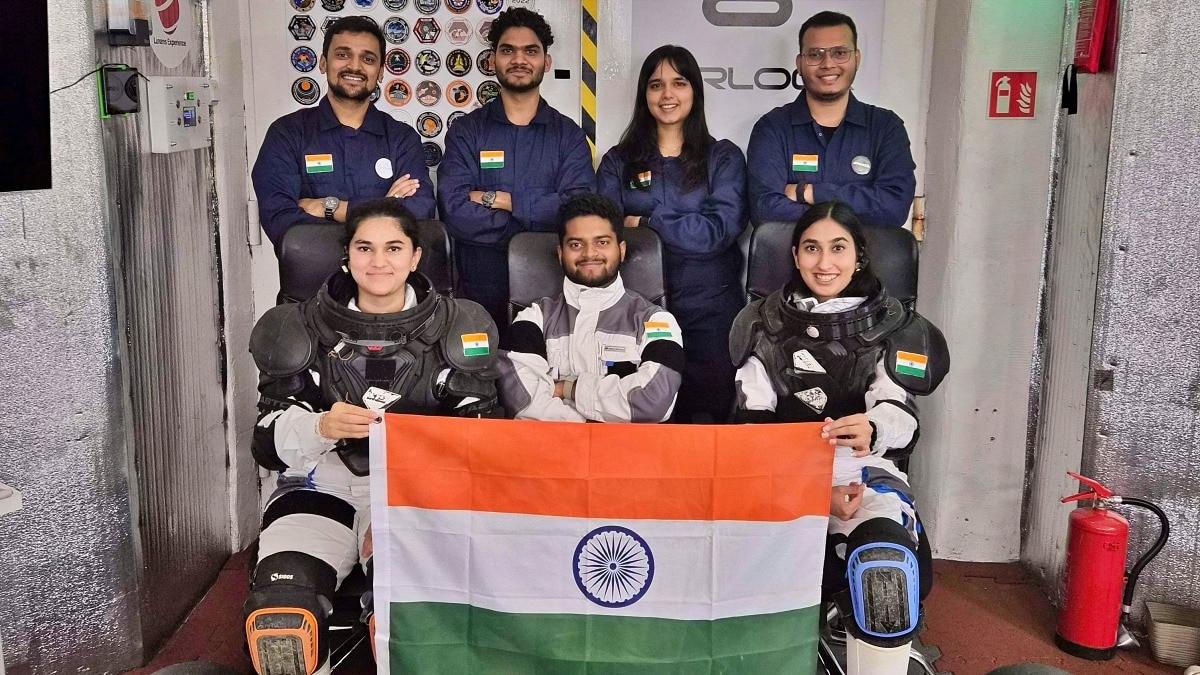
Vyomsetu completed a 27-day analogue astronaut campaign in Poland with an all-Indian crew. The mission examined how isolation, habitat design and team behaviour could shape future human spaceflight.The crew of the Vyomsetu analog mission in Poland. (Photo: Arkasa)An Indian space architecture company has completed more than 21 days of isolated habitat operations as part of an ambitious analog astronaut campaign designed to simulate the physical, psychological and operational challenges of living beyond Earth.The mission, called Vyomsetu, or “Bridge to Space,” brought together an all-Indian multidisciplinary crew for a 27-day campaign in Poland.The programme included an 18-day mission at the internationally recognised LunAres Research Station, followed by a nine-day phase at the Analog Astronaut Training Center, or AATC. Analog astronaut missions recreate many of the operational challenges of spaceflight. (Photo: Arkasa) Together, the campaign subjects the crew to more than 21 days of isolated habitat operations designed to recreate conditions astronauts could face during future lunar and deep-space missions. Vyomsetu was organised by Arkasa, an Indian space architecture company working on human-centred space exploration, with Surat-based aerospace deep-tech company Syslunar Technologies serving as its Scientific and Technical Partner.The crew, drawn from fields including biotechnology, aerospace engineering, space architecture and other scientific and engineering disciplines, lived and worked in isolation while following mission protocols similar to those expected during future space expeditions. The mission was designed to examine one of the biggest unanswered questions surrounding long-duration human spaceflight: how do people adapt when they are confined, isolated and required to function as a tightly interdependent team? These missions enable researchers to better understand how humans perform under conditions that closely resemble those expected during future deep-space expeditions. (Photo: Arkasa) During the campaign, researchers studied human performance under prolonged isolation, crew psychology, resilience, behavioural adaptation, team coordination and decision-making.The mission also focused on habitat operations, resource management, scientific experiments, technology validation and engineering investigations relevant to future human spaceflight.The research extended beyond simply testing whether people can survive in a confined environment. Studies conducted during the mission examined how the design of a habitat itself can influence cognitive and psychological well-being.One research project investigated how geometry, materials, acoustics and spatial configuration affect the crew's psychological and physiological responses. Another explored how sound and sensory inputs can influence mood, stress, focus and social interaction inside confined habitats. Vyomsetu reflects the growing maturity of India’s private space ecosystem. (Photo: Arkasa) Other experiments looked at crew dynamics, AI-assisted decision-making and even whether caring for plants such as microgreens can influence mood, stress, fatigue and overall psychological well-being during isolation.With India preparing for its next phase of human spaceflight through programmes such as Gaganyaan and future plans for a space station and lunar exploration, Vyomsetu was aimed at building experience in the less visible but equally critical aspects of sending humans into space.The mission shows that preparing for life beyond Earth is not just about rockets and spacecraft. It is also about understanding the human mind, behaviour and the environments astronauts will one day call home.- EndsPublished By: Sibu Kumar TripathiPublished On: Sep 1, 2026 13:26 IST
Indian startup completes 27-day analog mission simulating life in space
Full Article
Original Source
Read the full article at Indiatoday →KhanList aggregates and links to publicly available news content. We do not host full articles from third-party sources. Always verify important information with original sources.