
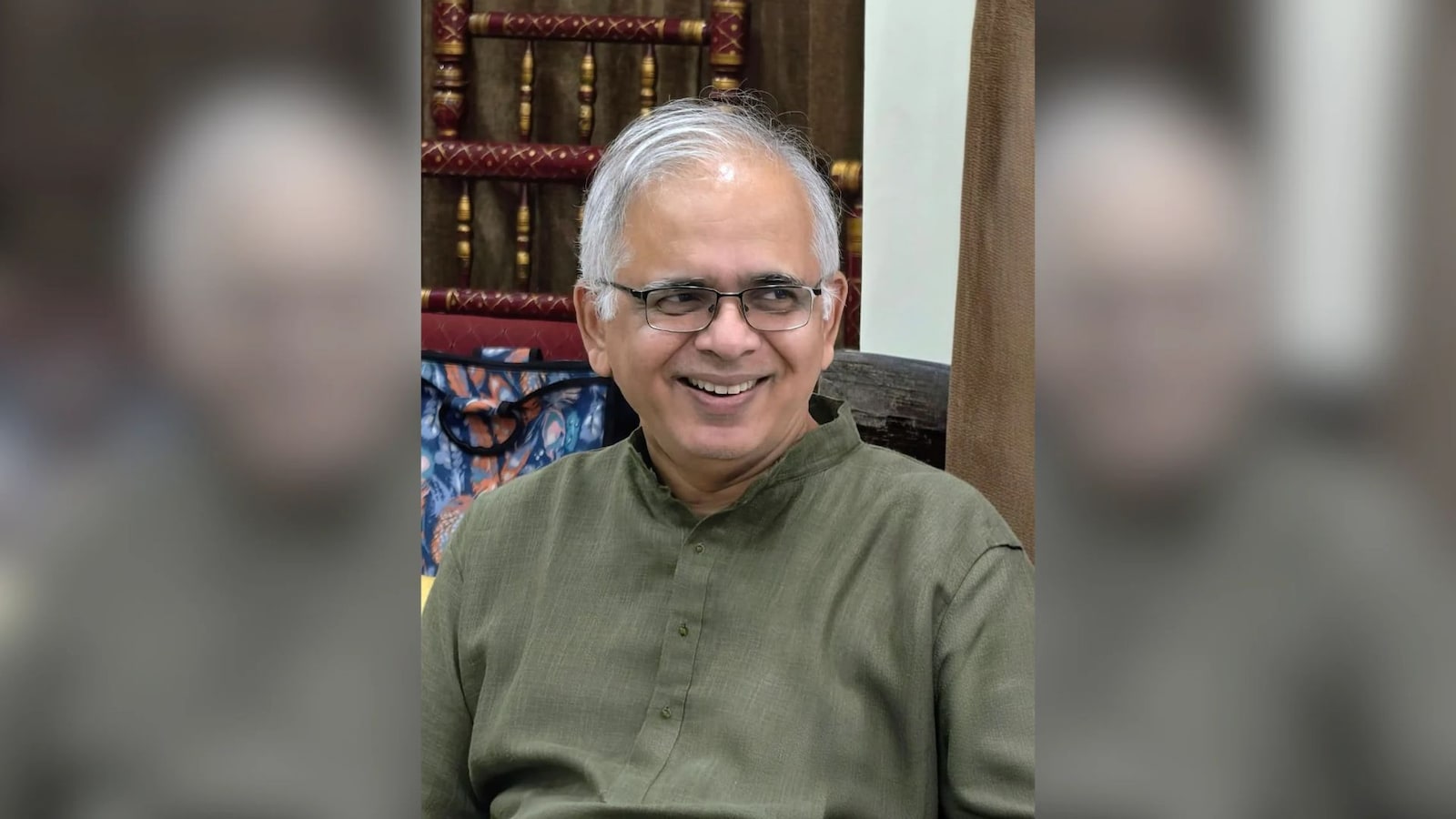
Prominent Indian biologist Shekhar Mande will help steer the world towards sustainable development, even as India aspires to become a developed nation by 2047.One of the country's most recognised scientists, Mande, has been chosen by the United Nations Secretary-General to join an elite global group that will help guide the world's efforts to achieve the Sustainable Development Goals (SDGs), the ambitious international agenda aimed at improving human wellbeing while protecting the planet by 2030.The appointment places the distinguished Indian biologist among just 10 eminent experts selected from around the world to serve on the United Nations Group of Ten High-level Representatives of Civil Society, Private Sector and Scientific Community to Promote Science, Technology and Innovation for the SDGs, commonly known as the 10 Member Group. The committee is one of the most influential scientific advisory bodies within the UN system and is tasked with identifying how science, technology and innovation can help address some of humanity's biggest challenges.Mande brings a 'Vasudhaiva Kutumbakam' or 'the world is one family' philosophy to the elite S&T UN body. Speaking to NDTV, Mande said "in many ancient and long-standing civilisations, living in harmony with nature was deeply ingrained in the culture and way of life. Sustainability was not merely an aspiration or a policy objective; it was an intrinsic part of everyday living. Many of these traditional practices were rooted in a deep understanding of the natural world and reflected principles of sustainability that remain relevant even today. The science, technology and innovation underlying these practices can be revisited, adapted and integrated with modern knowledge to help us build a more sustainable and resilient future. India, representing approximately 1/6th of the world's population, can bring views such as this on the global platform."The timing of the appointment is significant. The world is entering the final years of the 2030 Agenda for Sustainable Development, and the United Nations is preparing for the 2027 SDG Summit amid growing concern that many of the goals are not progressing fast enough. Climate change, food security, public health challenges, access to clean water, inequality and sustainable economic growth remain pressing global concerns. Against this backdrop, scientific advice is increasingly being viewed as central to accelerating progress.The newly appointed 10-member panel reflects a deliberately global composition. Besides India, the group includes representatives from Ghana, Italy, Sweden, Brazil, Russia, Japan, China, the Maldives and Canada. The co-chairs are Marian Dorcas Quain of Ghana, a biotechnology scientist, and Giorgio Rossi of Italy, an internationally respected physicist and leader in nanoscience research.Together, these experts bring expertise ranging from biotechnology, medicine, economics, and physics to digital technologies, higher education, social sciences and innovation policy. The committee is expected to advise the United Nations on emerging technologies, artificial intelligence, biotechnology, quantum technologies, digital transformation, capacity building, technology partnerships and science-based policy interventions. The group will also help shape recommendations for the UN Science, Technology and Innovation Forum.For India, Mande's selection represents an international recognition of the country's growing scientific stature and its increasing role in shaping global development discussions. India is today the world's most populous country and has set itself the ambitious national target of becoming a developed nation by 2047, the centenary of Independence. Achieving that vision will require rapid advances in science, research, innovation, public health, clean energy, agriculture, water management and digital infrastructure, all areas that align closely with the Sustainable Development Goals.The SDGs themselves comprise 17 broad goals adopted by all United Nations member states in 2015. They range from ending poverty and hunger to ensuring quality education, gender equality, good health, clean water, affordable energy, climate action and sustainable cities. The goals are intended to create a more equitable and environmentally sustainable world by 2030.However, progress globally has been uneven. Successive UN assessments have shown that many SDG targets are off track following the COVID-19 pandemic, geopolitical conflicts, economic disruptions and the growing impacts of climate change. While important gains have been made in access to healthcare, renewable energy deployment and digital connectivity, significant challenges remain in reducing poverty, addressing food insecurity, limiting global warming and achieving social inclusion. This is one of the reasons why the UN is placing increasing emphasis on science and innovation as tools for accelerating progress.India's own SDG performance has shown notable improvement over the past decade. Major national initiatives focused on sanitation, digital payments, renewable energy, financial inclusion, drinking water access and rural electrification have contributed to advances across several SDG indicators. Yet substantial challenges remain owing to India's size and diversity. Issues such as nutrition, healthcare access, quality education, urban sustainability, climate resilience and water security continue to require sustained policy attention. India's broader 'Viksit Bharat' 2047 vision is closely linked to continued progress on many of these SDG indicators.The appointment also brings renewed attention to Mande's distinguished career. A structural and computational biologist, he currently serves as president of the Indian National Science Academy (INSA), India's premier scientific academy, while also holding academic positions at Savitribai Phule University, Pune and the National Centre for Cell Science, Pune.His scientific research has focused on molecular biophysics, protein structure, computational biology and infectious diseases, particularly tuberculosis. After earning his doctorate from the Indian Institute of Science in Bengaluru, he pursued advanced research in the Netherlands and the United States before returning to India.Beyond research, he emerged as one of India's most influential science administrators. He served as Director of the National Centre for Cell Science before becoming Director General of the Council of Scientific and Industrial Research (CSIR) and Secretary of the Department of Scientific and Industrial Research (DSIR). In those roles, he oversaw one of the world's largest publicly funded scientific research systems and played a leading role in India's science and technology response during the COVID-19 pandemic. He also championed initiatives spanning nutrition, groundwater management, and health research and gender inclusion in science.Mande also serves as the national president of Vijnana Bharati, the science movement associated with the Rashtriya Swayamsevak Sangh (RSS) ecosystem, which promotes scientific awareness and indigenous scientific capabilities in India.His appointment to the UN's high-powered advisory body comes at a moment when science, technology and innovation are increasingly seen as the keys to addressing global development challenges. As the world works to rescue the 2030 Sustainable Development Goals and as India pursues its own journey towards becoming a developed nation by 2047, an Indian scientist will now be among a select group helping shape the international agenda for a more sustainable future.
Indian Scientist Shekhar Mande Joins Elite UN Panel On Sustainable Development
Full Article
Original Source
Read the full article at Ndtv →KhanList aggregates and links to publicly available news content. We do not host full articles from third-party sources. Always verify important information with original sources.