
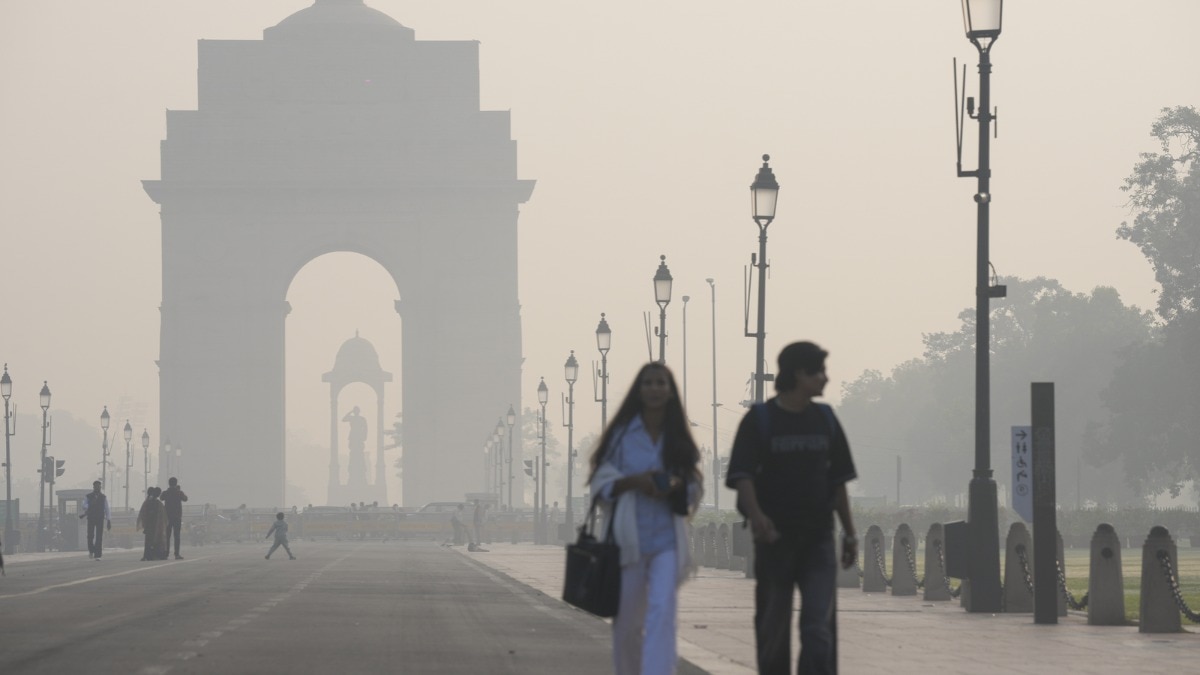
A CREA review found adverse health associations in 169 of 184 Indian air pollution studies. The evidence spans multiple organ systems and highlights rural research and monitoring gaps.A CREA review found adverse health associations in 169 of 184 Indian air pollution studiesNew Delhi,Nov 16, 2026 14:15 ISTAir pollution in India may be affecting far more than just the lungs. A new review of five decades of Indian research has highlighted associations between exposure to polluted air and several health complications, including cardiovascular diseases, diabetes, pregnancy-related complications and mental health disorders.A review by the Centre for Research on Energy and Clean Air (CREA), released on November 13, 2026, found that 169 out of 184 epidemiological studies conducted in India reported at least one adverse health association with air pollution exposure. This accounts for 91.8 per cent of the studies reviewed.Titled 'Air Pollution and Health in India: A Review of Epidemiological Evidence', the report examined peer-reviewed studies published between 1975 and 2025. It followed the Preferred Reporting Items for Systematic Reviews and Meta-Analyses (PRISMA) 2020 guidelines to assess the available evidence from Indian populations.The findings highlight how prolonged exposure to polluted air is associated with health risks extending beyond respiratory illnesses. AIR POLLUTION IS NOT JUST A RESPIRATORY HEALTH PROBLEMRespiratory diseases were the most frequently investigated health outcome, featuring in 86 of the 184 studies reviewed by CREA.However, the research also examined several other health conditions, including cardiovascular diseases, diabetes, metabolic disorders, pregnancy complications, low birth weight, impaired child growth, blood disorders, neurocognitive conditions, mental health disorders, sleep disorders, eye diseases and chronic kidney and bone diseases. Sixteen studies examined mortality, while 11 investigated cardiovascular diseases.These findings highlight the wider health implications of air pollution and the importance of understanding its potential effects on different organs and body systems.HOW AIR POLLUTION CAN AFFECT THE HEART AND METABOLIC HEALTHFine particulate matter, particularly PM2.5, is a major concern because these tiny particles can penetrate deep into the respiratory system.Exposure to air pollution can trigger inflammation and oxidative stress in the body. These processes are being investigated for their role in cardiovascular and metabolic complications.In the cardiovascular system, pollution exposure has been associated with an increased risk of heart-related problems. Inflammation and damage to blood vessels may contribute to conditions affecting heart health.Research has also examined the relationship between air pollution and type 2 diabetes. Potential mechanisms include systemic inflammation, oxidative stress and insulin resistance, which can affect the body's ability to regulate blood glucose.However, the CREA review brings together epidemiological evidence and does not establish that air pollution directly caused every health condition examined in these studies.GOVERNMENT-FUNDED STUDIES ALSO REPORT HEALTH RISKSAn important finding of the CREA review is that adverse health associations were also reported in studies supported by government institutions.Of the 46 government-funded studies included in the review, 44 reported increased health risks associated with air pollution exposure.Similarly, 77 out of 81 studies with government institutional affiliations reported adverse health associations.The institutions involved included the Ministry of Environment, Forest and Climate Change, Ministry of Health and Family Welfare, Indian Council of Medical Research (ICMR), Central Pollution Control Board (CPCB), All India Institute of Medical Sciences (AIIMS), Department of Science and Technology and Council of Scientific and Industrial Research (CSIR).This adds to the body of evidence generated by Indian researchers and institutions examining the health consequences of air pollution.AIR POLLUTION IS ALSO A CONCERN IN RURAL INDIAThe health burden of air pollution is not restricted to metropolitan cities.Of the 40 studies that examined rural populations, 38 reported at least one adverse health association with air pollution exposure.The review also highlighted significant geographical gaps in research.Delhi accounted for the highest number of studies, with 26, followed by Punjab with 13. Maharashtra and Uttar Pradesh had 11 studies each, while West Bengal accounted for 10.The findings underline the need to expand air quality monitoring and health research beyond major urban centres.CREA CALLS FOR STRONGER AIR POLLUTION CONTROL MEASURESThe review points to the need for a broader approach to tackling air pollution in India.It recommends updating India's National Ambient Air Quality Standards (NAAQS), which were last revised in 2009, to reflect current scientific evidence and public health considerations.It also calls for stronger and enforceable emission standards for major pollution sources, including industries and thermal power plants.Another important recommendation is to expand air quality monitoring and reduce indoor pollution by accelerating the transition away from solid fuels such as biomass, coal and dung for household cooking and heating.The report also emphasises the importance of addressing multiple pollutants rather than focusing on particulate matter alone.The larger message from the five-decade review is that air pollution is not merely an environmental problem. Its potential health consequences extend across multiple organs and systems, making exposure reduction an important public health priority.- Ends
Indian research links air pollution to heart disease, diabetes and more
Full Article
Original Source
Read the full article at Indiatoday →KhanList aggregates and links to publicly available news content. We do not host full articles from third-party sources. Always verify important information with original sources.