
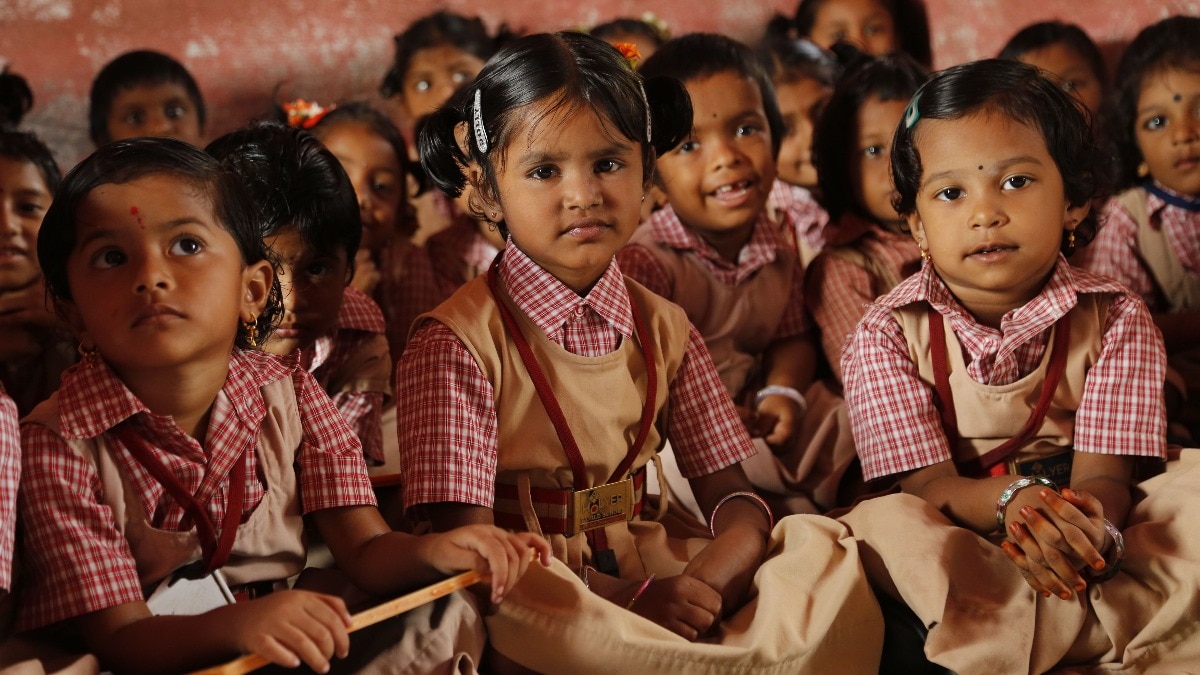
India's primary-school-age population is set to shrink by a fifth over the next decade, changing the demand for schools across the country. A new EAC-PM paper points to falling fertility, shifting enrolment patterns and a school network that will need to adapt. The shift will reshape demand, enrolment patterns and school resource planning.India's primary-school-age population is set to shrink by a fifth over the next decade, changing the demand for schools across the country.New Delhi,Nov 7, 2026 16:05 ISTIndia could have around 2.5 crore fewer children entering primary-school age by 2036, a demographic shift that may change how the country plans and manages its schools.The population of children aged five to nine is projected to fall from 12.53 crore in 2011 to 10.02 crore in 2036, a decline of nearly 20%, according to a new working paper by the Economic Advisory Council to the Prime Minister (EAC-PM).The paper, titled How India is Transforming Educational Capacity under the New Education Policy 2020, says the shrinking population of young children is among the major changes that India's education system must prepare for.The projections show that this age group is expected to decline to 11.27 crore in 2026, around 10% lower than its 2011 level. It is then projected to fall by another 11% over the following decade. The estimates are based on population projections prepared by the National Commission on Population using Census 2011 as the base year.The working paper is authored by Soumya Kanti Ghosh, member of the EAC-PM and Group Chief Economic Adviser at the State Bank of India, and economist Shashidharan Sharma.FEWER CHILDREN, A BIGGER PLANNING CHALLENGEThe changing numbers are linked to India's declining fertility rate.The country's total fertility rate fell from 2.1 in 2019 to 1.9 in 2024, according to data from the Office of the Registrar General and Census Commissioner cited in the paper.A fertility rate of 2.1 is generally considered the replacement level, or the rate at which a population replaces itself over generations, in the absence of migration.The decline means fewer children are entering the school-going population, with direct implications for the demand for foundational and primary education.YearPopulation aged 5–9 years201112.53 crore2026 (projected)11.27 crore2036 (projected)10.02 croreThe authors describe this as the first clear demographic evidence of a shrinking pool of children entering primary-school age.However, fewer children nationally do not automatically mean that every school or region will see fewer admissions. Where families live and where schools are located are becoming equally important factors in education planning.THE SCHOOL MAP IS CHANGING TOOThe shift is already visible in enrolment patterns across rural and urban schools.Between 2012-13 and 2021-22, enrolment across Classes one to 12 in rural-located schools declined by around 78 lakh, falling to 17.93 crore.Urban-located schools, meanwhile, added approximately 93 lakh students, taking their enrolment to 7.64 crore. Their share of total school enrolment increased from 26.4% to 29.9% during the same period.Indicator2012-132021-22Rural school enrolment18.71 crore17.93 croreUrban school enrolment6.72 crore7.64 croreUrban share of total enrolment26.4%29.9%State-level figures also show that the shift is not uniform. In Uttar Pradesh, for instance, overall enrolment remained almost unchanged, but rural enrolment declined by 19.46 lakh while urban enrolment increased by 17.6 lakh.PRIMARY-ONLY SCHOOLS TAKE A BIGGER HITThe changing demand is also reflected in India's school network.Between 2018-19 and 2025-26, the total number of reported schools declined by 5.4%, from 15.51 lakh to 14.67 lakh.The reduction was sharper among primary-only schools, which offer Classes 1 to 5. Their number fell by 12.6%, from 8.27 lakh to 7.22 lakh.In contrast, the number of schools offering education up to Class 12 increased by 29.7%, from 1.30 lakh to 1.69 lakh.Type of school2018-192025-26ChangeAll reported schools15.51 lakh14.67 lakh-5.4%Primary-only schools8.27 lakh7.22 lakh-12.6%Schools offering Class 121.30 lakh1.69 lakh+29.7%The authors point to declining primary-age populations and the operational difficulties faced by very small schools as factors behind these changes.However, they caution against treating the fall in reported school numbers as a direct count of closures. Schools may move out of the primary-only category after adding higher classes, while mergers, changes in management and corrections to records can also affect the count.CLOSING SCHOOLS IS NOT THE ONLY ANSWERThe paper argues that India needs to rethink how it distributes educational resources instead of simply reducing the number of schools in response to fewer children.The National Education Policy (NEP) 2020 proposes school complexes and clusters, allowing neighbouring schools to share teachers, infrastructure, leadership and other resources.This could help smaller schools access specialist teachers, laboratories, libraries and other facilities without necessarily shutting down teaching at individual locations.The authors stress that school reorganisation must take into account local demand, accessibility, travel distances and the ability of nearby institutions to accommodate additional students.A school serving a remote village, for instance, cannot be treated in the same way as one located in an urban area with several alternatives nearby.The larger message is that India's education challenge is changing. The focus is no longer only on building more schools and increasing enrolment. It is also about ensuring that schools are in the right places, have adequate resources and can respond to the changing number and location of children.- Ends
India to see 20% fewer primary children by 2036. Does it need fewer schools too?
Full Article
Original Source
Read the full article at Indiatoday →KhanList aggregates and links to publicly available news content. We do not host full articles from third-party sources. Always verify important information with original sources.