
South Korea has set the standard in international archery for decades. Its dominance, particularly in recurve, has been built on a system that continues to produce world-class athletes. India has had its moments against the Koreans, but building a team capable of challenging them regularly has been a different proposition altogether.Rahul Banerjee knows what that challenge looks like. A former Indian archer who competed at the Olympic and Commonwealth Games, Banerjee has experienced the demands of competing at the highest level. Now a coach, he is working with a generation of archers whose preparation looks very different from his own.In an exclusive interview with IndiaToday.in, Banerjee spoke about the changes in Indian archery, the growing confidence within the team and what it will take to turn that progress into an Olympic medal.Sports science, specialised strength and conditioning, video analysis and sports psychology have become part of the preparation. The Archery Premier League is also giving younger athletes opportunities to learn alongside established international names. But the biggest shift, Banerjee believes, is in the way India now approaches its strongest opponents. The gap with South Korea has not disappeared. Yet India's recent performances have given the team reason to believe it belongs among the contenders.His assessment is clear. “We are not underdogs anymore.”BREAKING THE BARRIERThere is a reason Banerjee is confident about India's standing. The 2026 Asian Games in Aichi-Nagoya offered perhaps the clearest evidence yet, particularly in women's recurve.Ankita Bhakat, Kirti and Kumkum Mohod defeated South Korea 5-3 in the women's team final to win India's first-ever Asian Games gold in the event. The victory also ended a remarkable Korean run. South Korea had won every women's recurve team title at the Asian Games since 1998.Kumkum went a step further the following day. The 17-year-old beat South Korea's Oh Yejin in a shoot-off to win the individual recurve gold, becoming the first Indian archer to claim that title at the Asian Games. She had also beaten Korean world champion Kang Chaeyoung in the quarter-finals.History made in Archery! Heartiest congratulations to Ankita Bhakat, Kumkum Anil Mohod & Kirti on winning India’s first-ever Gold Medal in the Recurve Women’s Team event at the #AsianGames2026. The first Asian Games Gold for India’s women’s recurve team, a landmark moment for these three archers & Indian Archery! A proud moment for the nation. Well done, Champions! #Cheer4Bharat— Kiren Rijiju (@KirenRijiju) October 2, 2026The men's recurve team, however, lost 5-1 to South Korea in the final. The result was a reminder that India has not closed the gap across every event. Korea remains a formidable opponent, backed by a system that produces technically accomplished archers across generations.Banerjee believes the younger Indian archers are beginning to approach these contests differently. He recalled speaking to Kumkum about her mindset during the Asian Games. Her response stayed with him.“Humne kuch socha hi nahi, main toh gaya aur chalaya (I did not think about anything, I just went and shot),” he recalled her saying.She had not allowed the occasion or the reputation of her opponent to dominate her thinking. She went out and focused on shooting.“Pressure is for everyone,” Banerjee said. Producing a 10 in a decisive moment, he explained, comes down to practice and knowing when to execute the shot.The future of Indian archery looks exciting! First Kumkum Mohod, then Gatha Khadake, and now 17-year-old Yuktha Sri Kondapavuluri delivering a stunning Hit-or-Miss Shootoff shot! https://t.co/bkkf9KBlL8— Sports Apna (@sportsapna1) October 16, 2026He is careful not to mistake a few landmark victories for a complete shift in the sport's hierarchy. South Korea's advantage comes from the depth of its programme. Its archers move through a structured pathway that begins in schools and continues through universities and corporate teams. Making the national team is an achievement in itself.The coach sees a similar level of competition emerging in India's compound programme. He estimates that around 60 Indian compound archers can shoot 700 out of 720, creating intense competition for places in the national squad. Recurve still needs to develop that kind of depth, among both men and women.“That thing we need to bring into Indian recurve,” he said. “We have to have more athletes with better technique.”India has beaten South Korea on major occasions. Banerjee's ambition, however, goes beyond producing another upset. He wants enough Indian archers capable of challenging the Koreans consistently, rather than depending on a small group of leading performers.THE SCIENCE SHIFTFor Banerjee, India's progress cannot be separated from the way its archers are now trained. The difference between his generation and the current one is the support available around the athlete, particularly in physical conditioning and mental preparation.“When we were competing, sports science was not introduced,” he said. “I came to know about physiotherapy, manual therapy and started working with sports psychology in the middle of my career.”Training in those days was largely built around repetition and general fitness. Archers were expected to put in the hours, shoot more arrows and work on their strength through conventional weight training. Specialised support was not part of their everyday routine.The approach has changed. At the academy where Banerjee works, psychologists begin working with archers when they are around 15 or 16. Young athletes are introduced to meditation and visualisation, while strength trainers focus on the specific muscle groups used in archery.“Nowadays, we have proper strength trainers who know which muscles we need to use,” he said. “We have psychology, they suggest what kind of visualisation we need to do.”Banerjee has also seen technology change the way coaches assess technique. He says his academy was among the first in India to introduce Dartfish video analysis, allowing coaches to study an athlete's movements and identify areas that need attention. Korean archers, he says, had been using similar technology for around 15 years before it became more common in India.He believes the impact can be seen in the depth of the domestic pool. During his competitive years, he recalls, only three or four Indian archers could produce the scores now reached by the country's leading athletes. Today, he estimates that around 16 can reach that level.“Now the bench strength of Indian archery has increased,” he said, pointing to the growth of academies, support systems and sports science.Banerjee also credits government programmes and private organisations, including the Reliance Foundation, with supporting athletes. The exchange of knowledge between Indian and overseas coaches has added another dimension to their preparation.“During our time, we were used to generalised training. We had to work hard, shoot more arrows,” he said. “Now there are multiple academies, multiple support systems.”THE MIND GAMEAn archer can spend years perfecting technique and developing the consistency to shoot high scores. None of that guarantees the same performance when an Olympic medal is on the line. Banerjee knows this from experience. He says the pressure of a major final can change the way an archer physically experiences a shot.One problem, he explains, is that the bow can suddenly feel lighter than it actually is. An archer accustomed to drawing 50 pounds may feel as though the bow has dropped to 30 pounds when the pressure becomes intense. That altered sensation can affect the release, producing what Banerjee describes as a loose shot.“Archery is a sport of feeling,” he said. “When you're in too much pressure, you'll feel like you're drawing 30 pounds.”His approach begins with breathing. Young archers at his academy are taught stomach breathing and encouraged to spend five to 10 minutes visualising their performance before a match. The aim is to bring their attention back to the task before they step onto the shooting line.Every archer has an individual sequence. One might focus on the position of the left hand, another on breathing, the hook or the movement of the drawing elbow. The details differ, but the purpose is the same: to give the mind something familiar to follow when the pressure rises.“Your work is to shoot according to your shooting form,” Banerjee said. “If you're focusing on the opponent, that he has shot a 10 and I have to shoot a 10, things become worse.”Archery, he stresses, is a contest in which the athlete must concentrate on executing a shot rather than reacting to an opponent's next move. Watching the opponent's score can pull attention away from the technique.Banerjee uses the example of driving a manual car. Once a person has repeated the movements enough times, changing gears and coordinating the pedals become instinctive. Under pressure, an archer needs a similar level of familiarity with the shooting sequence.“Even if you're talking to someone while driving, you can easily drive because your mind and body are coordinated,” he explained. “The same process you are following in a sport like archery.”The conditions outside an archer's control add another layer. Wind can push the athlete's aim from side to side and alter the arrow's trajectory. Archers must read the wind flags and windsocks around the field, then make adjustments based on experience.Physical strength and equipment choices also influence how an archer deals with wind. A higher draw weight can give an arrow greater speed, reducing the extent to which wind affects its flight. But that comes with a physical demand, particularly in recurve, where the archer must hold the draw weight throughout the shot.For Banerjee, technique, physical preparation and mental control are connected. An athlete cannot depend on one of them alone when a match reaches its decisive moments.THE APL EFFECTThe Archery Premier League has introduced a different kind of pressure. At a regular World Archery event, competitors have 20 seconds to shoot an arrow. The APL cuts that down to 15. With compound and recurve archers competing together, teams must complete eight arrows in two minutes.The shorter window is particularly demanding for compound archers, who have to account for their sight, aim, wind conditions and reflections on their lenses. Team coordination becomes just as important. If one archer takes longer than expected, the others have to adjust.DHIRAJ BOMMADEVARA, AGAIN! Another sensational last arrow from the Mighty Marathas' main man. And they take a superb set 77-76. Marathas 3-1 Knights #APL #APLSeason2 #RiseOfArchery https://t.co/jUfTo2BdeE— Archery Premier League (@ArcheryPL) October 18, 2026Banerjee believes the format has also helped archers spend less time thinking about the pressure itself. With so little time available, there is limited room to overanalyse a shot.He spoke to several archers after close finishes in the league, including competitors who had to produce a 10 with only seconds remaining. Their responses were remarkably similar.“Nothing was going on in my mind. I just need to finish the arrow. I just need to aim and follow my process,” he recalled them saying.The effect has been noticeable among younger Indian archers. Banerjee remembered a conversation he had with a youngster after a national competition in Jaipur. She told him that she had been shooting within nine seconds and had twice stepped away from the line before her coach reminded her that this was not the APL and she had time to complete her shot.The league's influence extends beyond its faster format. Sharing a team with established international competitors gives young archers an opportunity to learn from people they have previously watched from a distance.That exchange is what Banerjee believes the league was designed to encourage. Indian archers can observe how leading international athletes train and prepare, while also having the chance to ask questions directly.The exchange works both ways. Banerjee recalled Nico (Weiner) of the Kakatiya Knights asking him to give one of his Indian teammates an opportunity to compete, despite being one of the team's leading archers himself. The message was about putting the team first: win or lose, the team does it together.Even international competitors have found value in the experience.For Banerjee, this exchange of knowledge is one of the APL's most important contributions. It gives Indian archers access to expertise that might otherwise take years to encounter, while making them more comfortable around athletes they once considered distant role models.THE OLYMPIC TESTFor all the progress Indian archery has made, the biggest test still lies ahead. The target is clear: an Olympic medal at Los Angeles 2028. But before India can think about the podium, it has to secure its place there.Banerjee says qualification will be a major focus in 2027, with the World Championships offering an important opportunity to earn Olympic quotas. At the time of the interview, India had already secured a quota in compound, but recurve still had work to do. The women's team had one individual quota, while securing a team quota would allow India to send a full squad.INDIAN DUO HAS STUNNED OLYMPICS CHAMPION SOUTH KOREA IN RECURVE ARCHERY! - Dhiraj Bommadevara & Kumkum Mohod of India wins the Archery World Cup, Antalya 2026 https://t.co/HhanwbZty5— The Khel India (@TheKhelIndia) June 14, 2026For Banerjee, having more archers at the Games would improve India's chances. He wants the Archery Association of India, coaches and senior athletes to work together, sharing suggestions and making changes wherever necessary.There is another challenge, one that cannot be addressed through qualification alone. India has come close to an Olympic medal before, only to fall short when the pressure has been greatest. Banerjee believes the thought of making history can become a burden. An archer reaches the quarter-finals or semi-finals and begins thinking about the possibility of becoming India's first Olympic medallist. The focus shifts from the shot to what winning it could mean.That is why Banerjee keeps returning to the idea of process. The team is working to recreate the conditions athletes will face on the Olympic podium, rather than leaving them to encounter that environment for the first time at the Games.For the Asian Games, he took archers to South Korea for training. The Korean setup recreated an Olympic-style final, so that the athletes could experience the atmosphere of a major final before competing in one.These preparations are intended to make the environment familiar enough that it does not distract archers from their technique.India has already shown it can beat the best. The Asian Games victories over South Korea have strengthened that belief, while the growing depth in the domestic circuit gives the team more options. What remains is to carry that confidence into the one competition that has repeatedly eluded Indian archery.Banerjee does not believe the country needs a complete overhaul. He believes it needs to break through once.“Once we get one medal, I think no one can stop India,” he said.For a team that has spent years coming close, that first Olympic medal could change more than its record. It could change what the next generation believes is possible.- Ends
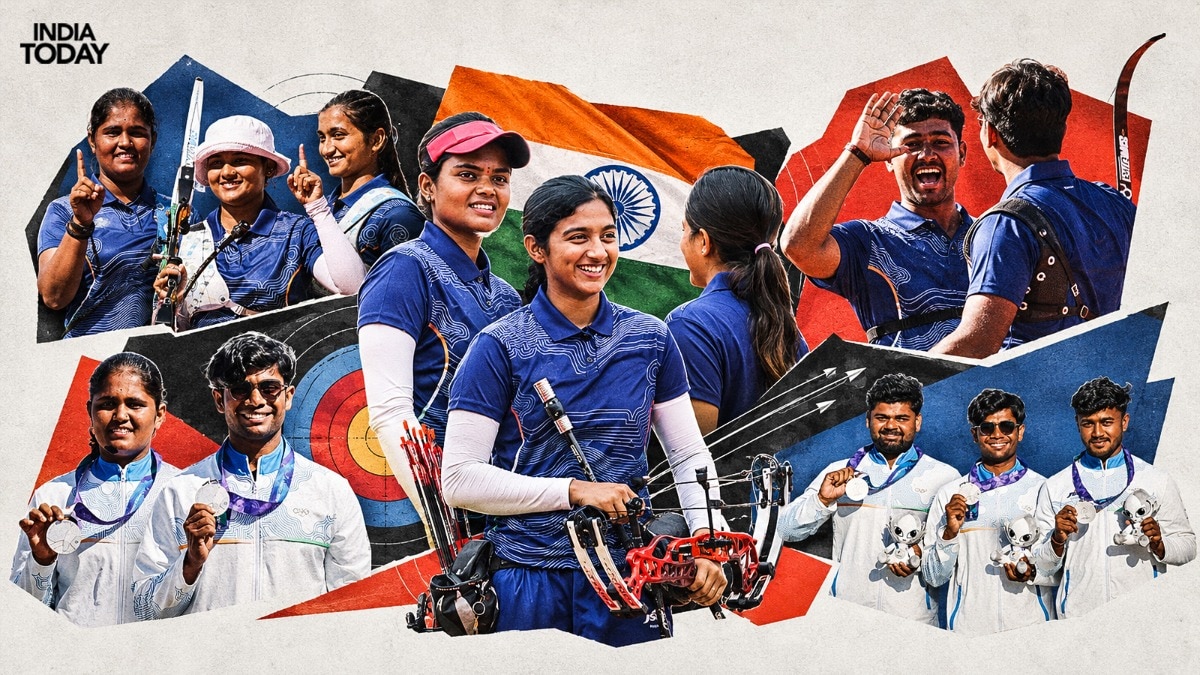
India takes aim: Arrows, ambition and belief driving a new era in Indian archery
Full Article
Original Source
Read the full article at Indiatoday →KhanList aggregates and links to publicly available news content. We do not host full articles from third-party sources. Always verify important information with original sources.