
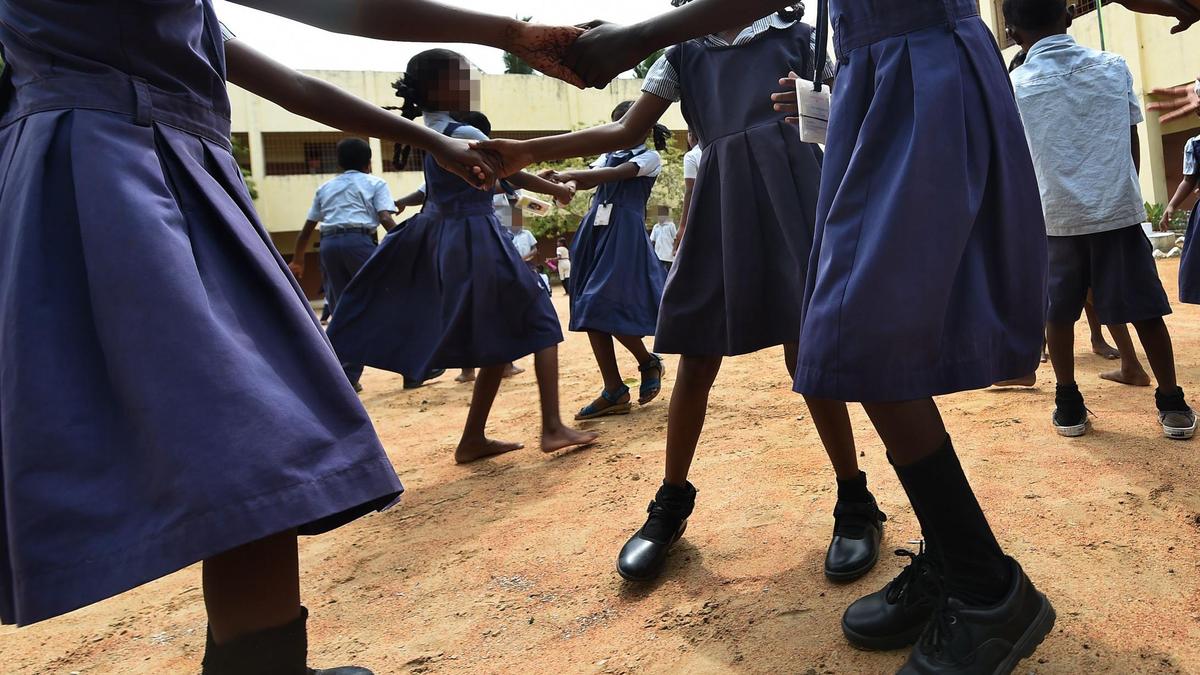
Changing lives: Gnanodaya school located at Venkatapuram in Kanchipuram district take admission from children of only Leprosy patients. File | Photo Credit: Shaju John India’s leprosy programme is falling short of several projections set for 2025-26. The country reported 91,783 new leprosy cases in 2025-26, 41.2% higher than the projected 65,000. New cases among children were 91.6% above the projection while the rate of Grade 2 Disability (G2D) among new cases was 1.34 per million, against a projected one per million.India’s national prevalence rate was 0.56 cases per 10,000 population at the end of March 2026, below the elimination target of a prevalence rate below one case per 10,000.But the burden remains concentrated geographically. Chhattisgarh had the highest prevalence among States/UTs at 1.66 cases per 10,000 population, followed by Jharkhand (1.51), Chandigarh (1.49), Odisha (1.25) and Maharashtra (1.14).At the district level, 14.8% of districts had a prevalence rate above one case per 10,000 in 2025-26, down from 18.6% in 2013-14 but 114 districts still remained above the programme’s elimination target. Moreover, only 148 districts have provisionally achieved interruption of transmission, against a projected 300.G2D was also concentrated in a few States/UTs. Chandigarh, Delhi, Chhattisgarh, Jharkhand and Odisha together accounted for 42.5% of the 1,945 G2D cases reported in 2025-26. Chandigarh recorded the highest rate at 13.54 per million, followed by Delhi (11.53) and Chhattisgarh (7.87).Single-Dose Rifampicin Post-Exposure Prophylaxis (SDR PEP), a preventive dose given to people who have been in contact with a leprosy patient, was administered to 91.2% of the 16.94 lakh eligible contacts in 2025-26, up from 71.4% of the 6.48 lakh in 2019-20.Source: National Leprosy Eradication Programme (2025-26) and National Strategic Plan and Roadmap for Leprosy 2023-2027 Published - October 09, 2026 07:00 am IST
India struggles to curb leprosy transmission
Full Article
Original Source
Read the full article at Thehindu →KhanList aggregates and links to publicly available news content. We do not host full articles from third-party sources. Always verify important information with original sources.