
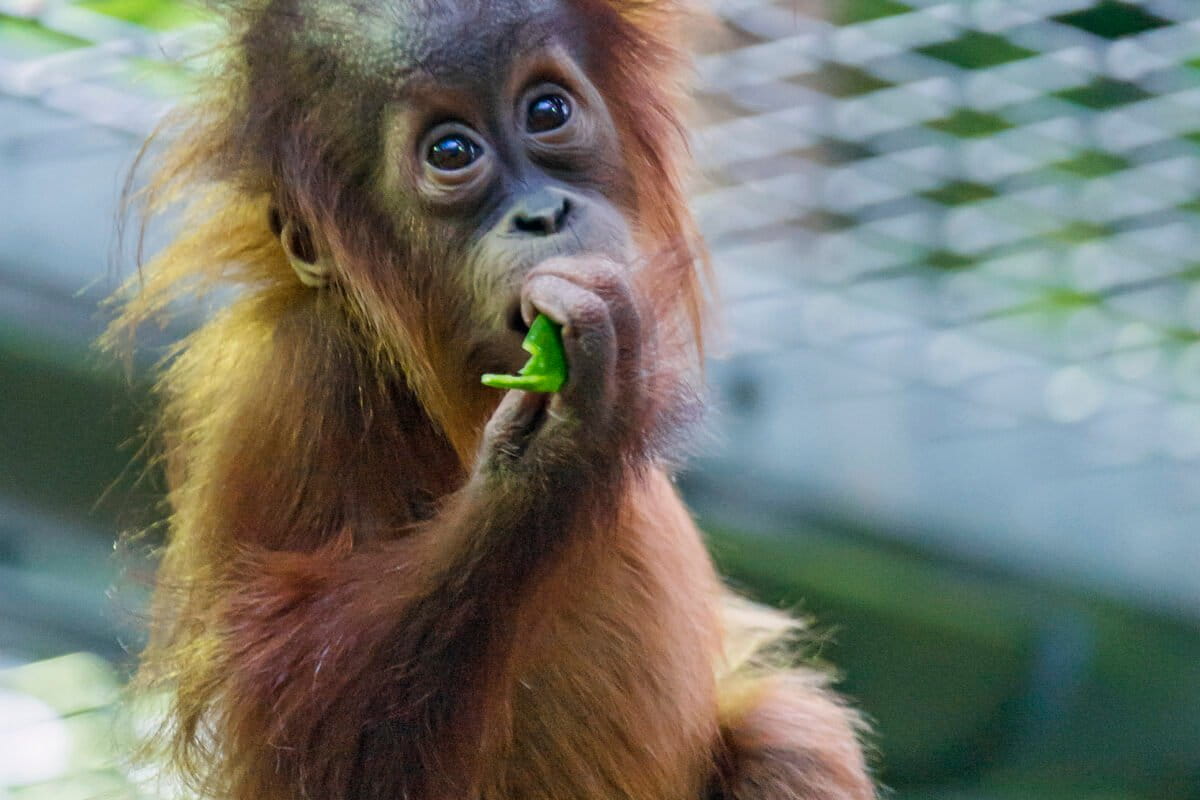
A juvenile orangutan seized from an apartment in the Indian city of Mumbai in 2024 has been repatriated to its native Indonesia, following two years of health and procedural delays. The endangered animal was transferred to the Sumatra Rescue Alliance facility on the island of Sumatra, where experts plan to prepare it for eventual release into the wild, reports Mongabay India’s Arathi Menon. Orangutans are listed in Appendix I of CITES, the global wildlife trade treaty, which bans the international commercial trade in wild-caught individuals. “This is the first successful repatriation of a seized CITES animal from India and my office did everything in our capacity to make it happen,” said Yogesh Nilkand Warkad, assistant management authority of CITES in Mumbai. Sinan Serhadli, a conservation scientist and adviser to Yayasan Orangutan Sumatera Lestari–Orangutan Information Centre (YOSL-OIC), which manages the Sumatra Rescue Alliance where the orangutan is headed, said that after a designated quarantine period, the juvenile will attend a forest school to acquire survival skills. “If all goes to plan, he can be released in the wild in about four years,” he said. The successful repatriation has renewed international focus on five infant orangutans that were rescued from the forests of Odisha state in India in September. Estimated to be between 1 and 1.5 years old, the infants remain at Nandankanan Zoological Park in Bhubaneswar, Odisha’s capital, while authorities investigate their origins and suspected trafficking. Panut Hadisiswoyo, founder of the Orangutan Information Centre, which founded the Sumatra Rescue Alliance, credited the media attention surrounding the Odisha incident in helping accelerate repatriation efforts. “A team of experts from Indonesia will visit the babies soon and look into the paperwork needed,” he said. Indonesia has proposed sending a seven-member delegation of government officials, veterinarians, and orangutan specialists to assess the infants’ health, welfare, and origins. Ahmad Munawir, director of species and genetic conservation at Indonesia’s Ministry of Forestry, said initial physical observations suggest the infants are Sumatran orangutans (Pongo abelii), though official confirmation requires genetic testing, as reported by Mongabay Indonesia. While Indonesian authorities say they’re hopeful the repatriation can set the right precedent in wildlife trade and seizures in India, Hadisiswoyo said both nations should leverage this latest development to dismantle cross-border smuggling operations. “We also demand processes are in place to combat international illegal wildlife trade that facilitate transport and trade of animals to other countries,” Hadisiswoyo added. Read the full story by Arathi Menon here. Banner image: Representative image of an infant orangutan at a zoo in Zürich, Switzerland. Image by Tambako the Jaguar via Flickr (CC BY-ND 2.0). Credits Topics
India repatriates seized orangutan, raising hopes for five more
Full Article
Original Source
Read the full article at News →KhanList aggregates and links to publicly available news content. We do not host full articles from third-party sources. Always verify important information with original sources.