
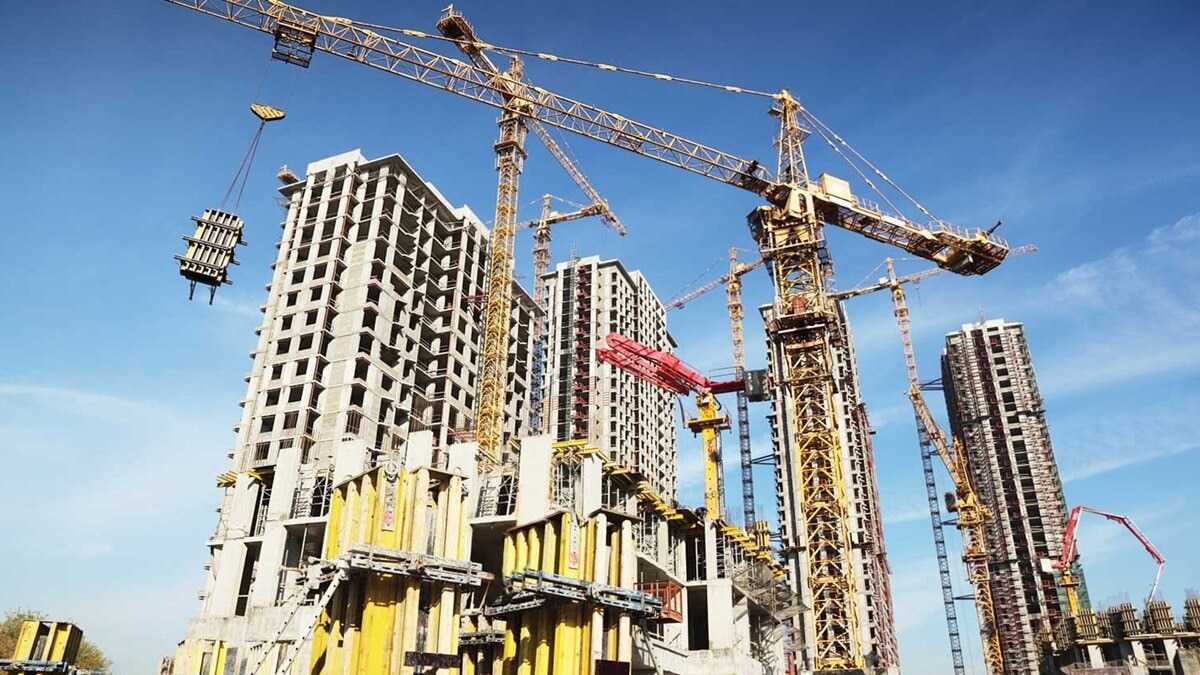
India has put in motion a $1.2-billion incentive scheme to encourage domestic manufacturing of high-value construction and infrastructure equipment, reported news agency Reuters.The planning comes as the government looks to reduce its dependence on China for machinery critical to the country's infrastructure advancementsThe soon-to-be finalised scheme, aims to attract around $1.8 billion in fresh investment by offering incentives to domestic manufacturers over 7 years. The equipment covered under the plan includes tunnel boring machines (TBMs), fire-fighting systems and elevators used in high-rise buildings.Despite the rapid expansion of construction in the country, India somehow still relies heavily on imports for some of the machines needed to build that infrastructure. That dependence is particularly visible in the rising imports of TBMs. These are specialised machines used to dig tunnels for metro rail, highways and other underground infrastructure. China is among the key suppliers of such equipment to India.The proposed scheme is therefore aimed at bridging this gap by making it more viable for Indian companies to locally manufacture these machines.INDIA'S DEPENDENCE ON CHINA India's dependence on imported construction equipment did not rise overnight.As India currently does not have enough domestic capacity to meet the demand, its infrastructure projects using TBMs remain heavily dependent on foreign suppliers.In addition, India-China relations have not been the best since the deadly border clashes between the two countries in 2020, with tensions continuing to shape trade and investment ties.As a result, New Delhi put certain restrictions on investments by Chinese companies and their participation in public procurement. China, in turn, gradually tightened exports of TBMs to India in 2024, as it delayed customs clearances for the necessary shipments.Initiating the ripple, the Indian imports of tunnelling machinery from China fell to $3 million in 2023-24 from $18 million a year earlier. They fell further to $500,000 in 2024-25, before rising to $800,000 in 2025-26, as per the report.Since the bilateral talks between India and China last year, India has slowly relaxed some of its restrictions on China. In fact, it eased rules on investments by Chinese companies in 2026 and began allowing Chinese firms to participate in government contracts.But the episode exposed a larger problem. Restricting imports does not automatically create domestic manufacturing capacity.Unless Indian companies can produce sophisticated machinery at scale, infrastructure projects can remain vulnerable to disruptions in overseas supplies.GOVERNMENT TO PUSH LOCAL PRODUCTIONThis is where the proposed incentive scheme comes in.After carefully assessing what level of financial support would be needed, the government has designed the said plan to make local production more feasible against India's existing dependence on imports.The idea is to ensure that companies do not simply assemble imported parts in India. It is important for the government that companies don't continue to depend on foreign suppliers for the most important and basic components.In this scheme of events, one of the entities that could actually benefit is Bharat Earth Movers Limited (BEML), as it is looking for opportunities to domestically manufacture TBMs.Other equipment makers, such as Larsen & Toubro and Johnson Lifts, could also potentially benefit from the planned scheme.It is important to note that a final decision on the incentive plan is expected soon, although India's heavy industries ministry and finance ministry are yet to respond to requests for comment.THE BIGGER INFRASTRUCTURE OPPORTUNITYThe push comes at a time when India's construction and infrastructure equipment market is expanding rapidly. Presently, the market is valued at around Rs 1 lakh crore ($10.4 billion) and is expected to further grow in future.Manish Mathur, CEO at Cranes, Action Construction Equipment said, "At a time when the Indian government is prioritising self-reliance in manufacturing and reducing dependence on imports, such incentives can provide a significant impetus to homegrown manufacturers by enabling greater investment in technology, R&D and indigenisation."Hence, the broader aim of the government is to build the domestic capacity to manufacture machines that require advanced technology, specialised components and large investments."Together, these measures encourage Indian manufacturers to move further up the technology curve, build globally competitive products and scale India’s position as a reliable global hub for construction equipment manufacturing," added Mathur.- EndsPublished By: Radhika VermaPublished On: Aug 21, 2026 17:08 IST
India plans $1.2 billion manufacturing push to reduce China machinery dependence
Full Article
Original Source
Read the full article at Indiatoday →KhanList aggregates and links to publicly available news content. We do not host full articles from third-party sources. Always verify important information with original sources.