
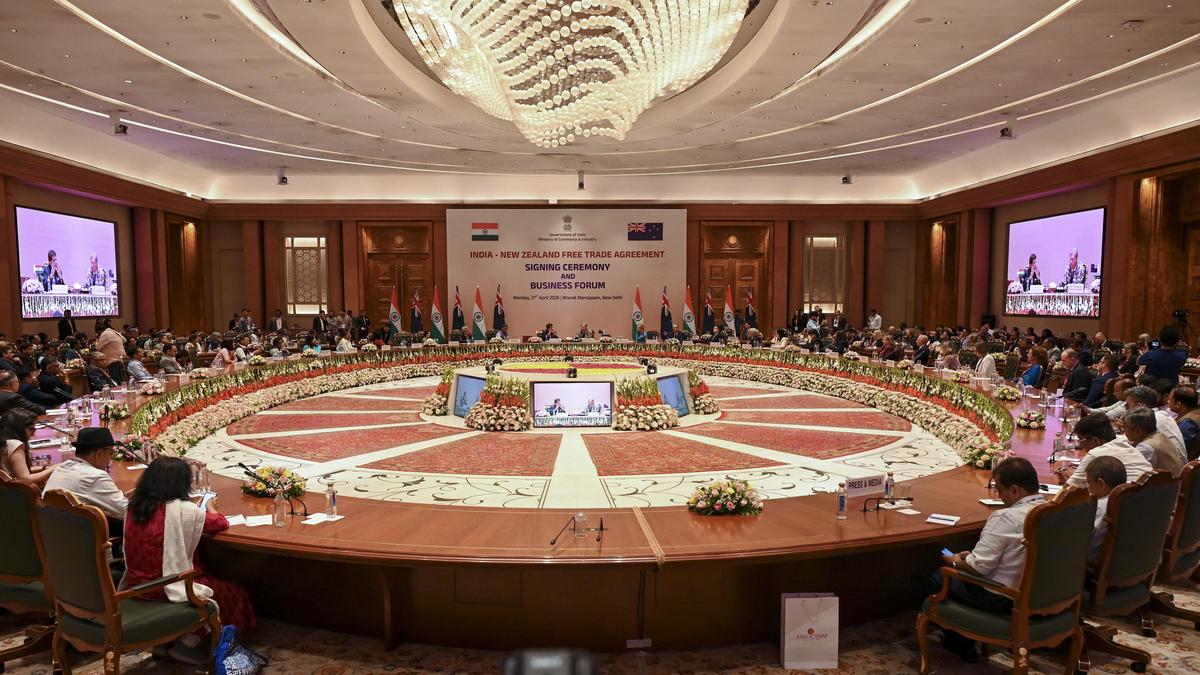
In 1953, Sir Edmund Hillary of New Zealand and Tenzing Norgay, the Nepalese-Indian Sherpa mountaineer made history by becoming the first ever to climb Mount Everest. This extraordinary partnership showed what co-operation, trust and determination could achieve, and we are once again set to see the India-New Zealand partnership scale to new heights with the entry into force of the India-New Zealand Free Trade Agreement (FTA).The India-New Zealand relationship has always been cordial and extends beyond diplomatic ties. Their people share the same passion for cricket, place a high value on domestic traditions and share strong people-to-people ties. In fact, New Zealand is also home to a large Indian diaspora, strengthening relations between the two countries, be it in business, education or cultural exchange. The implementation of the FTA provides another opportunity to leverage these ties for a stronger economic partnership.Moreover, this FTA is among the recently signed modern FTAs of India which will strengthen its foothold and economic engagement in the Indo-Pacific. The complementary nature of the two economies will help in creating greater opportunities for both countries, not just in trade but also in investments and other areas of economic co-operation.High potential for trade expansionIndia-New Zealand bilateral merchandise trade, which is at $1.2 billion, is way below potential. India caters to just 1.9% of New Zealand’s merchandise imports worth $47.5 billion, while China accounts for an over 22% share and Australia, the United States, South Korea and Japan together account for another 33% share.Most of these major suppliers (excluding the U.S.) already enjoy preferential access to the New Zealand market through respective trade agreements, thus placing Indian exporters at a competitive disadvantage.With the India-New Zealand FTA now in force, Indian exporters will also get a level playing field in this market across all tariff lines that have been now offered duty free access.The immediate gains for India could be significant in the labour-intensive sectors. New Zealand imported nearly $1.2 billion worth of apparel in 2025, but India’s share was only around 4%. The elimination of average tariffs of nearly 10% on apparel offers Indian apparel manufacturers and exporters an opportunity to expand their presence in New Zealand. Similar potential exists in sectors such as leather, footwear, home textiles and carpets.The opportunity is equally important in higher-value manufacturing. New Zealand imports nearly $7 billion worth of machinery and $5.2 billion worth of vehicles and automotive components annually. Yet, India’s market share in these categories remains around 1% or lower. The FTA provides an opportunity for Indian engineering and automotive manufacturers to deepen their presence in New Zealand for these products.Greater market accessThe agreement also addresses regulatory barriers, which will create an opportunity for sectors such as pharmaceuticals. India already enjoyed zero-duty access for pharmaceuticals in New Zealand and has held a share of around 5.5% in New Zealand’s imports. The FTA includes provisions that facilitate the use of regulatory evaluation and inspection reports from recognised regulators. This can reduce duplicative compliance requirements and further improve market access for Indian pharmaceutical companies.New Zealand’s services imports stood at $24.2 billion in 2024, and India’s share was less than 3%. The FTA has provided commitments across 118 services sectors, including IT, professional services, healthcare, education and financial services.The agreement also creates dedicated pathways for skilled professionals, providing a quota of 5,000 visas at any given time and stay for up to three years.Additionally, the agreement ensures enhanced student mobility and post-study work opportunities. These will strengthen educational and professional linkages that exist between the two countries.As part of the agreement, New Zealand will facilitate $20 billion worth of foreign direct investment into India over a 15-year period. This should not be difficult, given India’s attractiveness to global investors and New Zealand’s capital and technological expertise. India offers significant investment opportunities across sectors, be it high-value manufacturing, renewable energy, agritech, food processing, digital technologies or infrastructure.Effective utilisation is the keyThe outcomes from the FTA will flow only if they are effectively utilised. Indian businesses need targeted market intelligence, stronger distribution networks, regulatory preparedness and commercial partnerships. What is equally important is sustained engagement with New Zealand’s investors to develop a pipeline of commercially viable projects.Through the combined efforts of all stakeholders — the government, the associations as well as the industry on both sides — it should not be difficult to double India-New Zealand bilateral trade by 2030. The agreement has created an enabling framework and success will depend on how these opportunities are converted into exports, investments, jobs and meaningful partnerships.Anant Goenka is President, The Federation of Indian Chambers of Commerce & Industry (FICCI)
India-New Zealand trade ties set to scale new heights
Full Article
Original Source
Read the full article at Thehindu →KhanList aggregates and links to publicly available news content. We do not host full articles from third-party sources. Always verify important information with original sources.