
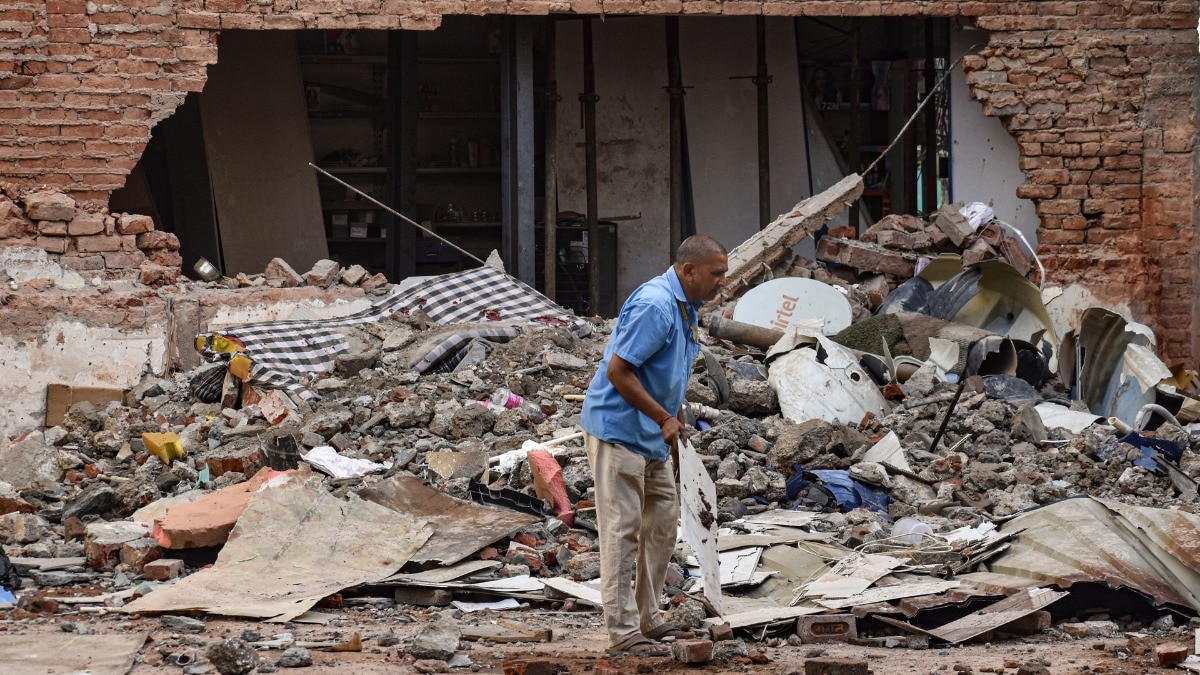
The building collapse deaths in Delhi's Satya Niketan are a reminder on why student residency needs stricter safety standards, regular audits and accountabilityThe collapse of a multi-storied building in New Delhi’s Satya Niketan, which claimed seven lives, has spotlighted a problem higher education in India has long ignored: who is responsible for keeping students safe when their classroom is a university but their stay in the city a paying guest (PG) accommodation, and often an illegal one?For thousands of students moving to education hubs across India every year, finding a place to live is almost as important as finding a college. Yet while universities have clear systems for classrooms, examinations and campus safety, accommodation outside the campus remains a grey area.Students today live in a mix of private PGs, hostels, co-living spaces and even residential buildings converted into student accommodation. The problem: are these places safe, compliant and accountable?“Student safety cannot be an afterthought,” says Saurabh Arora, founder and CEO of University Living, a global student housing marketplace. He points to the scale of the crisis: India has around 44.6 million students enrolled in higher education while the demand for student-living accommodation is estimated at around 12 million beds. Colleges and universities accommodate only around 4 million students. Who checks the building? A student looking for a PG is usually concerned with rent, location, food, Wi-Fi and whether the room is comfortable. Structural safety of the accommodation could be the last thing on mind.But according to Arora, students and parents should also verify residence documents, such as approved building plan, occupancy or completion documentation, structural stability, fire clearance, PG or hostel registration, electrical safety records, lift safety certification and so on. They should enquire how emergencies are handled and how safety or maintenance complaints are recorded.At the same time, the responsibility for ensuring that a property is legally permitted, structurally sound, fire and electrically compliant and operating within approved occupancy limits must rest with the accommodation provider and the authorities responsible for enforcement.Yet, for students, some basic checks are still possible. Are emergency exits clearly marked? Are fire extinguishers visible and serviced? Do staircases look safe? Is there exposed or overloaded wiring? Are common areas adequately lit? Is access controlled? These may not establish whether a building is structurally safe but they can reveal obvious warning signs.Could a ‘safety passport’ help?Imagine searching for a PG online and being able to see, at a glance, whether the property is registered, its approved occupancy, the status of its safety certifications and the name of the person responsible for operating it. That is the kind of system Arora believes India needs—a digital property ‘safety passport’ or public compliance record that students can check before paying a deposit.It would also shift the system from reacting after an accident to monitoring properties continuously. Periodic audits and re-certification, transparent compliance records and clear operator accountability should become routine rather than measures triggered by a tragedy.Safety cannot become a luxury. Indicatively, in 2026, a decent, well-located PG can cost around Rs 7,000-18,000 a month in Delhi, Rs 9,000-22,000 in Mumbai, Rs 7,500-17,000 in Bengaluru, Rs 6,500-15,000 in Pune and Rs 7,000-16,000 in Hyderabad. These are market ranges rather than official citywide averages, and the actual monthly expense can rise with deposits, food, utilities, laundry and transport.For many students, especially those moving away from home, cost remains a decisive factor. But cheaper cannot mean overcrowded rooms, unsafe wiring or compromised fire exits. The answer, therefore, is not to make private accommodation more expensive in the name of safety. It is to create enough professionally managed supply to make safe housing accessible.Shouldn't universities step in? Purpose-built student accommodation, or PBSA, could offer a more organised alternative. But scaling it up requires land near education clusters, long-term capital, approvals and a regulatory framework that recognises student housing as a distinct category. Traditional PGs and converted rental properties will continue to fill gaps because they can enter the market faster and with lower upfront investment. The challenge is bringing the same consistency of safety and accountability to this fragmented market.Universities should step in but not by taking responsibility for every private property. They can disclose their own accommodation capacity and eligibility clearly, while helping students access verified external options when campus housing is unavailable. Any such list should be based on a standard checklist covering registration, structural fitness, fire and electrical safety, approved occupancy, habitability, security and grievance redressal. It should also be re-verified periodically.The larger point: student housing is education infrastructure. A student living in an overcrowded, poorly maintained or badly connected building carries that stress into the classroom. Long commutes, inadequate study space, unreliable internet, safety concerns and unresolved maintenance problems can affect concentration, satisfaction and even the overall college experience. India has expanded its higher education capacity. The next step is to ensure that accommodation grows with it. Subscribe to India Today Magazine- EndsPublished On: Sep 14, 2026 18:39 IST
India is expanding higher education, but what about safe student accommodation?
Full Article
Original Source
Read the full article at Indiatoday →KhanList aggregates and links to publicly available news content. We do not host full articles from third-party sources. Always verify important information with original sources.