
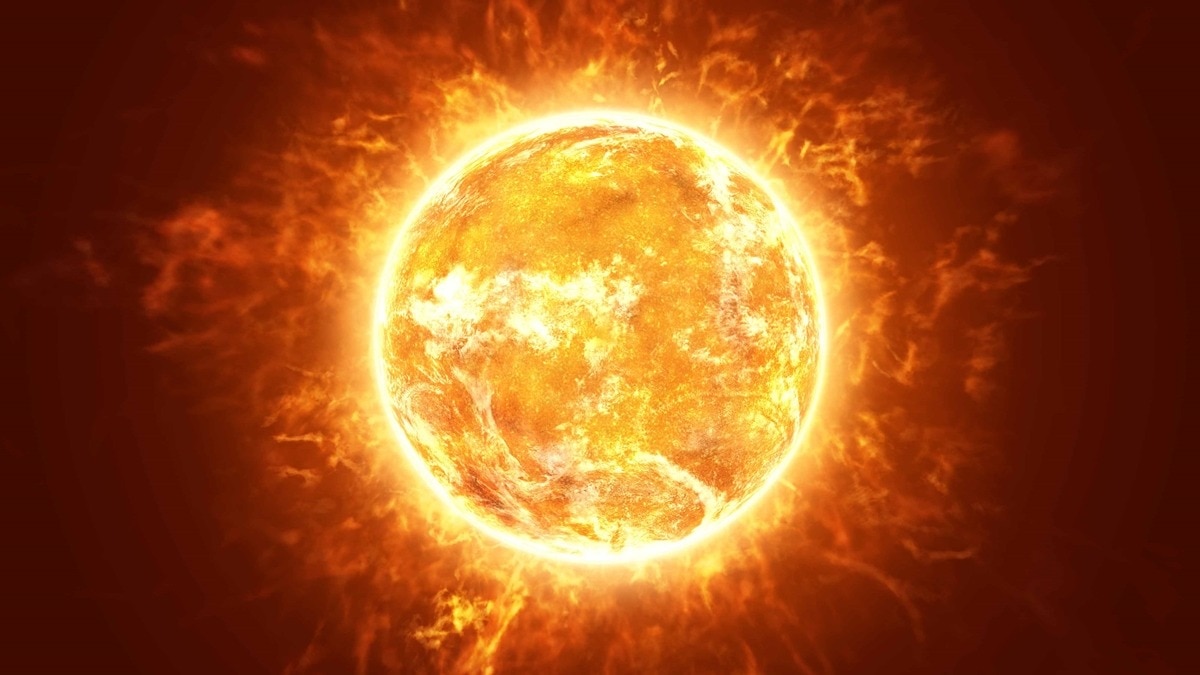
India has installed and commissioned a new 82.6 GHz, 400 kW gyrotron on the SST-1 tokamak in Gujarat. The upgrade strengthens its effort to sustain ultra-hot plasma for longer in fusion research.The enhanced heating capability could allow researchers to maintain hotter plasma for longer and study how it behaves under more stable conditions. (Photo: Getty)Deep inside a laboratory in Gujarat, scientists are trying to recreate one of nature's most powerful processes, the reaction that makes the Sun shine.India's quest to build an artificial Sun has taken another major step forward with the installation and commissioning of a powerful new 82.6 GHz, 400 kW gyrotron on the SST-1 tokamak at the Institute for Plasma Research.The SST-1, or Steady State Superconducting Tokamak, is India's experimental fusion machine designed to recreate the process that powers stars.Instead of burning fuel like conventional power plants, a fusion reactor aims to release energy by forcing light atomic nuclei to combine under extreme temperatures and pressure. At the heart of the experiment is plasma, an extremely hot, electrically charged state of matter. Scientists must heat this plasma to extraordinary temperatures and confine it using powerful magnetic fields inside the doughnut-shaped tokamak. Fusion is often described as the ultimate clean-energy dream. (Photo: ITER) Indian fusion experiments have already achieved plasma temperatures exceeding 200 million degrees Celsius, around 20 times hotter than the Sun's core. But reaching such temperatures is only part of the challenge.The real test is keeping the superheated plasma stable and confined for long enough to make fusion energy a practical reality.That is where the newly installed gyrotron comes in.WHAT IS A GYROTRON?A gyrotron is a powerful device that produces high-frequency microwave energy.The new system injects this energy into the plasma inside SST-1, helping scientists heat and sustain it at extreme temperatures. Operating at 82.6 GHz and 400 kW, it represents a significant upgrade over the earlier 42 GHz system.The enhanced heating capability could allow researchers to maintain hotter plasma for longer and study how it behaves under more stable conditions.Unlike the Sun, where enormous gravitational pressure confines the plasma and sustains fusion, scientists on Earth must rely on complex magnetic systems to keep the plasma from touching the walls of the reactor.Even a slight instability can disrupt the delicate conditions needed for fusion.Fusion is often described as the ultimate clean-energy dream. Its fuel sources are abundant, and it produces far less long-lived radioactive waste than conventional nuclear fission. However, turning fusion into a reliable commercial source of electricity remains one of science and engineering's greatest challenges.The new gyrotron will not immediately turn SST-1 into a fusion power plant, nor is India's artificial Sun producing electricity yet.But it significantly strengthens the country's ability to study sustained, ultra-hot plasma, the crucial step between achieving record temperatures and learning how to control them.For India, the latest milestone brings its artificial Sun one step closer to the next breakthrough, and, eventually, to a future where the power of the stars could help light up the planet- EndsPublished By: Sibu Kumar TripathiPublished On: Sep 14, 2026 13:20 IST
India is building an artificial Sun. It just came closer to becoming a reality
Full Article
Original Source
Read the full article at Indiatoday →KhanList aggregates and links to publicly available news content. We do not host full articles from third-party sources. Always verify important information with original sources.