
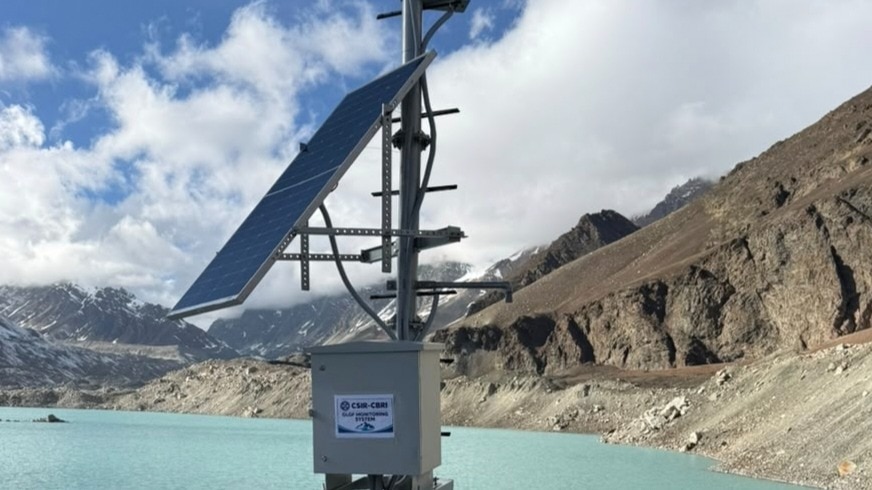
India has installed a sensor-based early warning system at Vasundhara Tal, a high-altitude glacial lake in Chamoli district, to monitor changes that could signal a dangerous flood.The installation marks the first phase of efforts to strengthen monitoring at vulnerable glacial lakes across the state.The system is designed to help authorities detect potential hazards sooner in a region where steep terrain and limited communications make disaster response difficult. An image of the team behind installing the early warning system. (Photo: X/@CSIR_CBRI) HOW WILL CHAMOLI'S EARLY WARNING SYSTEM WORK?Scientists and technical experts from the CSIR-Central Building Research Institute (CBRI) in Roorkee and the Wadia Institute of Himalayan Geology carried out the installation, with support from the Uttarakhand State Disaster Management Authority (USDMA), Indo-Tibetan Border Police, National Disaster Response Force and State Disaster Response Force. Sensors monitor the lake's water level, weather conditions, snow and movement in the surrounding ground. A weather station also measures parameters such as rainfall, wind speed, temperature and atmospheric pressure.Because mobile networks are unavailable at the remote site, the equipment uses satellite communication to send data to monitoring dashboards at CBRI and the USDMA. Readings are transmitted every two hours under normal conditions, while unusual developments can trigger immediate data transmission. Vasundhara Tal lies around 4,800 metres above sea level and measures approximately 900 metres long and 600 metres wide.The system could help officials identify potentially dangerous changes, but it cannot guarantee a fixed amount of warning time before a flood.WHY ARE GLACIAL LAKES BECOMING A CONCERN?A glacial lake outburst flood (GLOF) occurs when water stored in a glacier-fed lake is suddenly released, often after a natural barrier fails or an avalanche or landslide displaces water. The resulting surge can rush downstream, damaging homes, roads, bridges and hydropower infrastructure. Kupup Lake, a high-altitude glacial lake is pictured. (Photo: Getty) As glaciers melt and retreat, some lakes expand, potentially increasing the volume of water that could be released.Uttarakhand has identified 13 glacial lakes as high-risk, while the state has more than 340 such lakes, according to figures cited in reporting on the initiative.The danger has been demonstrated by past Himalayan disasters.In February 2021, flooding in Chamoli damaged infrastructure along the Rishiganga and Dhauliganga river valleys. In October 2023, a glacial lake outburst in Sikkim triggered severe flooding along the Teesta river. The team of experts and officials behind the successful installation of the system. (Photo: X/CSIR_CBRI) The new installation is a step towards earlier detection. Effective protection will also depend on rapid communication, evacuation planning and ensuring that communities downstream can act on warnings.- Ends
India installs early warning system in Uttarakhand's Chamoli: What will it do?
Full Article
Original Source
Read the full article at Indiatoday →KhanList aggregates and links to publicly available news content. We do not host full articles from third-party sources. Always verify important information with original sources.