
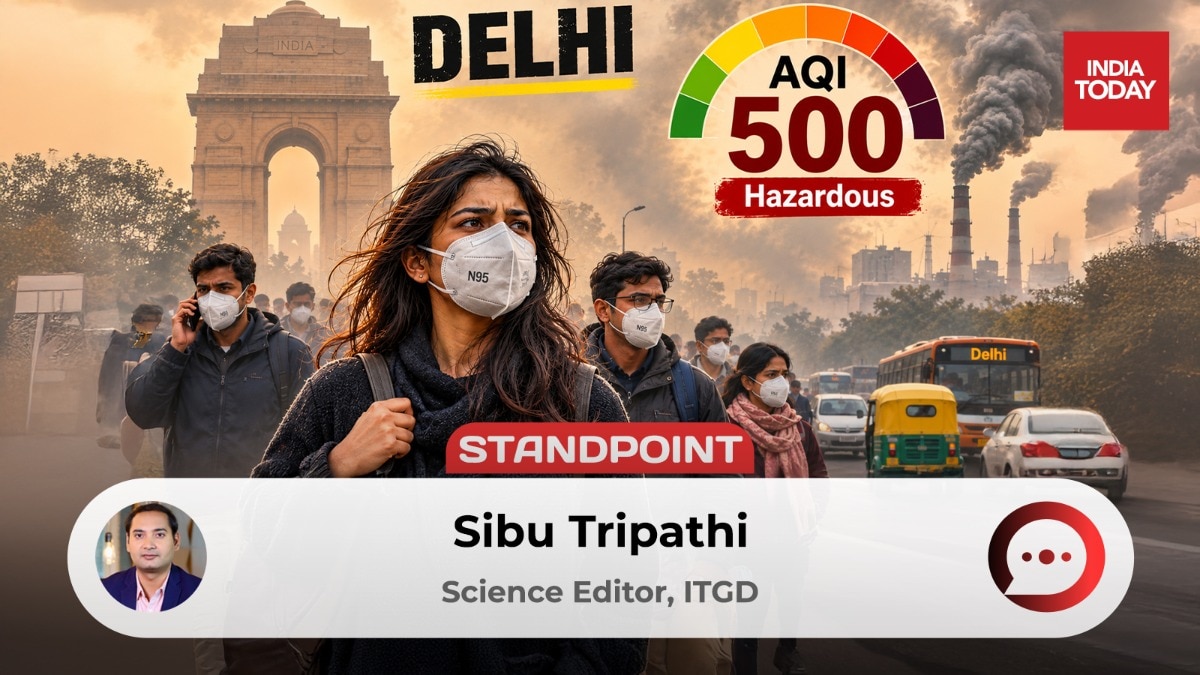
India has four seasons, we are told. Summer, monsoon, autumn, and winter. But anyone who has lived and worked in Delhi-NCR long enough knows that the city has quietly added a fifth to its calendar. It arrives around October, settles in by November and refuses to leave without making a lasting impression on your lungs.Welcome to pollution season. The only season in Delhi that nobody looks forward to, nobody has managed to cancel, and everybody is forced to participate in.Now that I have completed a decade in the city, I can say that this season is the most brutal of all.It deserves an official place in the calendar. Perhaps the government could declare its arrival with the same enthusiasm reserved for the onset of monsoon. Schools could announce special pollution holidays, offices could issue N95 masks along with employee ID cards, and weather apps could stop showing the familiar sun-and-cloud symbols. A little skull and crossbones might be more appropriate.For people living and working in Delhi, October and November have become a test of endurance. The mornings begin with checking the AQI instead of the weather. A run in the park becomes a calculated health risk. Children are asked to stay indoors, elderly people are advised to avoid stepping out, and those with respiratory conditions are told to take extra precautions. Even a simple commute to work comes with an invisible surcharge: the air you breathe. The cost is personal. It is paid in irritated throats, burning eyes, persistent coughs, compromised lungs and the anxiety of wondering what years of breathing this air might mean for your health. The most unsettling part is that this is no longer an exceptional emergency. It is becoming an annual routine.And what does Delhi get in return? An annual political slugfest.Every winter, the familiar script plays out. Governments blame neighbouring states. Political parties accuse one another of incompetence. Stubble burning becomes the headline villain, construction dust gets its moment, vehicles are hauled into the debate and emergency restrictions are announced. There are meetings, press conferences, blame games and competing explanations.By the time the political argument reaches its peak, the pollution has already settled over the city.The debate is endless; accountability is elusive. The same questions return every year, leaving residents to wonder why a problem that arrives with such predictable regularity still catches the system unprepared.Delhi does not need another round of political theatre. It needs measurable action, regional coordination and someone willing to take responsibility beyond the next news cycle.Meanwhile, the capital has become a global punchline. Images of its grey skyline, people walking through thick smog and AQI readings resembling emergency alerts circulate across international media and social platforms as an image of Delhi, but India.Delhi has become famous for reasons no city should aspire to. It is hard to sell the dream of India's national capital as a destination for opportunity when its air quality is increasingly part of relocation risk assessments.And this has consequences for the young.For decades, Delhi represented possibility. Students arrived for universities, young professionals came chasing jobs, entrepreneurs moved here to build businesses, and families settled down hoping for a better future. Today, a youngster considering a job in the capital may have to think beyond salary, rent and commute. They may also need an exit strategy.Perhaps Delhi should formally declare pollution a season. At least then, young professionals could plan their careers accordingly: arrive in April, build their networks through summer, enjoy the monsoon, and make sure they have a transfer, a remote-work arrangement or a return ticket ready before October. The real tragedy is that Delhi's pollution season is no longer just about a few bad weeks or an inconvenient winter. (Photo: PTI) It sounds ridiculous. But so does having to plan your life around the months when breathing becomes a public health gamble.The real tragedy is that Delhi's pollution season is no longer just about a few bad weeks or an inconvenient winter. It is about the slow normalisation of an unhealthy life. People are adapting to conditions they should never have been expected to accept.A city cannot keep asking its residents to buy air purifiers, wear masks, shut windows and wait for the wind to change. Clean air cannot be a seasonal privilege, and breathing should not require a contingency plan.Delhi may have added pollution to its list of seasons. But it is time its governments stopped treating it as an annual weather event and started treating it as the public health crisis it is.Because the only thing worse than breathing Delhi's polluted air every winter is knowing that, come next October, we will probably be having this same conversation all over again, and I will be typing another rant all over again.- Ends
India has four seasons. Delhi has a fifth, and it's choking the life out of us
Full Article
Original Source
Read the full article at Indiatoday →KhanList aggregates and links to publicly available news content. We do not host full articles from third-party sources. Always verify important information with original sources.