
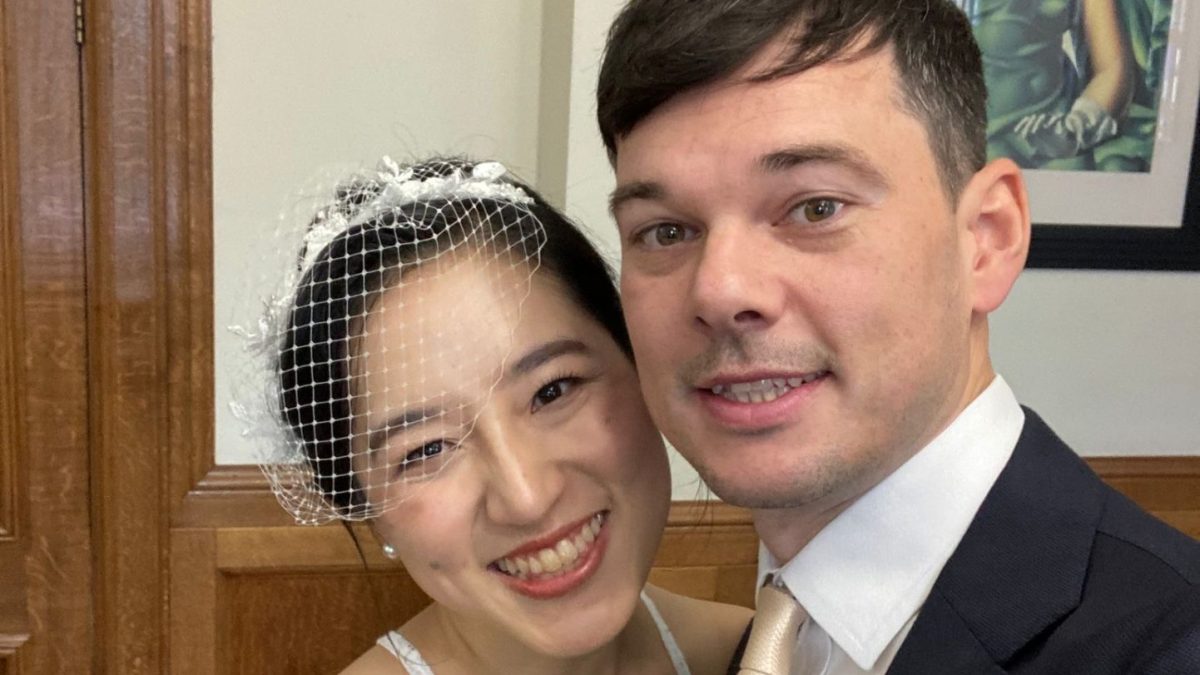
Migrant workers who were on track to be granted permanent residency in the UK after five years have told The i Paper that their lives have been “completely upended” by changes to indefinite leave to remain (ILR). Michaela Chen, 34, got married last year. She was busy trying to plan a life for herself and her husband, but says the changes announced by the Home Secretary this week have left her “questioning everything”. ILR gives someone the right to live, work and study in the UK for as long as they like, but Government changes mean the standard length of time migrants will have to live in the UK to qualify will double from five to 10 years – and in some cases increase to 20 years. Shorts Chen is one of the 2.2 million people who were on a path to permanent settlement in the UK. She moved to London from Canada in 2020 to study a master’s degree at LSE. Since then, she has met and married her husband and built a life for herself in the capital. Instead of being in a “honeymoon bubble”, however, for the past year, she says she and her partner have been plagued by “constant stress” as they waited for Shabana Mahmood to announce her long-awaited visa reforms. On Monday, Chen learned she was one of approximately 500,000 people who discovered the time before they are eligible for ILR has doubled from five to 10 years. “We knew what was coming for a long time,” she said, “but still I didn’t sleep last night.” She told The i Paper that the ILR extension has left her feeling “sad, frustrated, and completely isolated… you work so hard to make a new country you’re home, but then you’re made to feel like you’re still not welcome. “I work hard, I pay my taxes, I do volunteer work, I even learnt about football – and yet it’s not enough”. Chen said the changes have left her feeling like she is in limbo. Fees such as the immigration health surcharge – which allows access to the NHS and costs £3,105 for a three-year visa – “is going make affording to start a family more difficult, but moving to Canada isn’t a viable option because we have caring responsibilities in the UK”. Under the new rules, those earning less than £50,271 will have to wait a decade before they can apply for ILR. There are ways migrants can fast-track their route to settlement, however. High earners on a salary of £125,000 or more only need to wait three years before applying, while for those making more than £50,271 the wait will remain at five years. The Home Secretary was also forced to back down over proposals to make care workers wait 15 years to qualify for permanent residency. ‘I can’t plan a future’ Martin, 29, who asked to keep his last name private, moved to the UK five years ago to study a master’s degree at Leeds University, and now works in the charity sector. With less than six months until his visa runs out, he worries that will not be the case for much longer. Martin was one of a record number of foreign university students who came to the UK during the so-called “Boris wave” – a surge in post-Brexit, non-EU migration under then prime minister Boris Johnson – and was only two years away from being eligible for ILR. Working in the charity sector, however, he does not earn more than £50,271. “Even if I got a promotion to a managerial position, I wouldn’t get paid that much,” he said. Martin’s dream is to become a journalist, which he is studying for alongside working full-time, but his “ability to envision a future” for himself is becoming “increasingly squeezed”. Martin’s visa expires early next year, and his current employer is unable to renew his visa sponsorship. Over the past year he has applied for over 200 jobs but has found it “impossible” to find a workplace in his sector that will sponsor him. “It’s stressful, not being able to plan for your future,” he added. Martin was born in America but raised in Mexico. “If I have to leave, it’s not the first time I’ve had to start over my life, but this time, I don’t know where I am supposed to go”. ‘Life has become so precarious’ Samantha Connor, 25, moved to Edinburgh from Oklahoma, USA, and going back is not an option. “It’s socially a very conservative place – I wouldn’t be safe there.” But she says her plans have been “completely upended” by the changes to ILR, and she is now at least nine years away being eligible for it. “I will have lived in the UK for 16-17 years at that point,” she told The i Paper. “But that life will be so precarious, because you don’t know if one day they [the Home Office] are going to turn around and change the goalposts again”. Connor first moved to the UK to study at university and spent six years on a student visa, then a graduate visa. She is now one year into a skilled worker visa, which she hoped would allow her to apply for ILR in four years. However as she earns under £50,000 she now faces waiting for at least nine years. The amount of time Samantha Connor will have to wait before being eligible for ILR has doubled Overnight, her younger sister, who is studying in Glasgow, has realised she will be unable to stay in the UK. “It’s sad – it was so good to be close to her when the rest of my family is thousands of miles away, but you wake up one day and you’re back to square one”. “I’ve lived in the UK my whole adult life. My friends, my career, my partner and her family are all rooted here. I don’t know how to live anywhere else.” “Indefinite leave to remain used to feel secure – but now it feels like the Government [is] punishing those of us who do things the legal way”.
Indefinite leave to remain changes are ruining our dreams of starting a family
Full Article
Original Source
Read the full article at Inews →KhanList aggregates and links to publicly available news content. We do not host full articles from third-party sources. Always verify important information with original sources.