
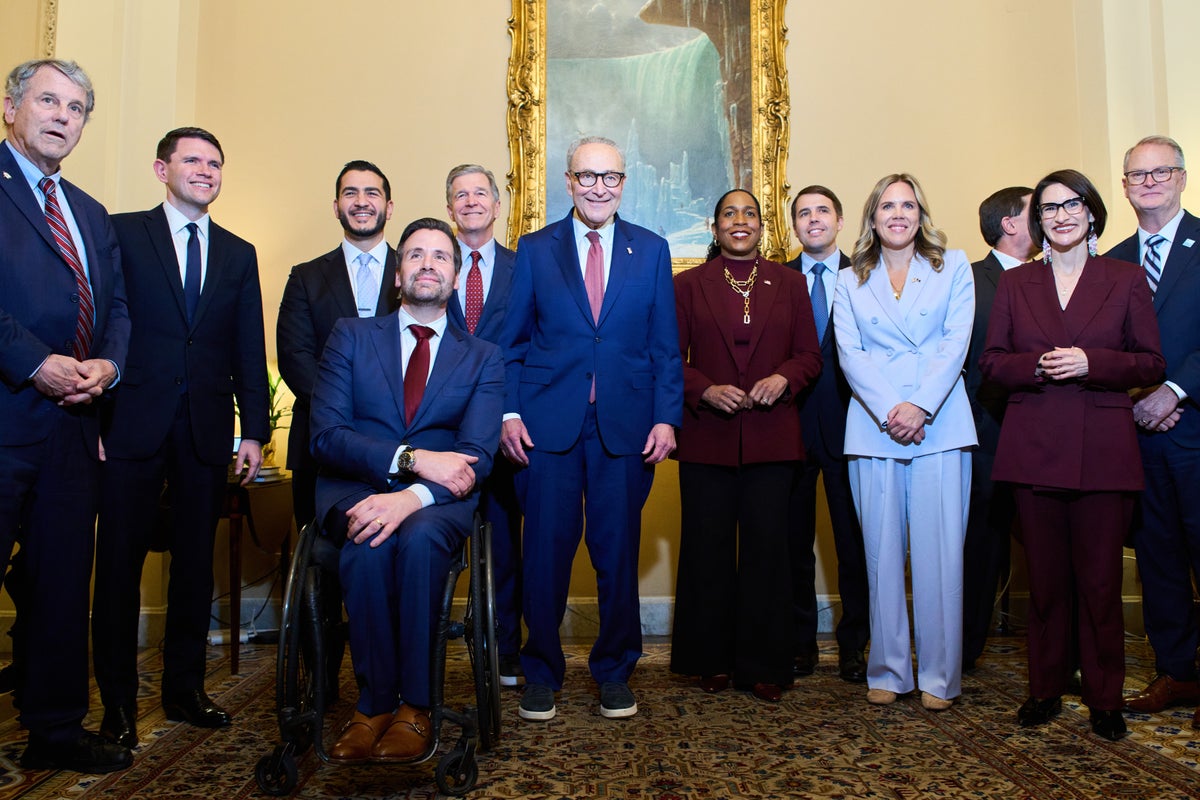
Even before taking their oaths of office, the Democratic Party’s incoming class of senators finds itself facing an immediate test of the campaign promises that brought them to Capitol Hill: selecting who will direct their new majority.Representing the largest group of new Democratic senators in decades, 13 lawmakers earned victories in conservative territories by pledging to bring change to Capitol Hill. They now find themselves embroiled in a traditional Washington power struggle, choosing whether to re-elect veteran Senate leader Chuck Schumer of New York or throw their weight behind challenger Chris Van Hollen of Maryland.Van Hollen has mounted his challenge against Schumer on a platform of bolder legislative strategy, securing early endorsements from incoming progressives like Abdul El-Sayed of Michigan and Peggy Flanagan of Minnesota. Conversely, Sen.-elect Sherrod Brown of Ohio, making his return to the chamber following a defeat in 2024, has pledged his allegiance to Schumer.Meanwhile, incoming senators hailing from traditionally red states including Texas, Mississippi, Iowa, and South Carolina—whose triumphs were pivotal in handing Democrats control—are largely holding their cards close to their chest. Annie Andrews of South Carolina noted she remains in dialogue with both contenders, while Mississippi’s Scott Colom stated he is currently in "listening mode" while getting further acquainted with both senators.2026 Democratic candidates who flipped Senate seats (AP Photo/)On Thursday, Kansas Sen.-elect Adam Hamilton confirmed he would not be supporting Schumer, though he stopped short of endorsing a rival candidate."I'm looking for someone who is going to bring people together," Hamilton told MSNow. "Right now, in places like Kansas, there's a lot of people who don't feel that in Chuck Schumer."Heading into the secret-ballot election set for Dec. 1, Schumer benefits significantly from decades of established relationships and his deep knowledge of Senate procedure. Nevertheless, the hesitation among new members to declare a preference has cast a rare spotlight on a freshman class that holds substantial influence over the party’s trajectory."We should be very embracing of the new people who have been through fire to get here," said Hawaii Sen. Mazie Hirono. "We have to make sure that all these voices are heard, and they’ve got a lot of talent to bring to the table."Candidates promised reformA central pillar for many in the freshman class was presenting themselves as political outsiders who would introduce fresh viewpoints to a capital system they argued was failing working citizens.Andrews, a 46-year-old pediatrician who delivered South Carolina Democrats their first Senate victory in almost 30 years, advocated for "generational change" while explicitly declining to back Schumer.Yet she has simultaneously distanced herself from proposals favored by Van Hollen, including "Medicare for All." Speaking during a media call on Tuesday, Andrews emphasized that she has made "no decision" regarding the leadership contest."The way I assess the situation as it is right now is that the generational change is represented by this incredibly dynamic incoming freshman class of senators," Andrews said.They must decide whether to stick with longtime Senate leader Chuck Schumer of New York or back challenger Chris Van Hollen of Maryland (Getty)Texas Sen.-elect James Talarico similarly demanded "new blood" within party leadership to overhaul a broken political system, though he has not explicitly ruled out Schumer. In a CBS appearance two days following the Nov. 3 election, Talarico said he planned to engage with both candidates to ask "tough questions."Taking a comparable stance, Iowa Sen.-elect Josh Turek noted his endorsement will rest on which leader best aligns with his campaign platform. At a press conference on Monday, Turek confirmed holding conversations with both Schumer and Van Hollen while awaiting "further updates" regarding his inquiries."Whoever provides those answers to me that most closely align with my common sense, prairie populist agenda that I’ve been running on for the last year and a half, that’s who I’ll support," Turek said.Following the official call of her election victory on Wednesday, Alaska Sen.-elect Mary Peltola informed The Associated Press that she had not yet turned her focus to the leadership decision.While El-Sayed and Flanagan remain firmly in Van Hollen's camp, fellow progressive and Maine Sen.-elect Troy Jackson stated he will not vote for Schumer, though he has not formally declared support for Van Hollen either.Schumer, through his position overseeing the party's Senate campaign apparatus, originally supported rival candidates during the primary contests in those three states, before backing the winners once they secured the nominations.Internal party voting turns into public disputeHistorically, party leadership votes in the Senate operate behind closed doors via secret ballots, driven by internal legislative dynamics. Navigating the post requires balancing a politically diverse caucus—a balancing act that frequently clashes with the demands of progressive activist bases.Supporters of Schumer highlight his track record in managing those internal rivalries, particularly during the recent midterms where he aided candidate recruitment—including Brown, Peltola, and North Carolina Sen.-elect Roy Cooper—alongside directing nationwide fundraising efforts."When the manager takes you to the World Series, you give him another contract," Arizona Sen. Ruben Gallego said.Van Hollen, a supporter of progressive priorities including Medicare for All and restrictions on offensive weapons transfers to Israel, has promised a more confrontational approach to Trump (AP Photo/Julia Demaree Nikhinson)Yet party members face growing demands from grassroots supporters to adopt a firmer stance against Republican President Donald Trump and execute ambitious legislative goals. Major progressive groups, such as MoveOn and Indivisible, have backed Van Hollen, triggering an influx of phone calls to Senate offices demanding Schumer be ousted."Our members are tired of politicians content with incrementalism — they want bold, creative leadership that will help Democrats usher in affordability and accountability without delay or compromise in the next Congress," MoveOn's executive director, Joel Payne, said in a statement.Demonstrators made their presence felt at a press briefing held by Schumer on Wednesday, chanting from nearby, "Step down, Schumer! Step down, Schumer!"Serving his fifth term, the New York senator has not disclosed whether he plans to retire at the end of his current term in 2028.Van Hollen, who backs key progressive measures such as Medicare for All and limitations on offensive arms transfers to Israel, has pledged a more combative approach toward Trump, alongside sweeping economic proposals and reforms to party primary processes.Push for leadership shifts spans veteran lawmakersThe debate over party leadership has engaged veteran Democratic senators as well, including those widely considered potential candidates for future national campaigns.Georgia Sen. Jon Ossoff, having recently secured re-election in a key battleground, is among those mentioned as possible 2028 presidential contenders after spending nearly six years serving under Schumer."I haven’t committed to any candidate, and I’ll hear everybody out," Ossoff said this week.Meanwhile, Michigan Sen. Elissa Slotkin, who was elected in 2024 and is eyeing a potential White House bid, announced Thursday she would back Van Hollen. As a moderate who advocates for new leadership yet disagrees with several of Van Hollen’s further-left policies, Slotkin's decision illustrates how this battle transcends standard ideological lines."Because I’ve been clear that I wasn’t supporting Schumer, I will be supporting Chris Van Hollen," Slotkin said.
Incoming senators face first major test after promising change on campaign trail
Full Article
Original Source
Read the full article at Independent →KhanList aggregates and links to publicly available news content. We do not host full articles from third-party sources. Always verify important information with original sources.