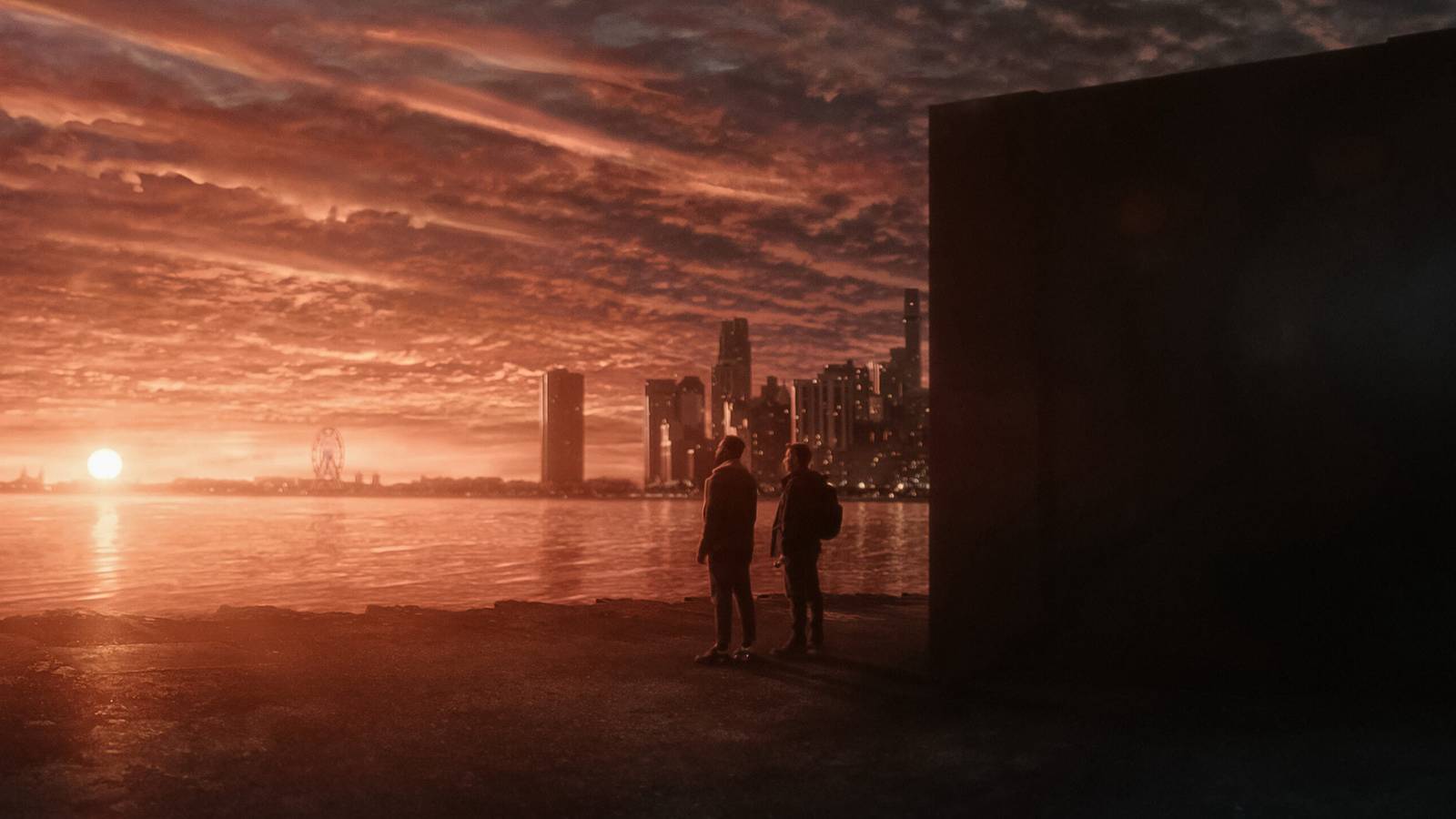
Published Jul 18, 2026, 10:30 PM EDT Dhruv is a Lead Writer in Screen Rant's New TV division. He has been consistently contributing to the website for over two years and has written thousands of articles covering streaming trends, movie/TV analysis, and pop culture breakdowns. Before Screen Rant, he was a Senior Writer for The Cinemaholic, covering everything from anime to television, from reality TV to movies. After high school, he was on his way to become a Civil Engineer. However, he soon realized that writing was his true calling. As a result, he took a leap and never looked back. One of the most mind-bending sci-fi shows on Apple TV seems to combine some of the best ingredients from Inception and Everything Everywhere All At Once. When it comes to delivering high-concept and twisty sci-fi shows, Apple TV is easily the leading streaming service with shows like Severance, Foundation, For All Mankind, Dark Matter, and Sugar in its catalog. Among these, Dark Matter is perhaps the most underappreciated sci-fi gem that does an incredible job of bringing its source material's multiversal story to the small screen. Based on Blake Crouch's book of the same name, Dark Matter is packed with one twist after another as it walks through a man's journey through many bizarre parallel worlds. Dark Matter also performed well enough on Apple TV to be renewed for season 2, which is set to premiere on August 28, 2026. While Dark Matter seems to have etched its own unique identity in the vast array of modern sci-fi shows out there, it shares some intriguing similarities with movies like Inception and Everything Everywhere All At Once. These similarities will likely be even more evident in its upcoming season, which makes its return even more exciting. Apple TV’s Dark Matter Is Reminiscent Of Movies Like Inception & Everything Everywhere All At Once Credit: Everett Collection Just like the dream machine in Christopher Nolan's Inception, Apple TV's Dark Matter features a device called "The Box." The Box in Dark Matter operates on a rigid set of rules, and, much like the dream machine, it operates through the mind of an observer. Just like the dream machine allows one to become the architect of a vivid subconscious reality, The Box allows one to manifest a desired parallel reality. Both Inception and Dark Matter present a "Schrödinger's cat" paradox where they argue that even the manifested or dream worlds are not less real than the ones the protagonists originally lived in. After watching both, it becomes hard not to question the nature of one's objective existence and how it is shaped by subjective perception. Dark Matter's parallels with Everything Everywhere All At Once emerge in the beginning itself, when the show sets out to explore a bizarre set of alternate realities and possibilities. Like the Oscar-winning movie, Apple TV's Dark Matter also presents alternate versions of the same character who are radically different from one another. Similar to Daniel Kwan and Daniel Scheinert's movie, Blake Crouch's Dark Matter also makes a narrative device out of its multiversal travel. It uses it to capture the complex nature of familial relationships and how even the smallest choices in the present can ripple into disastrous yet necessary consequences in the future. While Dark Matter is not as unique as Inception and Everything Everywhere All At Once and relies more on twists and turns to keep viewers invested, it is a fascinating addition to the sci-fi genre. Dark Matter Will Be Even More Mind-Bending In Season 2 Dark Matter season 1's ending exhausts its source material's story. Surprisingly, despite this, the show is returning with another season on August 28, 2026. Sci-fi book adaptations that try to stretch beyond their source material's story often end up going off the rails and forgetting what made them special in the first place. However, it seems like Dark Matter will avoid these issues because its source material's author, Blake Crouch, is its showrunner. With Crouch serving as its creator, it is hard not to believe that the author will expand the story with the same careful attention to its characters and central ideas that made the book a bestseller. Blake Crouch already did an incredible job of subtly setting up story beats for season 2 in season 1's final moments. Given how the Apple TV sci-fi show's season 1 has already introduced a handful of parallel universes and also establishes that many new characters will set out to travel the multiverse through "The Box," Dark Matter season 2 can be expected to be even more mind-bending and compelling than season 1. If all goes well for the Apple TV sci-fi show, it might end up earning as much acclaim and mainstream success as movies like Inception and Everything Everywhere All At Once. Based on his novel of the same name, Dark Matter is a sci-fi drama-thriller television series created for Apple TV+ by Blake Crouch. The series follows a physicist who is kidnapped and thrown into an alternate reality where he witnesses one potential path his life could have taken. However, he learns that the lives of his family are in jeopardy by an alternate version of himself. Network Apple TV+ Cast Jennifer Connelly, Joel Edgerton, Oakes Fegley, Jackie Dallas, Michael A. Dean, Reilly Oh, Snag Flynn, Alice Braga, Jimmi Simpson, Dayo Okeniyi, Amanda Brugel, Matthew Amador, Rolando Boyce, William Smillie, Joe Dioletto, Arti Ishak, Elvis Garcia, Jenne Kang, Peter Sipla, Kathryn Acosta, Madelyn DePorter, Bassam Abdelfattah, Brenann Stacker, Beacon Bowman, Tara Mallen Directors Jakob Verbruggen, Alik Sakharov, Roxann Dawson, Logan George Writers Blake Crouch Main Genre Sci-Fi Creator(s) Blake Crouch Producers Don Kurt, Joel Edgerton, Matt Tolmach, David Manpearl, Blake Crouch, Megan McDonnell Seasons 2 Where To Watch AppleTV+
Inception Meets Everything Everywhere All At Once In Apple TV’s Mind-Bending Sci-Fi
Full Article
📰 Original Source
Read full article at Screenrant →KhanList aggregates and links to publicly available news content. We do not host full articles from third-party sources. Always verify important information with original sources.