
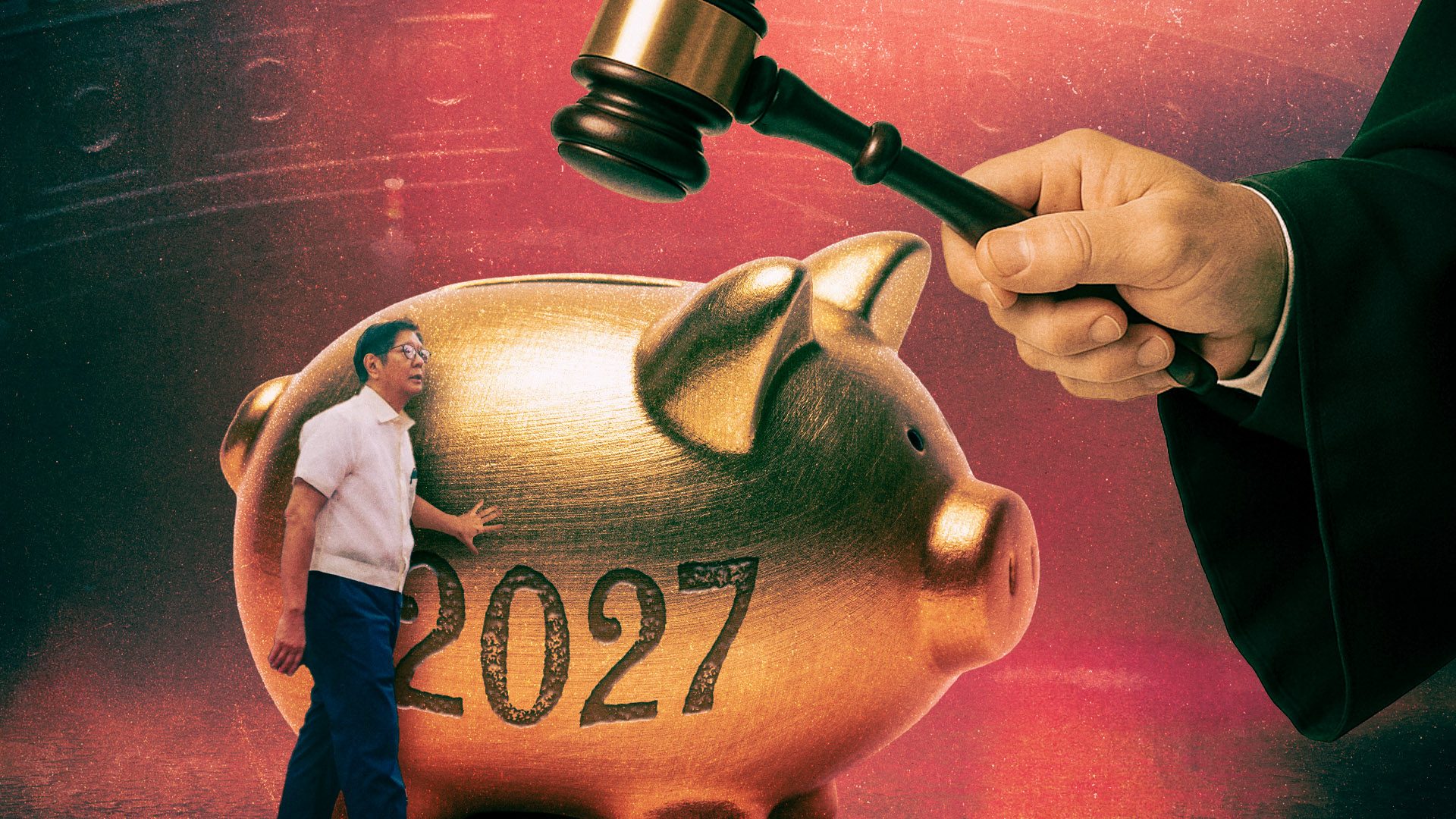
The Supreme Court has delivered a damning verdict on how Congress and the Marcos administration have handled our national budgets in the past few years. In a decision announced on Tuesday, October 20, the Supreme Court (SC) declared the 2024 and 2025 General Appropriations Acts (GAAs), or our annual budget laws, unconstitutional. It also struck down two provisions governing the release of unprogrammed appropriations (UA) in the 2026 budget. This is a historic decision. It’s not every day that the Supreme Court declares GAAs unconstitutional. It also comes on the heels of the SC’s December 2025 decision ordering the return of P60 billion transferred from PhilHealth to the Treasury—done also to fund unprogrammed appropriations. Note that the Court didn’t invalidate the entire 2026 budget, abolish all unprogrammed appropriations, or order the return of every past payment. Instead, the ruling—dated October 7 and written by Senior Associate Justice Marvic Leonen—exposes serious defects in the way hundreds of billions of pesos were authorized in the past few years. What went wrong, and what should happen next? Budget inflation Let’s start with the very concept of unprogrammed appropriations or standby spending authority that the government can use only when specified funding conditions are met. These differ from programmed appropriations, which already form part of the government’s regular spending plan. In principle, unprogrammed funds can serve legitimate purposes. A foreign-assisted project, for instance, like a railway, may need spending authority contingent on an approved loan. The Supreme Court recognizes that such appropriations can be constitutional. But just because a spending item is “unprogrammed” doesn’t mean it’s exempted from the Constitution’s budget ceiling. This is a key ruling in the decision. Article VI, Section 25(1) of our Constitution says Congress may not increase the appropriations recommended by the President for government operations, set yearly in the National Expenditure Program or NEP. For instance, for 2027, the NEP set a P7.2 trillion budget, and Congress cannot exceed that. What the Supreme Court made clear is that this ceiling should strictly include both programmed and unprogrammed appropriations. Congress brazenly breached this ceiling in past years. For 2024, the President proposed about P281.9 billion in unprogrammed funds, but Congress raised that to P731.4 billion, amounting to an increase of P449.5 billion or roughly 159%. Hence, the standby allocation became about 2.6 times the original proposal. The scale of the increase is really mind-boggling. Nearly half a trillion pesos in additional spending authority emerged from the budget legislation process. Programmed appropriations remained unchanged, so the UA increase also raised the combined total above the President’s budget ceiling. With the 2024 budget ceiling breached, the Supreme Court declared the P449.5-billion increase (and, consequently, the 2024 budget law) unconstitutional. The 2025 budget suffered a similar defect through a P17.992-billion increase in the Department of Public Works and Highways’ Special Road Fund. From where I sit, the Supreme Court decision is largely a constraint on Congress’ ability to play around with unprogrammed funds. This is the handiwork of Marcos’ allies and family members in Congress, including the former speaker Martin Romualdez (his first cousin), who orchestrated the anomalous budget increases. But blame rests on the executive, too. President Ferdinand Marcos Jr. and his budget officials—especially former budget secretary Amenah Pangandaman—must explain how budgets with these defects passed through executive scrutiny. By the way, the ruling also raises questions about the 2023 budget, the Marcos administration’s first, when unprogrammed appropriations reached more than P807 billion. That budget was outside the consolidated cases, however. Questionable financing Through its recent decision, the Supreme Court also reaffirmed limits on when standby funds can be released. The challenged 2026 special provisions allowed releases from unprogrammed appropriations when collections from a particular non-tax revenue source exceeded its target, or when a new revenue source produced collections. Neither condition, by itself, guarantees that total government revenues have exceeded the overall target. The reason is that higher collections from one source—or revenues from a new source—can coexist with larger shortfalls elsewhere. For instance, suppose the government expects P90 in taxes and P10 from other revenues, for a total of P100. Instead, it collects P80 in taxes and P15 from other sources. There’s a P5 windfall in the second category, but total collections are only P95. If planned spending is P100, the financing gap is already P5. Authorizing another P5 of spending on the strength of the supposed windfall doubles that gap to P10. Reaffirming its earlier Araullo ruling, the Supreme Court requires aggregate collections to exceed total revenue targets for the use of unprogrammed appropriations. It invalidated the two triggers found in the 2026 budget, but still allowed approved loans for foreign-assisted projects. This makes a lot of sense from a fiscal standpoint. Additional spending without genuinely additional resources can mean more borrowing, higher interest costs, or less room for other services. Government borrowing can finance worthwhile investments, but the projects and financing must be assessed in tandem, not in isolation. The spending of these funds also deserves scrutiny. The decision examines the broadly defined Support for Assistance to Government Infrastructure and Social Programs (SAGIP), which left actual project selection and allocation to the Executive after budget enactment. Of roughly P200 billion in SAGIP allotment releases in 2024, about P155.9 billion went to public works, including P85.8 billion for flood control. These were authorizations to incur obligations, not proof of completed projects or corruption. The Supreme Court itself says SAGIP “paved the way for the new pork barrel system.” It recounts the comments of an amicus curiae, UP School of Economics Professor Emerita Solita Monsod, one of my mentors. She explained before the court how infrastructure allocations had become embedded in budget preparation, with lawmakers proposing projects and a “parking fee” allegedly paid for projects outside their districts. These observations demand investigation: Exactly which allocations financed useful infrastructure, and which financed ghost projects or kickbacks? What now? The main concern with the ruling is that it does little to recover what was already lost. It’s like shutting the tap after water has already gone down the drain. A number of lawyer friends immediately pointed out that the Supreme Court applies the doctrine of operative fact, which allows certain consequences of an unconstitutional law to stand when undoing them would unfairly harm people who relied on the law in good faith. Here, that protection is qualified: it covers irreversible programs, activities, and projects under the affected 2024 unprogrammed appropriations and challenged 2025 accounts, whose beneficiaries relied in good faith on the law’s validity. It doesn’t automatically clear every transaction or protect the officials responsible. The ruling itself convicts nobody of plunder or graft. Those questions require separate proceedings and proof. But authors, proponents, and implementers of the unconstitutional budget provisions can’t simply invoke the protection of beneficiaries to escape scrutiny. Moving forward, the Department of Budget and Management (DBM) should publish a project-level accounting of affected funds, distinguishing amounts authorized, released, committed through obligations, and actually paid. Ongoing commitments also need prompt legal review so agencies know which activities can lawfully proceed. Right now, Congress is finalizing the 2027 budget, and must be guided by the new Supreme Court decision. Specifically, the combined total of programmed and unprogrammed appropriations must stay within the constitutional ceiling. Congress must also publish a reconciliation of changes to be made by the bicameral conference committee, which settles differences between the House and Senate versions. Every addition should have an identifiable purpose and financing basis. The Supreme Court ruling is a win not just for budget watchdogs but for Filipinos at large. It gives government an opportunity to correct anomalous practices in recent years. But the big question is: Will Congress and the Marcos administration account for the affected funds and change how they prepare the next budget? Note, too, that lawmakers wised up and shifted their pork projects away from unprogrammed funds toward programmed funds. The 2027 budget (for the last full year of the Marcos administration, right before the 2028 polls) is shaping up to be as corrupt and patronage-driven as ever. Pork is here to stay, unless a radical shake-up in the political landscape changes how the budget is crafted and implemented. For Filipinos, bad budgeting is a double-whammy: we’re borrowing and paying for the corrupted amounts they stole from the public coffers. But we get nothing in return by way of quality public goods. Ang hirap mahalin ng Pilipinas! (It’s hard to love the Philippines!)– Rappler.com Jan Carlo “JC” Punongbayan, PhD, is an associate professor at the University of the Philippines School of Economics. His professional experience includes the Securities and Exchange Commission, the World Bank Office in Manila, the Far Eastern University Public Policy Center, and the National Economic and Development Authority. JC writes a weekly economics column for Rappler. He is also co-founder of UsapangEcon.com and co-host of Usapang Econ Podcast. His first book, False Nostalgia: The Marcos “Golden Age” Myths and How to Debunk Them, was published by Ateneo de Manila University Press in February 2023. His second book, Twin Plagues: How Duterte and COVID-19 Wrecked the Philippine Economy, was published by Penguin Random House SEA in June 2026. Follow him on Instagram (@jcpunongbayan). Below are In This Economy pieces you may have missed:
[In This Economy] Marcos’ unconstitutional budgets: Who will answer for them?
Full Article
Original Source
Read the full article at Rappler →KhanList aggregates and links to publicly available news content. We do not host full articles from third-party sources. Always verify important information with original sources.