
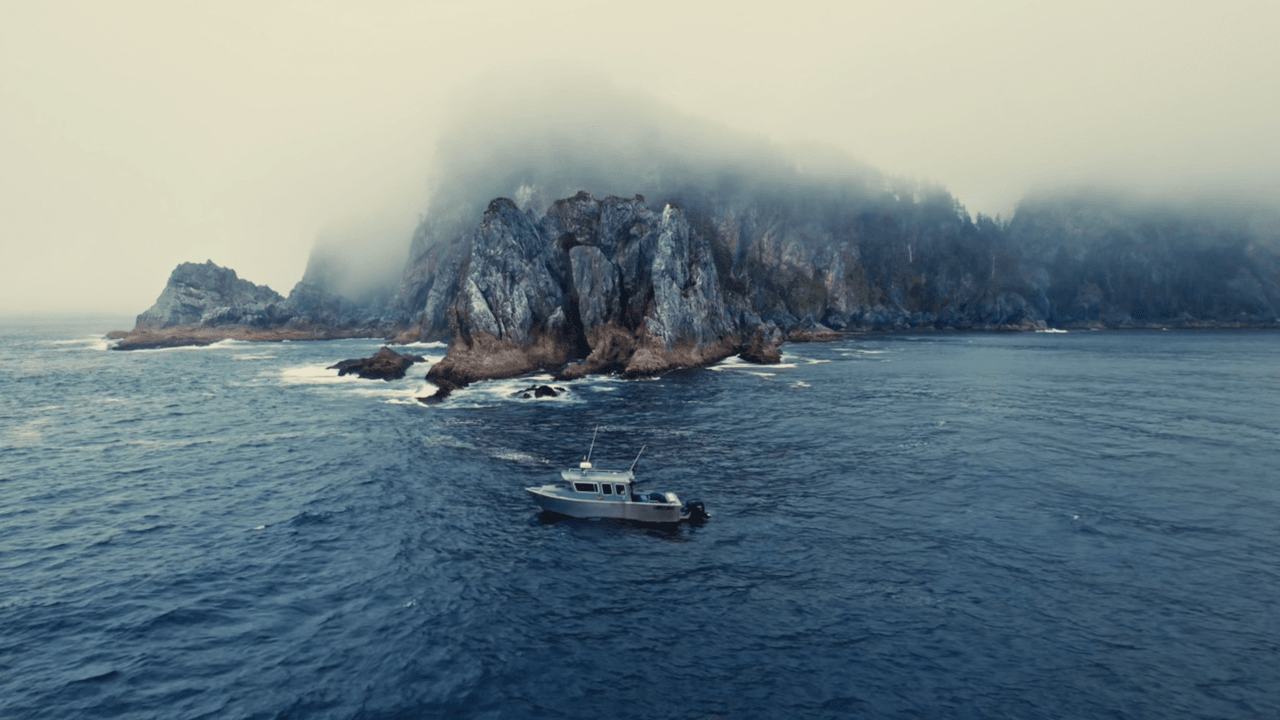
As the fish on the end of my line ferociously attempts to swim away from our boat, I can tell from the forcible tug that it's a prized Chinook salmon. I stay steady and let the fish (known as a king in Alaska for its large size) tire itself out before calmly reeling it in, following the advice of the expert guide standing alongside me. He hoists my catch into our North River cabin cruiser, and I meet my worthy opponent: a plump, silver-blue salmon with black speckles, weighing in around 15 pounds. As I take a moment to catch my breath and admire the scenery around me—pristine waters reflecting the blue sky above, dense forests, coastal cliffs—I realize my Indigenous ancestors likely fished this exact spot centuries before me.A decade ago, I returned to my birthplace of Ketchikan in Southeast Alaska to reconnect with my Tlingit heritage, having only recently learned of my Alaska Native ancestry and found my Indigenous family members. I felt inspired by our tribe’s rich culture, especially after hearing stories about it from my brother, but at the same time I felt unmoored and unsure of my place within it, as someone who had grown up in Minnesota, far from my tribe’s ancestral homelands. I have since returned several times, but on this recent trip to Alaska’s Inside Passage, salmon fishing was making me feel like I belonged.Steamboat Bay Fishing Club on Noyes Island in Southeast Alaska The adventure began long before I arrived at Steamboat Bay Fishing Club on remote Noyes Island, where unadulterated, old-growth forest stretches right up to the edges of its serene shoreline. To get there from Ketchikan, I hopped a floatplane for a 45-minute flight over Tongass National Forest—the planet’s largest intact temperate rainforest—before being dropped off at the lodge’s private dock.Certified by Alaska Green Adventure for its sustainability efforts, the luxury resort has operated on the island since 2013 and hosts a max of 24 guests. Typical three-night stays include guided fishing, curated chef’s dinners, rejuvenating massages, nature walks, and late-night storytelling and stargazing around the fire pit. Throughout my visit, I spied bald eagles, orcas, humpback whales, sea otters, and sea lions. The stay was unlike anything I’ve ever encountered before.It’s still an awe-inspiring experience for Haida-Tsimshian fisherman and artist Everett Athorp, who has served as a fishing guide at Steamboat Bay since it opened. “I’m amazed by the beauty of the place,” he says. “There’s nothing like getting out on the water on a beautiful day and seeing the sunrise and all the wildlife. I can’t picture myself doing anything else—I just love the freedom of being out on the water.”Athorp’s easygoing, unassuming demeanor belies his decades-long experience and expertise, which are rooted in the knowledge passed down by his Indigenous ancestors. Regulars who return to the resort every summer request to hit the water with him, eager to hear his stories of growing up in Alaska and to learn about the significance of fishing for the state’s 229 federally recognized tribal nations.“Salmon are so important to Alaska Native culture,” says Athorp, who lives in nearby Klawook on Prince of Wales Island. “Fishing is a livelihood and a way of life here. I’ll tell my guests about the old ways people fished, using traps and wooden halibut hooks. I hope they come away with a respect for the salmon, the fishery, and the land—and an appreciation for the opportunity to be here, even if it’s a slow fishing day.”In Alaska, fishing isn’t just a hobby—it’s a means of survival, especially for the state’s vast rural population, who depend on subsistence hunting and fishing to feed their families. Dating back millennia, Alaska Native communities have stewarded and sustainably harvested wild salmon runs, building smokehouses and summer fish camps (many of which are still in use). Oral histories, formline artwork, and traditional dances all honor the role of salmon as not only a vital food source but also an important cultural symbol; my Tlingit tribe considers salmon to be sacred beings representing abundance, renewal, and life itself.Steamboat Bay’s main lodge is dotted with artistic homages to salmon and other important animals, including carved paddles, bentwood boxes, and a massive carved Western cedar panel perched above the fireplace. It’s all made by Athorp, who is also an accomplished carver. The craft is another important cultural component of his Haida-Tsimshian heritage, and his creations are an act of resistance and cultural preservation—carrying on the work of his grandfather, Jones Yeltatzie.Haida-Tsimshian fisherman and artist Everett Athorp holds one of his works Russell Sparkman“My grandfather went to Mt. Edgecumbe boarding school in Sitka, so he had to [teach himself the artistic method] when he was a kid,” says Athorp. The institution was established by the Bureau of Indian Affairs in the 1940s to offer a high school education for rural Alaska Native students, who historically were restricted from learning about their cultures. “Because he was self-taught, [his technique] was a little rough. Looking back at it now, he was trying to keep the tradition alive.” Today, Athorp is the one passing those skills on to both Native and non-Native aspiring artists.Out on the water, I find myself settling into a rhythm as the hours pass. In some ways, it feels familiar, given that I grew up fishing Minnesota’s lakes for walleye, sunfish, and other freshwater species. But those Midwestern summers couldn’t have prepared me for quintessential Alaska fishing experiences like fighting a king salmon, hooking a barn-door halibut (so named for its size), or watching in disbelief as a sea lion snatches my hard-won catch right off the line.But as any seasoned angler knows, fishing is never just about fishing. Much of the day is devoted to seemingly ancillary activities like shooting the breeze with my boatmates. We become fast friends, and I learn that although this trip holds particular significance for me, they too seem to have found what they were seeking amid Alaska’s unadulterated beauty. All of us have been offered a taste of a time-honored Tlingit tradition, and it's here, floating out in uncharted waters as my ancestors once did, that I finally feel like I've found my place.
In Southeast Alaska, Connecting With My Indigenous Roots Through Salmon Fishing
Full Article
Original Source
Read the full article at Cntraveler →KhanList aggregates and links to publicly available news content. We do not host full articles from third-party sources. Always verify important information with original sources.