
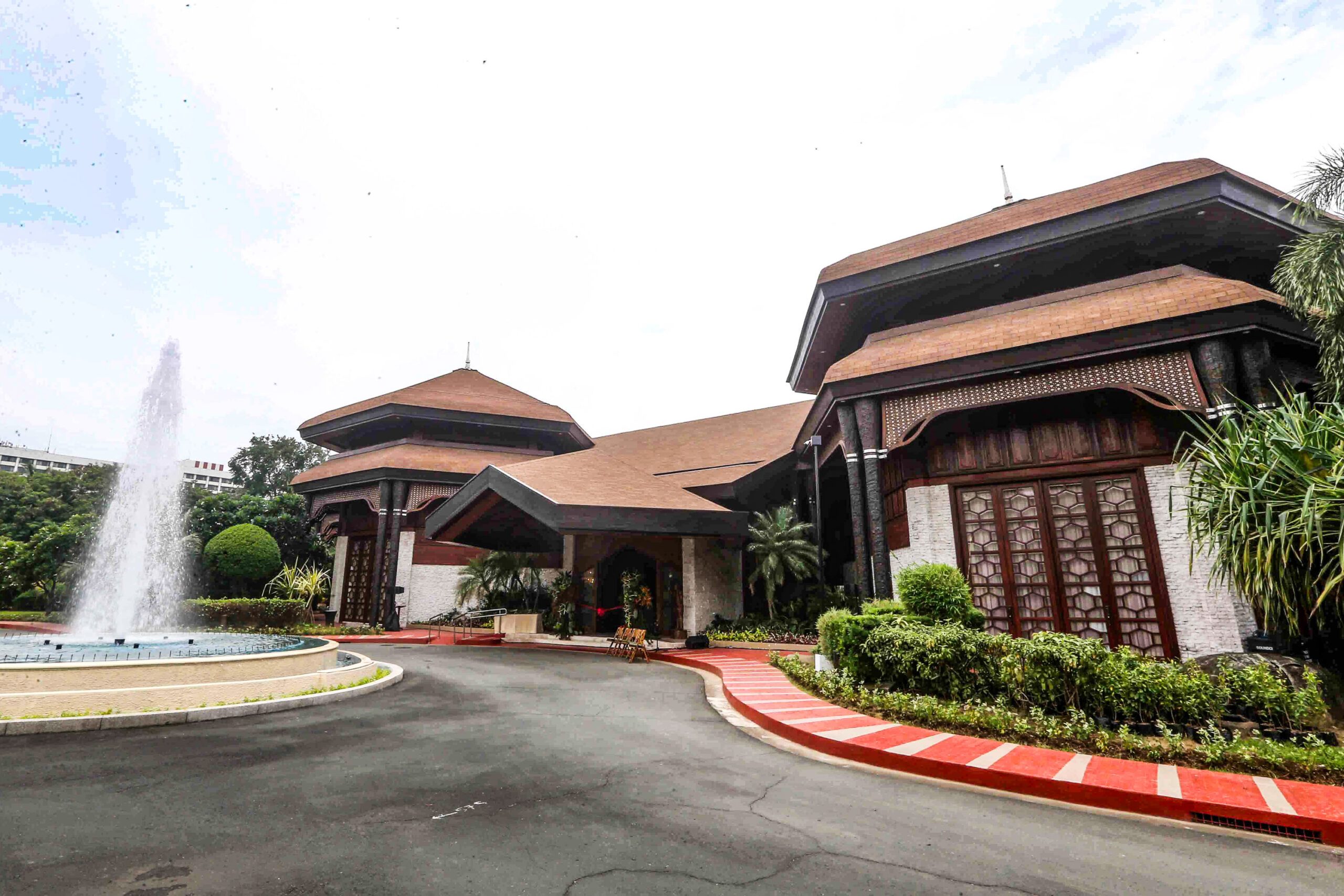
INDIGENOUS. The Coconut Palace in Pasay City, also known as Tahanang Pilipino, reopens to the public on August 25, 2026, following extensive renovations. Designed by National Artist for Architecture Francisco 'Bobby' Mañosa, the landmark is known for its distinctive Filipino architecture and use of coconut and other indigenous materials. Angie de Silva/Rappler Local and foreign visitors will again have a chance to experience the cultural and architectural landmark in Pasay City The Coconut Palace, also known as Tahanang Pilipino, underwent restoration work in preparation for the upcoming ASEAN Summit. The restoration project, led by First Lady Liza Araneta-Marcos, aims to reconnect Filipinos with their heritage and celebrate Filipino creativity. In 2023, the Coconut Palace was declared an Important Cultural Property, qualifying it for government support for maintenance and preservation. This is AI-generated. Read the article for full context. Report any errors. MANILA, Philippines – The Coconut Palace, also known as “Tahanang Pilipino (Philippine Home),” reopened to the public on Tuesday, August 25, after months of restoration works in preparation for the ASEAN Summit and Related Meetings in November. “The reopening of the Coconut Palace is more than the restoration of a historic landmark. It is an invitation for Filipinos and visitors alike to reconnect with our heritage, celebrate Filipino creativity, and appreciate the architectural and cultural legacy that continues to inspire generations,” said Government Service Insurance System (GSIS) President and General Manager Jose Arnulfo Veloso. Members of the media were shown around the cultural landmark in Pasay City during the pre-reopening tour on Tuesday. The project was spearheaded by First Lady Liza Araneta-Marcos. Forty-eight years ago, the First Lady’s mother-in-law, then-First Lady Imelda Marcos, commissioned the construction of the Coconut Palace as a guest house for Pope John Paul II. The structure was completed in 1981 in time for the papal visit, but the pope declined the invitation, saying the structure was too opulent in sharp contrast to the poverty being experienced by many Filipinos. As can be gleaned from its name, the Coconut Palace is built from coconut and other indigenous materials, showcasing Philippine craftsmanship and architecture. It was designed by the late National Artist for Architecture Francisco Mañosa. NATURAL MATERIALS. A guide gestures as she points to the ceiling of one of the areas of the newly restored Coconut Palace on August 25, 2026. Photo by Angie de Silva/Rappler During the first Marcos administration, the Coconut Palace hosted state guests and friends of the Marcoses, including the late Libyan strongman Moammar Gaddafi and American actor George Hamilton. After the EDSA People Power Revolution, the GSIS gained ownership of the Coconut Palace. It was leased out for private functions, including location shootings of television shows until the Office of the Vice President under Jejomar Binay rented it as the OVP’s official quarters and residence in 2011. His successor, Leni Robredo, did not want to hold office there when she was elected vice president as she found the P500,000-monthly rental “too ostentatious.” OFFICE. Then vice president Jejomar Binay’s official quarters and residence in 2011. Photo by Angie de Silva/Rappler In 2017, under the Rodrigo Duterte administration, the Coconut Palace hosted the ASEAN Leaders’ Summit and Retreat, where the leaders posed for their traditional group photo. In 2023, the National Museum declared the Coconut Palace as an Important Cultural Property, a status “given to establishments that have “exceptional cultural, artistic, and historical significance to the Philippines.” Because of this status, the Coconut Palace is qualified to get financial support from the government for maintenance and preservation purposes, as provided under the National Cultural Heritage Act. GRAND STAIRCASE. Designed by National Artist for Architecture Francisco ‘Bobby’ Mañosa, the landmark is known for its distinctive Filipino architecture and use of coconut and other indigenous materials. Photo by Rappler Commissioned in 1978 as a government guest house for foreign dignitaries, the Coconut Palace was declared an Important Cultural Property in 2023. Photo by Angie de Silva/Rappler A sitting area backdropped by shelves of Filipino artisans’ products. Photo by Rappler The Coconut Palace was commissioned in 1978 and finished construction in 1981 as a government guest house. Photo by Angie de Silva/Rappler There are seven rooms representing different areas of the Philippines. Photo by Angie de Silva/Rappler A sitting area with huge pillows fitted with local woven fabric. Photo by Angie de Silva/Rappler Photo by Rappler Photo by Rappler Photo by Rappler Photo by Rappler Photo by Rappler The Coconut Palace in Pasay City is also known as Tahanang Pilipino. Photo by Angie de Silva/Rappler – Rappler.com How does this make you feel? Loading
IN PHOTOS: Coconut Palace reopens to the public
Full Article
Original Source
Read the full article at Rappler →KhanList aggregates and links to publicly available news content. We do not host full articles from third-party sources. Always verify important information with original sources.