
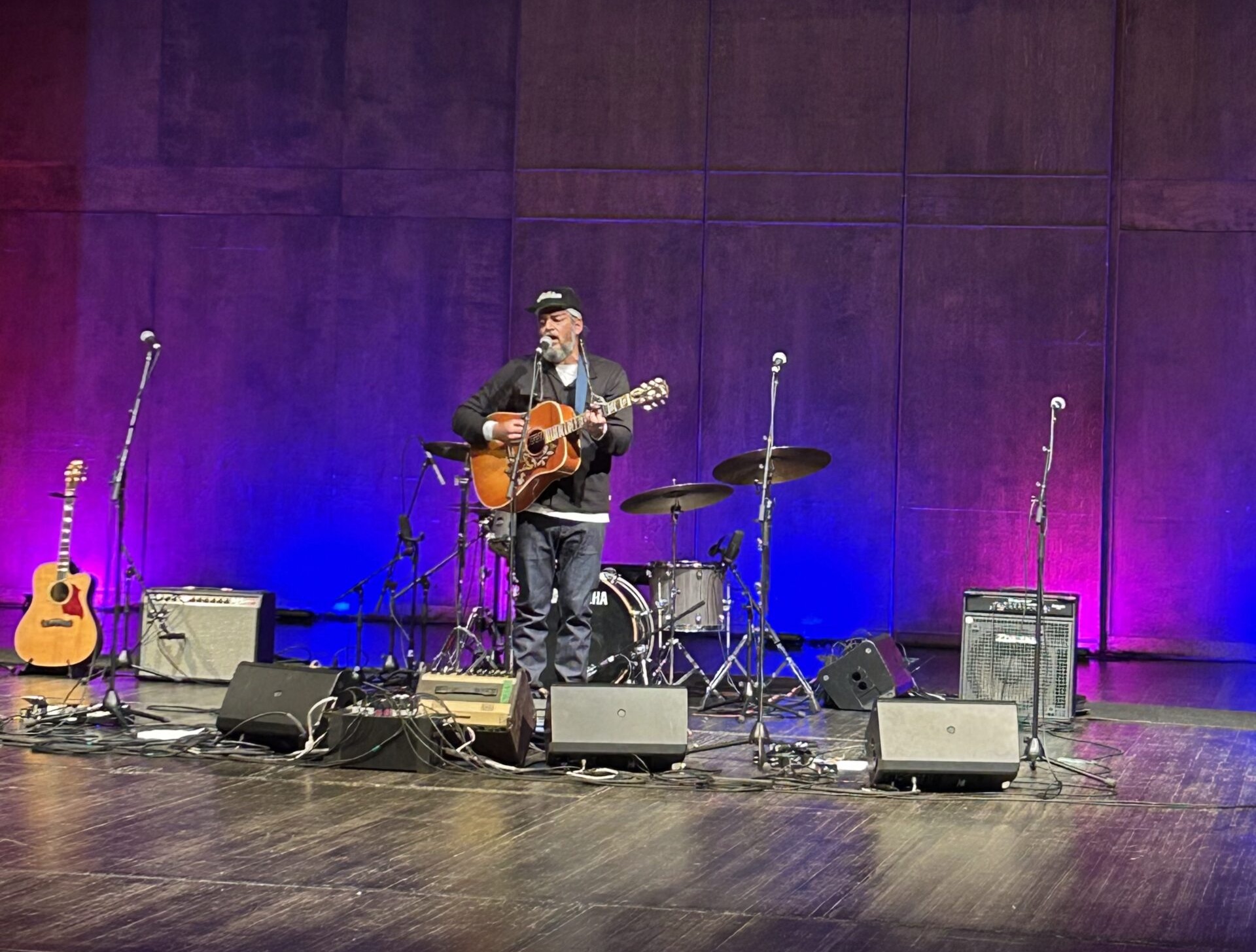
CAPE BRETON, Nova Scotia (CN) — At the Tiller and Wheel Pub in the small town of Baddeck, music-lovers escape the afternoon rain to buy a beer and hear locals play.The room is packed. A fiddler begins playing “Barrett’s Privateers,” and the crowd erupts.The wood beams overhead shake with claps, stomps and hollers. One can distinguish the locals and tourists by who sings along to this sea shanty:Oh, the year was 1778,How I wish I was in Sherbrooke now…A barkeep wanders the pub, collecting empties.He slaps regulars on the back with familiarity. “How’s she goin’?” he asks one.The room buzzes with clinking glass and indistinguishable accents. Someone opens a sea-facing window, letting a salty breeze cool the room.Welcome to Celtic Colours International Festival, an award-winning, nine-day musical event on picturesque Cape Breton island in Nova Scotia. Now in its 30th year, this year’s festivities include 52 concerts and 275 cultural experiences between Friday, Oct. 9 and Saturday, Oct. 17.Spread across 63 communities, Celtic Colours encourages attendees to explore the island, from its world-famous coastal drive along the Cabot Trail to quaint shops and seafood restaurants where visitors get greeted with a “darlin’.”A local musician performs at Celtic Colour's open-mic afternoon at the Tiller and Wheel Pub in Baddeck, Nova Scotia, on Oct. 10, 2026. (Rachel Habermehl/Courthouse News)“It’s not just the concerts,” says Dave Mahalik, a festival spokesperson. “It’s the opportunity to go beyond the music to understand the culture — and even better, immerse yourself in it.”Wrapped by 8,000 miles of craggy Atlantic coastline, the eastern Canadian province of Nova Scotia is a medley of musical cultures. This place exemplifies what can happen to music when distinct cultures share a small space.In the songs here, one can hear influences from the original Mi’kmaq peoples, as well as from the waves of immigration that followed: Acadian, Scottish, Irish and African Nova Scotians.More than just entertainment, music in Nova Scotia is about building community, telling stories and preserving culture and language. Despite having little more than 1 million residents, this province has produced some of the world’s best Celtic and folk artists, from Natalie MacMaster and Ashley MacIsaac to Rita McNeil and the Rankin Family.But if Celtic Colours represents Nova Scotian musical resilience, it’s also facing new challenges this year. Amid a $1.2 billion budget shortfall, the province on Feb. 23 announced a $130 million cut to organizational grants, impacting arts and culture funding. And although $53.6 million was reinstated on March 10, the reversal did not recover funds for music.“We had 20% less budget in an anniversary year,” Mahalik says, “so of course that’s going to have an impact on how you do things.” Other Nova Scotia music festivals report similar obstacles, including Halifax Urban Folk Festival and Deep Roots Music Fest.In spite of these challenges, the band plays on in Nova Scotia. It’s a testament to the strength of the music scene here, like a mortar that binds the province’s cultural mosaic together.An encore of the Unusual Suspects at Celtic Colours International Festival in Glace Bay, Nova Scotia, on Oct. 10, 2026. (Rachel Habermehl/Courthouse News)Despite the budget deficit, the province demonstrates an ongoing commitment to helping music thrive, says Bob MacEachern, chair of Celtic Colours.“At the end of the day, the province has been very supportive,” he says. “While the core funding has been cut, they’ve certainly still been on our side.”Celtic Colours doesn’t just use public funds — it also brings in millions each year in tourist dollars, helping extend the tourist season by more than a month. Last year, the festival generated $18.2 million in economic activity across the province, including $15.8 million in Cape Breton alone.These tourist dollars strengthen Nova Scotia, bringing business into shops and helping pay for routine maintenance work at the churches and halls that host events.“There’s always been a sense of community economic development behind the festival,” Mahalnik says.Looking around this packed venue, it’s easy to see why Celtic Colours is an economic boon. At one table, a man from Kansas is back at the festival for the second time. At another, there’s an English attendee who first visited 13 years ago. This time, he took two flights and made a four-hour road trip just to get here.A roadside lookoff near Englishtown on Cape Breton Island in Nova Scotia. (Rachel Habermehl/Courthouse News)Celtic Colours is hardly the only festival impacted by funding cuts.“Sponsorship money is tight for everybody,” says Mike Campbell, Founder and Program Director of the Halifax Urban Folk Festival or HUFF, an annual weeklong music event in downtown Halifax.It takes balance, Campbell says, to book a quality showcase of artists while still staying within budget.“We’re not-for-profit, so we’re not so much trying to make money as we are not to lose money,” he adds.To make up the difference, festivals are leaning on volunteers and community support.Celtic Colours has nearly 2,000 working behind the scenes. “We would never be able to put on a festival like this without the volunteers,” MacEachern says.The five-day Deep Roots Music Fest in the town of Wolfville likewise has more than a hundred volunteers, many of whom have never missed a year, says festival chairperson Gerry Davis.“One of our accomplishments is that we have been able to do this through a superb, committed volunteer basis,” Davis says. Support from local government and businesses helps further close the gap. “We put extra effort into getting other funding from other levels of government, and we increased our efforts for sponsorships from the community.”HUFF Songwriter's Circle in Halifax, Nova Scotia, on Sept. 29, 2026. From left to right: Mick Davis, Skye Wallace and Freya Milliken. (Rachel Habermehl/Courthouse News)A focus on community helps set Nova Scotia music culture apart from other Canadian scenes, Campbell says.“In Toronto, just as an example, it’s much more dog-eat-dog,” he says. “People would swoop in and steal someone else’s gig if they could manage it.” That’s not the case here, where he says there’s a real spirit of camaraderie. “I would go to a show and every other artist in town would also be there — and they weren’t on the guest list. They’d buy tickets.”Organizers say funding music events isn’t a handout.“The government puts half a million dollars into something, and then we churn that into $19 million spent on the ground here,” Mahalik says of Celtic Colours. “That sounds like a pretty good investment.”The economic effects are evident even with the smaller events. Stroll down Argyle Street in Halifax during HUFF and one can see people rushing from restaurants to music venues. Likewise for Wolfville during Deep Roots.“The restaurants are full. The bars are full,” Davis says. “It’s certainly economically great for the town.”The name Nova Scotia means New Scotland. Scottish and Irish heritage run deep here, not just as history but as living culture.Events like Celtic Colours pay homage to these roots. Even its name makes reference to them. Among this year’s performances is The Unusual Suspects, a 25-piece ensemble featuring both jazz and Scottish traditional musicians. An elegant storm of strings, woodwinds and brass, this orchestra weaves a colorful tapestry of new and historic sounds.In such a musical place, music is an important aspect of community wellbeing.Deep Root's Fresh Beats Rhythm Parade prepares to walk down Main Street in Wolfville, Nova Scotia, on Sept. 26, 2026 (Rachel Habermehl/Courthouse News)One can see it on the streets of Wolfville during the Deep Roots Festival from Sept. 24 to 27, where seniors, students and young families all come out to share in the experience together.On Saturday afternoons of Deep Roots festivals, a parade fills Main Street with cheerful band songs, quirky costumes and giant puppets.“I’m just so inspired by the arts here, and the energy,” says Deborah Gabinet, a local musician who moved from Western Canada to chase East Coast music. “The whole community is coming out for this wonderful parade."In a province so rich in music, boosters say supporting events like these is one of the best ways to invest directly into communities. Not because they need the money to survive — Nova Scotia music has proven its resilience — but because every dollar invested goes directly into one of the province’s greatest attractions, exports and economic drivers.Back at the Tiller and Wheel Pub in Baddeck, the room is full with the sounds of fiddles, guitars and musical spoons.As the bar empties later, folks zip up their jackets and tug beanies over their ears before stepping back into the cool ocean air.Outside, the streets are lined with cars bearing license plates from all around the continent. Someone with a Scottish accent asks how long the drive is to the next show in Glace Bay. This festival has taken 12 months to orchestrate, a compounding return on investment made by volunteers, artists and sponsors alike. And here’s the end result: In a small village on Cape Breton island in Nova Scotia, tourists have come from all around the world to listen to fiddle tunes and revel in what MacEachern calls “an experience they’ll never forget.”A drive through Cape Breton island in Nova Scotia. (Rachel Habermehl/Courthouse News)Subscribe to our free newslettersOur weekly newsletter Closing Arguments offers the latest about ongoing trials, major litigation and rulings in courthouses around the U.S. and the world, while the monthly Under the Lights dishes the legal dirt from Hollywood, sports, Big Tech and the arts.Additional Reads
In Nova Scotia, the band plays on despite funding cuts
Full Article
Original Source
Read the full article at Courthousenews →KhanList aggregates and links to publicly available news content. We do not host full articles from third-party sources. Always verify important information with original sources.