
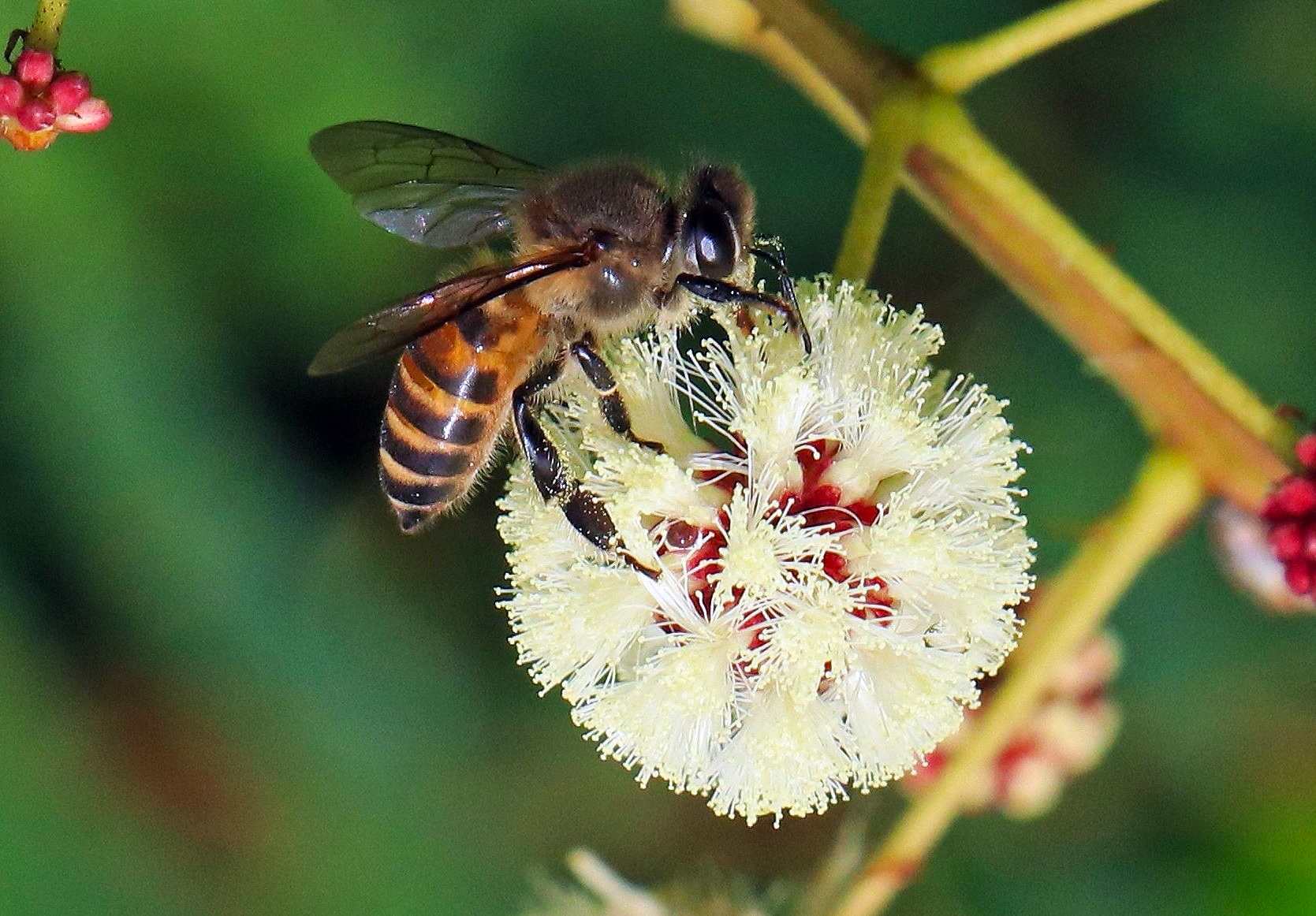
In the Himalayan region of Uttarakhand, India, traditional homes have a dedicated space to accommodate bees. Women then care for the bees as part of a beekeeping practice that has become a crucial sanctuary for indigenous bee populations facing severe environmental threats, reports contributor Swati Thapa for Mongabay. For generations, households in the region have shared their homes with the Indian honey bee (Apis cerana indica), using traditional “wall hives”, rectangular cavities constructed directly into mud house walls through which bees can enter. A small door, accessible from inside the house, is sealed with clay and cow dung. The seal is removed when it’s time to harvest honey. Historically, it’s the women in households who tend to the bees, especially as many men have left rural villages for job opportunities elsewhere. “The only reason A. cerana indica is still surviving in Uttarakhand is the women,” said Nagma Parveen, assistant professor of biomedical sciences at Kumaun University, India. Nagma added that traditional beekeeping is practiced as a sacred cultural custom rather than a commercial enterprise, with women regularly maintaining hives and feeding colonies amaranth or hemp seed powder during winter months when food is scarce. The thick mud construction of traditional wall hives provides essential insulation against extreme mountain cold, storms and rain, protecting bees that cannot safely forage when outdoor temperatures drop below 10–13°C (50–55°F). But this traditional ecosystem is increasingly threatened by rapid architectural changes and climate impacts. A study in Uttarakhand’s Chamoli district revealed that the proportion of traditional houses dropped from 61% before 1980 to 26% between 2001 and 2010, causing the average number of wall hives per home to drop to 8.4 per house by 2010. Modern cement houses contain zero observed bee colonies, depriving native bees of essential nesting structures. At the same time, shifting weather patterns, heavy rains and high winds have dramatically reduced honey yields and altered local flora profiles. Saraswati Devi, an 80-year-old resident, said that honey harvests have fallen from roughly 3 kilograms (6.6 pounds) per hive in past years to barely 1 or 2 kilograms (2.2-4.4 pounds) today. Extreme weather events have left many wall hives empty as bees exhaust their stored honey while trapped indoors during prolonged storms. “Rain, storms and cold also impact the well-being of the bees. Inside the wall hives, they are safe, but outside they cannot fight the natural forces,” said Shakuntala Devi, a local beekeeper. While women’s stewardship provides vital shelter, broader deforestation and habitat destruction continue to drive native bees out of wild ecosystems. “Bees only need humans because humans are devastating their natural homes,” Nagma said. “On one hand, people destroy forests and drive climate change, destroying hundreds of colonies. On the other hand, they offer shelter to just one or two hives in their walls.” Read the full story by Swati Thapa here. Banner image: Indian honey bees find refuge in traditional homes in Uttarakhand in India. Image © Afsar Nayakkan via iNaturalist (CC BY 4.0). Credits Topics
In north India, women protect native bees in traditional home walls
Full Article
Original Source
Read the full article at News →KhanList aggregates and links to publicly available news content. We do not host full articles from third-party sources. Always verify important information with original sources.