
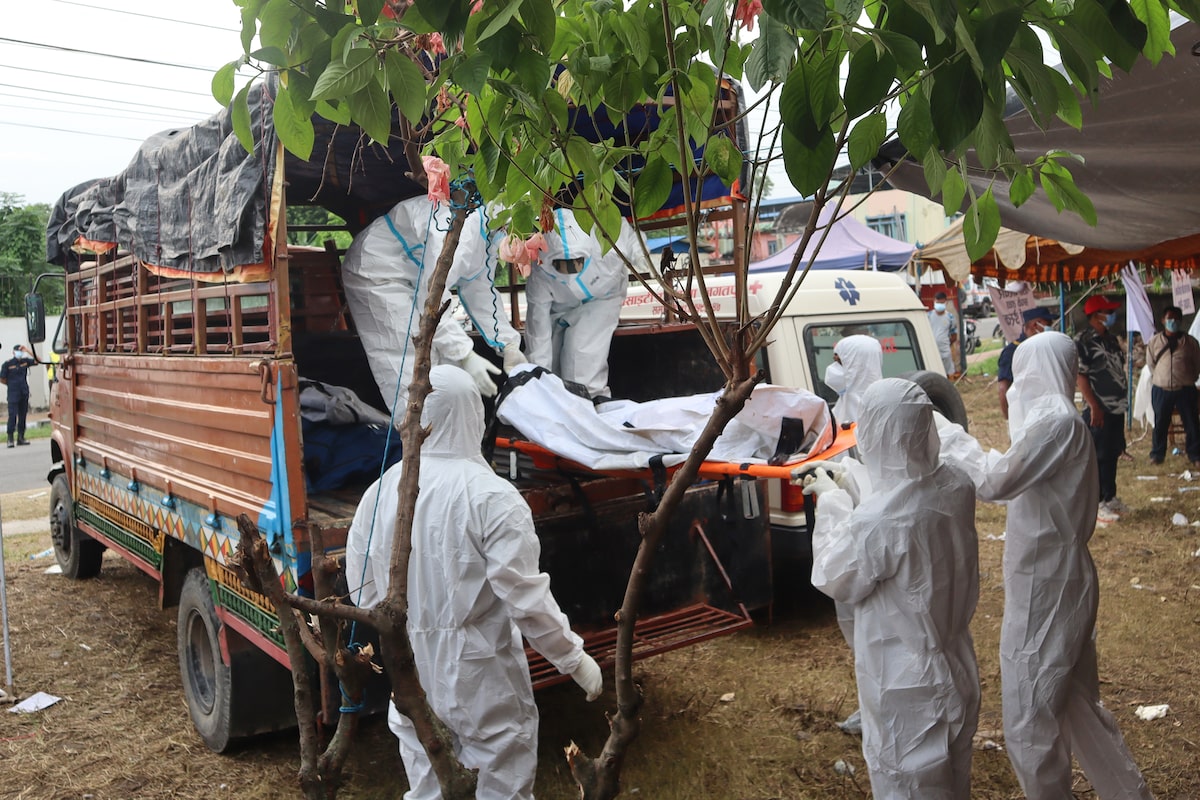
Open this photo in gallery:Rescuers carry bodies of flash flood victims for a mass burial in Chitwan, Nepal, on Saturday.Nisha Shrestha/The Associated PressThe devastating flash floods in the Himalayan region swept so many people downstream that authorities in one Nepalese district have begun burying bodies in temporary graves before they can be identified, prompting accusations that Hindu funeral traditions are being ignored.In south-central Nepal’s Chitwan district, the scale of the catastrophe was evident in some 250 bodies awaiting identification and the hastily dug trenches for their temporary burial following Wednesday’s catastrophic floods and mudslides, which killed at least 800 people and left more than 3,000 missing in Nepal and Tibet.The bodies were carried hundreds of kilometres downstream by the Bhotekoshi River from the flood’s epicentre before being recovered in Chitwan.Nepal warns of possible fresh flooding as communities grapple with devastationAuthorities carried out a temporary burial of about 100 victims on Saturday, officials said, as forensic teams struggled to cope. A convoy of vehicles carrying bodies entered a lush, forested area as an excavator dug a wide trench in the red earth while officials and media looked on.Anil Thapa, a police inspector co-ordinating the handling of the bodies, said another 50 bodies were having DNA samples taken ahead of their likely burial Sunday.Authorities preserve the DNA samples, photograph distinguishing facial features and record other identifying details, Thapa said. The bodies are assigned a reference number to help families claim them later.Thapa said many of the bodies had remained submerged in flood waters for about four days and were already decomposing by the time they were recovered.Across the region, homes, vehicles and farm tractors still lay partially buried in mud.Limited forensic infrastructure and inadequate morgue capacity in the district further strained efforts to manage the overwhelming number of bodies recovered from the disaster, officials said.High humidity and sweltering heat accelerated decomposition, compounding the challenges as health experts warned that leaving the remains exposed could increase the risk of disease.Fresh landslides in the area on Sunday closed the main highway linking the capital city of Kathmandu and Chitwan, a day after it partially reopened, complicating efforts to move bodies and relief supplies.Families comb through lists of missing people in Nepal as steep mountains hamper rescue effortsAs survivors grappled with the aftermath, criticism of the burials mounted. Some residents said the dead had waited days for their last rites and were denied dignity in death. Families still waiting to locate missing relatives and some public figures questioned whether authorities moved too quickly.The issue is particularly sensitive in Nepal, a predominantly Hindu nation where the dead are traditionally cremated.Ruby Chaudhary, who has two missing relatives, said the burials should not proceed without families’ consent.“The dead deserve to be treated with dignity,” she said. “Our tradition is to cremate them on the riverbank, surrounded by their immediate family.”A former prime minister, Baburam Bhattarai, said it was inappropriate to dispose of unidentified bodies before search and rescue operations were complete and without broader consultation with families of the missing.If morgues were insufficient, authorities could have mobilized emergency resources to set up temporary morgues or secure cold storage facilities, he said in a social media post Saturday night.Officials said the burials were a temporary measure necessitated by health concerns and limited capacity.“People are worried that this could be a permanent burial, but it is only temporary management,” Thapa said. “If someone is able to verify the identity later using the available information, they can take back the body and perform the appropriate funeral rites.”Amrit Bahadur Rai, Nepal’s foreign secretary, said the temporary burial of unidentified bodies was carried out in line with internationally accepted disaster-management protocols, including those of the International Committee of the Red Cross.“Families can match records later, and will be allowed to exhume (the remains later) for necessary rituals,” Rai said at a press briefing in Kathmandu.
In Nepal’s Chitwan district, authorities have begun burying flood victims in temporary graves before they can be identified
Full Article
Original Source
Read the full article at Theglobeandmail →KhanList aggregates and links to publicly available news content. We do not host full articles from third-party sources. Always verify important information with original sources.