
New Delhi: The Tata Sons' Articles of Association, and specifically Article 121, have been in the spotlight since the boardroom battle came to a head on September 17, pitting Tata Sons against Tata Trusts and Noel Tata. Article 121 requires some decisions taken by a board majority to also get the nod from a majority of the directors nominated by Tata Trusts. There are currently two Tata Trusts nominees on the Tata Sons board: Tata Trusts Chairman Noel Tata and Vice-Chairman Venu Srinivasan.During the September 17 board meeting, Srinivasan joined three other directors on the Tata Sons board in backing the reappointment of N Chandrasekaran as Tata Group Chairman, while Noel Tata opposed it. The presiding chairman's casting vote was then used. READ | Tata Trusts Against Listing, Diverted Attention: Harish Salve To NDTVTata Trusts has argued that the vote of a majority of its nominees would have meant the votes of both Noel Tata and Srinivasan. It has also said a chairman's casting vote can be used only when there is an equal split in votes on the Tata Sons' board and cannot replace the requirement of a majority vote of the Trusts' nominees. "A majority amongst two is two and not one," Tata Trusts said, referring to Noel Tata voting against the resolution. Responding to an email by Noel Tata questioning the legality of the resolution passed on September 17, Tata Sons shared the opinions of legal experts, including former Chief Justice of India UU Lalit and former Supreme Court Judge BN Srikrishna, who said the requirements under Article 121 were fulfilled during the vote on Chandrasekaran's reappointment. The opinions were accessed by NDTV Profit. Justice Srikrishna, who served on the Supreme Court between 2002 and 2006 and was the Chief Justice of the Kerala High Court before that, said, "In my opinion, what has been done is perfectly consonant with the letter and spirit of Article 121. The proceedings before the Board were not intended to be deadlocked in any event, and that is why it is necessary to read this Article in a manner so as to ensure that the proceedings before the Board and the Querist's business are taken forward and satisfactorily concluded."READ | 'Runaway Board': Abhishek Singhvi Backs Tata Trusts' 'Shareholder Primacy'"I am of the opinion that every Director has two duties - one, his fiduciary duty to the company under the Companies Act and the other to the nominating entity. There is no doubt that the former duty must override the latter in case of a conflict. That is because the former duty is statutory and the latter is only contractual. In the circumstances, Venu Srinivasan rightly acted pursuant to the statutory fiduciary duty," the former judge, who also led the commission of inquiry into the 1992-93 Bombay riots, added. Justice UU Lalit, who served as the 49th Chief Justice of India in 2022, concurred. "In the present case, out of five Members of the Board who cast their vote on the proposal, except Noel N Tata, the other four members had voted in favour of grant of chairmanship to N Chandrasekaran. Since there was equality of votes among the directors pursuant to Article 104(B), the presiding or the officiating chairman, by putting his casting vote, satisfied the requirement under Article 121," the former Chief Justice said. "Upon there being equality of votes amongst the Directors appointed pursuant to Article 104B, there was certainly an occasion for the chairman to have a casting vote. In my view, therefore, the resolution dated September 17, 2026 for approving the agenda was validly passed," he explained. 'Status Unaltered'Senior Advocate Sudipto Sarkar, who has been on the Board of Directors of several well-known large listed companies in India, such as JSW Steel Limited, Triveni Engineering Industries Limited and Bombay Stock Exchange Limited, listed the situations under which the casting vote can be used. READ | Tata Trusts vs Tata Sons: Why A Supreme Court's 2021 Ruling In Cyrus Mistry Case Is Back In Focus"On a plain reading of Article 121, it can be said that the chairman's casting vote can be invoked in either of the following situations: (i) where there is an equality of votes amongst the directors appointed pursuant to Article 104B; and (ii) where there is an equality of votes of the Board as a whole after taking into account the votes cast by all directors. Accordingly, the expression 'in the case of an equality of votes' may reasonably be construed as applying to either situation," he said. "Article 118 would not apply to the proposed re-appointment of the chairman (Chandrasekaran). Article 118 is expressly concerned with the selection of a 'new chairman'. The chairman's announcement that he will not offer himself for a further term does not alter his status as the incumbent chairman, and he continues in office until the expiry of his current term in February 2027," Sarkar added.
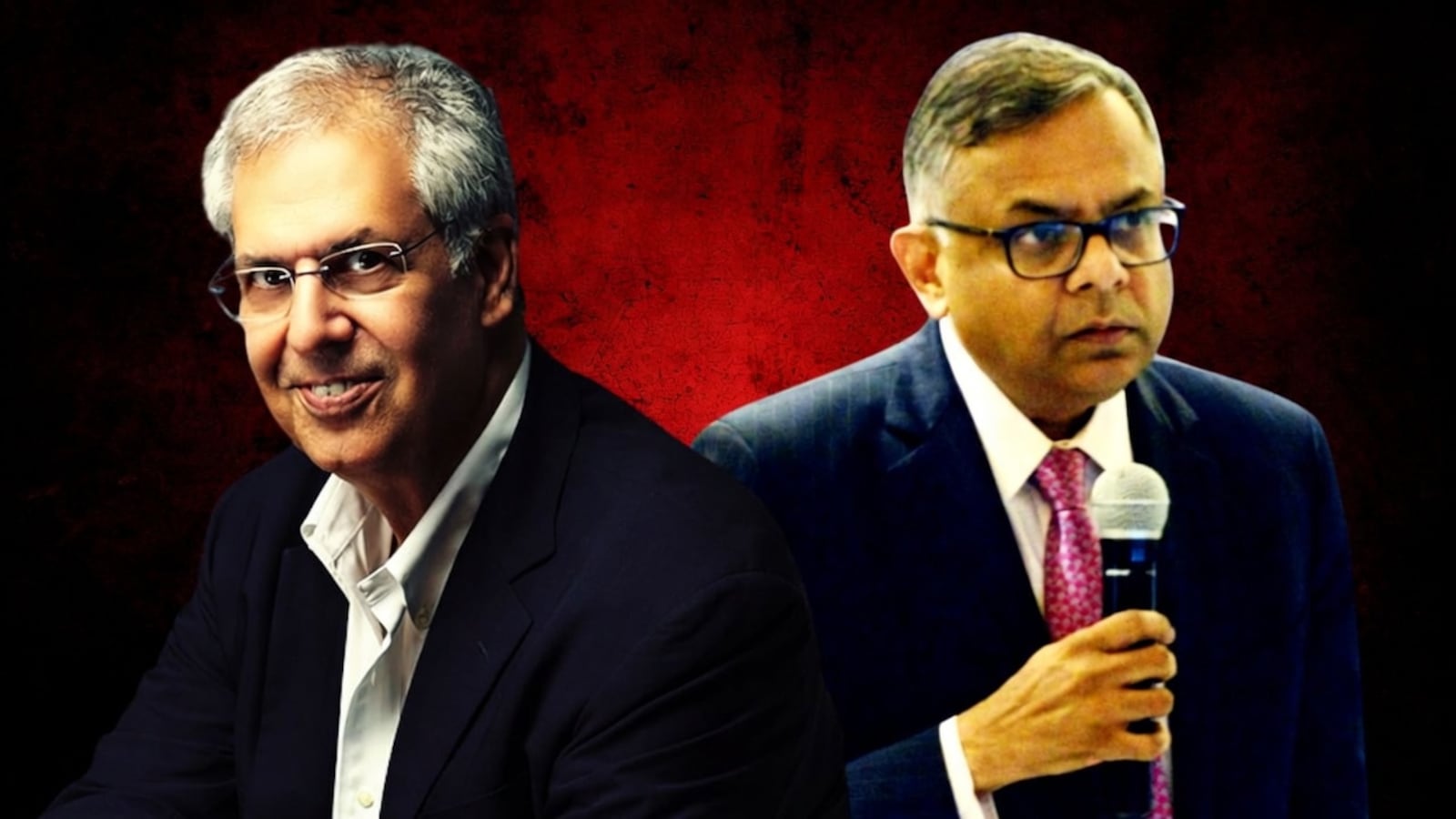
In N Chandrasekaran Reappointment Row, Tata Sons Cites Ex-Chief Justice's Opinion
Full Article
Original Source
Read the full article at Ndtv →KhanList aggregates and links to publicly available news content. We do not host full articles from third-party sources. Always verify important information with original sources.