
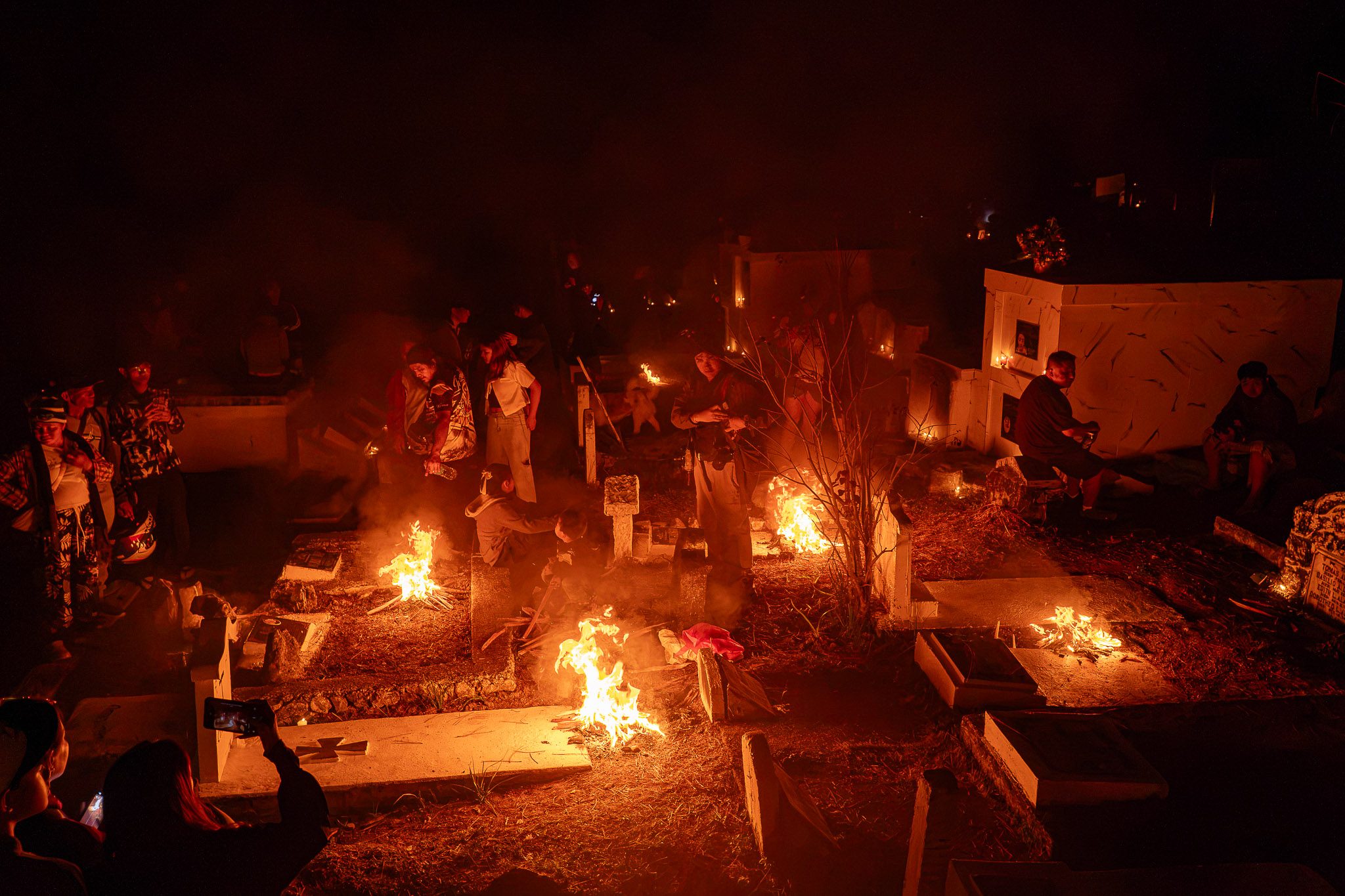
REMEMBER. Hundreds of Sagada residents burn pine fatwood during the Panag-Apoy, a tradition that honors their departed loved ones. Jyor So/Rappler In Sagada, lighting fires on graves serves as an act of remembrance meant to warm and guide the spirits of departed loved ones Panag-apoy is a solemn tradition in Sagada, Philippines, observed on All Saints' Day to honor the dead through the lighting of fatwood on graves. The practice combines both tribal and Anglican beliefs, starting with a Holy Mass and involving the blessing of graves before lighting fires as a remembrance of departed loved ones. This is AI-generated. Read the article for full context. Report any errors. SAGADA, Philippines – Traced back to the arrival of the Anglican mission in the early 1900s, this unique tradition has deeply influenced local culture and beliefs in the Mountain Province. Panag-apoy, a solemn practice observed by Sagada locals every November 1, All Saints’ Day, honors the dead through smoke and fire. It is also known as “Pagdedenet,” a Kankanaey term meaning “to light the fire.” Instead of candles, locals use pine fatwood as it is rich in resin and cannot be put out easily by the wind and light rains. Photo by Kenosis Yap The lighting of fire on graves holds meaning for both tribal and Anglican beliefs, serving as an act of remembrance meant to warm and guide the spirits of departed loved ones. Panag-apoy starts with a Holy Mass to remember the departed members of the community. In some towns across the province, names of the deceased locals are read aloud during the service. The local priest then blesses the graves, including candles and flowers at the cemetery, signaling locals to light their saeng or saleng — small bundles of fatwood placed on top of graves. As the fire burns, the cemetery glows orange as smoke fills the sky. The fire from each grave commemorates a soul who was once part of the local community. Photo by Jyor So Locals and officials stress that Panag-apoy is not a festival, despite the influx of tourists in recent years due to social media posts. While residents appreciate visitors, the swelling crowds, they say, have disrupted the solemnity and sacredness of the tradition. The light burning the fatwood is believed to be the light of Jesus guiding the souls of the departed. Photo by Kenosis Yap This year, the local government of Sagada limited visitor access to preserve the solemnity of the occasion. Tourists may only observe the practice from 7 pm to 9 pm, and drone cameras are not allowed. Tourists quietly take photos of the sacred practice. Photo by Jyor So The ritual unfolds in silence as the youth watch their elders light the saeng, passing the sacred tradition to the next generation. Even late at night, locals continue to arrive and light up fires for their loved ones. Photo by Kenosis Yap. – Rappler.com How does this make you feel? Loading
In Mountain Province, a solemn path of smoke and fire honors the dead
Full Article
Original Source
Read the full article at Rappler →KhanList aggregates and links to publicly available news content. We do not host full articles from third-party sources. Always verify important information with original sources.