
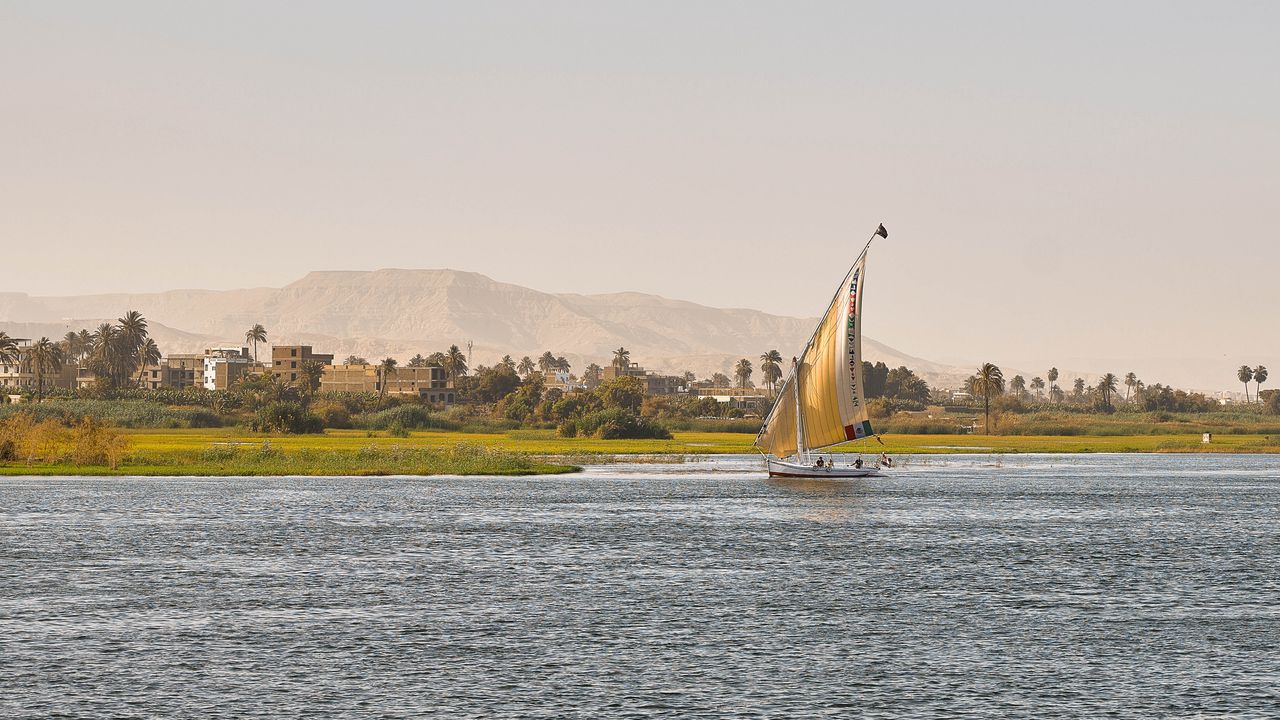
In Luxor, Seeing Ancient Egypt AnewIntimate river sailings and maximalist hotels are offering new ways to experience the Egyptian city’s richesYehia El AlailyThe water is cold and clear. Half-hidden amid the palm-tufted grounds of the Mortuary Temple of Seti I, this sacred sunken lake on Luxor's west bank was once the domain of ancient Egyptian priests. More than 3,000 years later, women from nearby villages still come, hoping its waters will serve as a fertility aid or a balm for their sick children, says my guide Ahmed Hassan, who was born and raised on this side of the Nile. It's one of the area's many miracles, he adds: No one knows where the water comes from, but it hasn't run dry since those priests of antiquity first bathed here. Hedging my bets, I submerge my hands.It can be difficult to know what to believe in this transcendent stretch of Upper Egypt, 410 miles south of Cairo, where the Nile exudes a life force of its own; the mountains cradle secret treasures; and the light, particularly at golden hour, plays tricks, almost convincing you that you have traveled back in time. The line between the real and the mystical feels flimsy, whether you are considering the scale of the approximately 1,000-ton, 65-foot-tall colossus of Ramses II, inexplicably carved from a single piece of granite and lying prostrate at the king's statuesque funerary temple, the Ramesseum; or observing the unnerving precision of the hieroglyphs in the tomb of Ramses V and VI, in the Valley of the Kings, that has proved immune to the ravages of time.Arax’s top deck and plunge pool Yehia El AlailyFormerly ancient Thebes, Luxor—whose name comes from the Arabic Al-Uqsur (The Palaces)—served as Egypt's capital during the New Kingdom, from circa 1550 BCE to 1070 BCE. On the west bank of the Nile, sugarcane and banana plantations lead to a limestone canyon topped by Al-Qurn, or The Horn, a natural peak shaped like a pyramid. The rulers of the New Kingdom decided that this would be the ideal spot to protect their richly decorated tombs from grave robbers—a failed exercise, since every tomb in the Valley of the Kings was looted in antiquity, bar that of now legendary boy king Tutankhamen.“There are many sites that have an impressive amount of ‘stuff,’ but what you have in Luxor is truly monumental,” Mennat-Allah El Dorry, from the American University in Cairo's department of sociology, Egyptology, and anthropology, tells me. “You have Karnak and Luxor temples on the east bank, and the mortuary temples on the west, as well as Valley of the Kings. It is such a dense area.”I take her recommendations, balancing the quiet of the lesser-visited, only partially restored Mortuary Temple of Seti I and the Ramesseum with the many-splendored tombs at the Valley of the Kings, where voyeuristic crowds swell to see the diminutive mummy of Tutankhamen languishing 26 feet below ground. By contrast, the tomb of Ramses V and VI close by is deserted. A toothless, djellaba-wearing guard smiles conspiratorially before letting me behind the barrier. He takes my phone and assumes the practiced ease of a fashion photographer directing his next magazine cover: “Come closer; go there; look over your shoulder.”Much of Luxor feels like it hasn't changed in centuries. At sunset the sails of felucca boats trace a timeless scene on the Nile's surface. Amid the clip-clop of horse-drawn carriages, the call to prayer tumbles from minarets and the sky settles into strips of apricot and lavender.Said Nady, captain of Arax Yehia El AlailyFrom the deck of Arax, where things do feel different, I watch night make its unhurried advance. The second offering from the homegrown Kazazian Cruises takes the motorless design of the traditional dahabeah boat and merges it with the sleek aesthetic of a luxury yacht. At every turn Nile views are given the reverence they deserve. In the airy living and dining areas, the brilliant blues and greens of the lush landscape are framed by the floor-to-ceiling glass windows of the 200-foot boat. In the nine cabins, beds clad in premium-quality Egyptian cotton face panoramic picture windows. There are Hermès toiletries, a massage therapist, and four chefs to make meals on demand. Founder Armen Kazazian identified a gap in the market for a Nile experience that offers extreme privacy and comfort on the time-honored journey between Luxor and Aswan—but also the kind of intuitive service that might see impromptu easels set up on deck to entertain the children, or a surprise beach dinner laid out on a private island.Matching the restraint of Arax is the stripped-back Marsam Hotel and discreet yet stately Habu Hotel, the latter just feet away from the Medinet Habu Temple. But Hotel Al Moudira sits at the opposite end of the spectrum. Founded by Italian Lebanese artist Zeina Aboukheir in 2001, and originally designed by famed Egyptian architect Olivier Sednaoui, the hotel revels in its maximalism: a whimsical interplay of domes and arches embellished with terra-cotta plaster, frescoes, and antiques. In 2022, Aboukheir sold the hotel to its new owner, Florian Amereller, but she still guides its creative direction, most recently in the design of six new villas. I stay in one of the five rooms in the salmon pink Villa Casbah, where hand-painted silhouettes of gazelles trip skittishly across the walls.Chef Gioconda Scott at The Moudira Farm Kitchen Yehia El AlailyScott plating lunch Yehia El AlailyUnder its new ownership the now five-star Al Moudira has expanded to include a huge swath of surrounding farmland. It's here, in an open kitchen engulfed in greenery, that I find British Spanish chef Gioconda Scott in the midst of a busy lunch service. In 2025 she launched The Moudira Farm Kitchen, where she transforms the fresh produce grown on-site into an unfussy, seasonal menu inspired by the Mediterranean. “This is simple cooking,” says Scott, who populates her kitchen with young chefs from the local tourism college. “Every element has to be good. If you don't have a good olive oil or a good tomato, there's no hiding.”The restaurant itself is filled with products made by artisans on the farm. Crockery, rendered in a range of earthy tones, was crafted by potters whom guests can join for classes. I can hear the distant clack of the loom that wove the jaunty turquoise tablecloth, while, in other corners, artisans carve alabaster, blow glass, and upholster furniture.The same crafts inhabit the decks of Al Moudira's new, 180-foot Nile Canopus, a nostalgia-infused nod to historic travel along this evocative waterway. Open-air decks with safari-tent-style coverings, a cozy library, and rooms fitted with brass beds and bespoke teak and rattan furniture are designed to evoke the age of Amelia Edwards, author of the seminal 1877 travelogue A Thousand Miles Up the Nile.There has been a proliferation of new dahabeahs on the Nile, which offer more intimate, personalized experiences than do the hulking, 50-cabin motorboats that also ply these waters. Laden with modern conveniences, today's dahabeahs are admittedly no longer sprightly enough to be harried along by wind and sail; instead they are pushed and pulled by dinky-looking tugboats. On the inside they are increasingly elaborate. Karine Hassoun called on Egyptian painters, professors, and artisans for her eight-cabin dahabeah, Nile Divine, a celebration of contemporary Egyptian craft. In the nine-cabin Oro, a dark wood exterior pays tribute to the dahabeahs of old but with a dramatic brass wall in the reception area, a plunge pool extending out over the deck, a full-fledged bar up top, and suites with private terraces and hot tubs. Oberoi Hotels and Resorts will join the fray later this year with two seven-suite dahabeahs featuring interiors by Karim Mekhtigian, founder of Alchemy Design Studio, while Waldorf Astoria Hotels and Resorts' new, 29-suite Nile cruiser will bring to the water all the elements of its land-based hotels, including its Peacock Alley brasserie.The reception of new dahabeah Oro Yehia El AlailyThe interiors of Habu Hotel Yehia El AlailyChange is underway on land too. I see the cranes hovering over the east bank, pinpointing where a Four Seasons Hotel, due to open in 2027, is rapidly taking shape. The much-loved Winter Palace—archaeologist Howard Carter's base during his 1922 Tutankhamen tomb discovery and where Agatha Christie was inspired to write parts of Death on the Nile—recently closed for a renovation and will reopen as a Mandarin Oriental in July 2027, exactly 120 years after its official inauguration, hopefully with original features and charm fully intact.That's only weeks before next year's solar eclipse: On August 2, Luxor will witness the moon masking the sun for its maximum duration, a total of 6 minutes and 22 seconds. Just enough time for that line between the real and the mystical to grow even flimsier.Where to stay in LuxorA few feet from Habu Temple, recommended for its deeply etched hieroglyphs and particularly well-preserved colors, is a property with its own historic pedigree: the unassuming, 17-room Habu Hotel was one of the first hotels to open on Luxor’s West Bank in the 1920s. It has been given a smart revamp, its public areas now filled with antiques, including stately granite busts and wooden statues from the 1800s. Sundowners on the hotel’s charming rooftop terrace bring you close enough to the temple’s chiseled interior that you can admire its exterior engravings from the comfort of your lounge chair.A day spent tirelessly exploring Luxor’s sites is best ended in the spa at Hilton Luxor Resort and Spa, where treatment rooms look directly over the Nile and the infinity pool is one of the best spots in the city to catch Luxor’s famous sunsets. This is an ultra-convenient base if you want easy access to the historic sites on Luxor’s East Bank—Karnak Temple, in particular, is within walking distance. A private breakfast on a felucca offers a fresh perspective of the Nile, especially if you time it to coincide with hot-air balloons rising majestically over the Valley of the Kings.A maximalist dream on the Nile’s West Bank, Hotel Al Moudira was the first Relais and Chateaux property in Egypt. It was founded in 2001 by Italian-Lebanese artist Zeina Aboukheir, who filled it with hand-painted frescoes, antiques, artworks and furniture sourced from across Egypt. Under new ownership since 2022, the hotel offers easy access to the West Bank’s infinite sites—if you can bear to drag yourself away from its cool bougainvillea and palm-covered grounds. Six new villas offer the same, much-loved aesthetic, with a touch of extra privacy.For a stripped-back stay that’ll make you feel like an Egyptologist of old, head to Marsam Hotel, which started life as the excavation house for the University of Chicago, before being converted into a hotel in 1939. There’s (very intentionally) no swimming pool or TVs; the 29 pared-back rooms and five suites are designed for guests who are serious about exploring the many sites that surround this historic hotel. Whether or not you spend the night, make time for lunch at Marsam’s farm-to-table restaurant, where the menu changes daily and you’ll be serenaded by the resident donkeys, camels and horses.A version of this story originally appeared in Condé Nast Traveller ME. This article appeared in the December 2026 issue of Condé Nast Traveler. Subscribe to the magazine here.Selina Denman has spent 20 years writing about the Middle East’s travel, luxury and lifestyle sectors. Before joining Condé Nast Traveller Middle East as head of editorial content, she spent 12 years as part of the features department at The National, the region’s most reputable broadsheet newspaper and online news site. ... Read More
In Luxor, Ancient Egypt feels newly alive
Full Article
Original Source
Read the full article at Cntraveler →KhanList aggregates and links to publicly available news content. We do not host full articles from third-party sources. Always verify important information with original sources.