
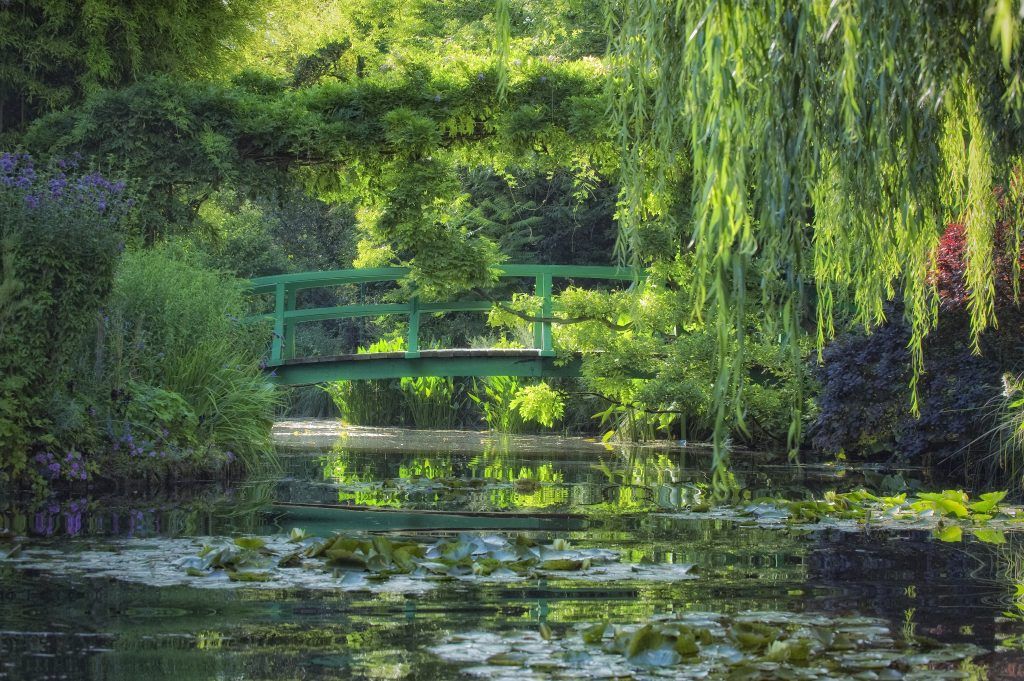
The colorful nasturtiums at the artist’s house and gardens have been hit particularly hard this summer, as France grapples with a record 52 heatwave days August 24, 2026 4:06 p.m. Claude Monet lived in Giverny, a small village about 50 miles northwest of Paris, for more than four decades. Maison et Jardins Claude Monet France has endured blistering temperatures this summer, with a record 52 heatwave days, widespread wildfires and more than 7,300 excess deaths. The extreme heat has also taken a toll on gardens, scorching plants and leaving gardeners struggling to keep their greenery alive. Even the gardens that inspired the Impressionist painter Claude Monet have fallen victim to the heat. At the artist’s house and gardens in Giverny, a small village in Normandy, about 50 miles northwest of Paris, Monet’s famous blooms are struggling to cope with this summer’s extreme temperatures. The nasturtiums—red, orange and yellow blossoms that grow rapidly during the summer months—have been hit particularly hard during periods of extreme heat, deputy head gardener Rémi Lecoutre tells France 24’s Oliver Farry. “It’s incredibly sad,” says Lecoutre, who first joined the foundation as a seasonal worker in 1988. “This is the first time it has happened to this extent. It’s awful.” Did you know? Monet’s legacy 2026 marks 100 years since Monet’s death. To commemorate the anniversary, the Musée de l’Orangerie is presenting “Monet: Painting Time” from September 2026 to January 2027. The Musée Marmottan Monet is offering “Histories of Landscapes: From Monet to Hockney (1890-2025).” Lecoutre is one of 11 gardeners responsible for maintaining the estate’s famous flowers and plants, which draw hundreds of thousands of visitors each year. This year, the team is taking steps to combat the effects of the heat, such as grouping plants together and using mini sprinklers and underground irrigation. However, “some foliage still burned,” Lecoutre tells France 3’s Medhi Weber, per a translation by ARTnews’ Devorah Lauter. “There are physiological phenomena happening at the plant level. They close their stomata, and they stop flowering. So we had a lot of withered flowers.” Looking ahead, the team is also considering adding more heat-resilient plant varieties, but it must balance the need to adapt to a changing climate with the garden’s original character. “As it’s a historic garden, it’s best that these plants answer to the aesthetic criteria, and that they are as close as possible to the plants that Monet would have known,” Lecoutre tells France 24. An 1899 Monet painting of water lilies Public domain via Wikimedia Commons Fortunately, the gardens’ iconic water lilies have remained largely unaffected by the heat. Monet lived in Giverny for more than four decades, from 1883 until his death in 1926. During that time, he cultivated an extraordinary variety of plants, drawing inspiration from their colors, shapes and changing light for some of his most famous paintings. When he first arrived at the property, however, the garden was a “utilitarian space,” filled primarily with vegetables, herbs and cider apple trees, Lecoutre said in an interview posted on the estate’s website. Nevertheless, Monet was “struck by the site’s potential, with its lovely gentle slope and ideal orientation.” Some of the artist’s favorite subjects were the water lilies he eventually planted in a small pond on the property. He went on to paint around 250 works featuring the flowers, many of them part of the Nymphéas, or Water Lilies, series. But his fascination with the floating blossoms arose slowly. As Monet once explained, “I grew them without thinking about painting them. … A landscape does not pervade your senses in one day. … Then suddenly I had a revelation and clearly saw these wonders on my pond. I took up my palette and paintbrush. And since then, I’ve hardly used any other subject.” You Might Also Like Get the latest stories in your inbox every weekday. More about: Art Artists Claude Monet Climate Change France France Travel Gardening Heat Impressionism Painters Tourism Weather
In France, Brutal Summer Heat Waves Are Taking a Toll on the Flowers That Inspired Claude Monet's Most Beloved Paintings
Full Article
Original Source
Read the full article at Smithsonianmag →KhanList aggregates and links to publicly available news content. We do not host full articles from third-party sources. Always verify important information with original sources.