
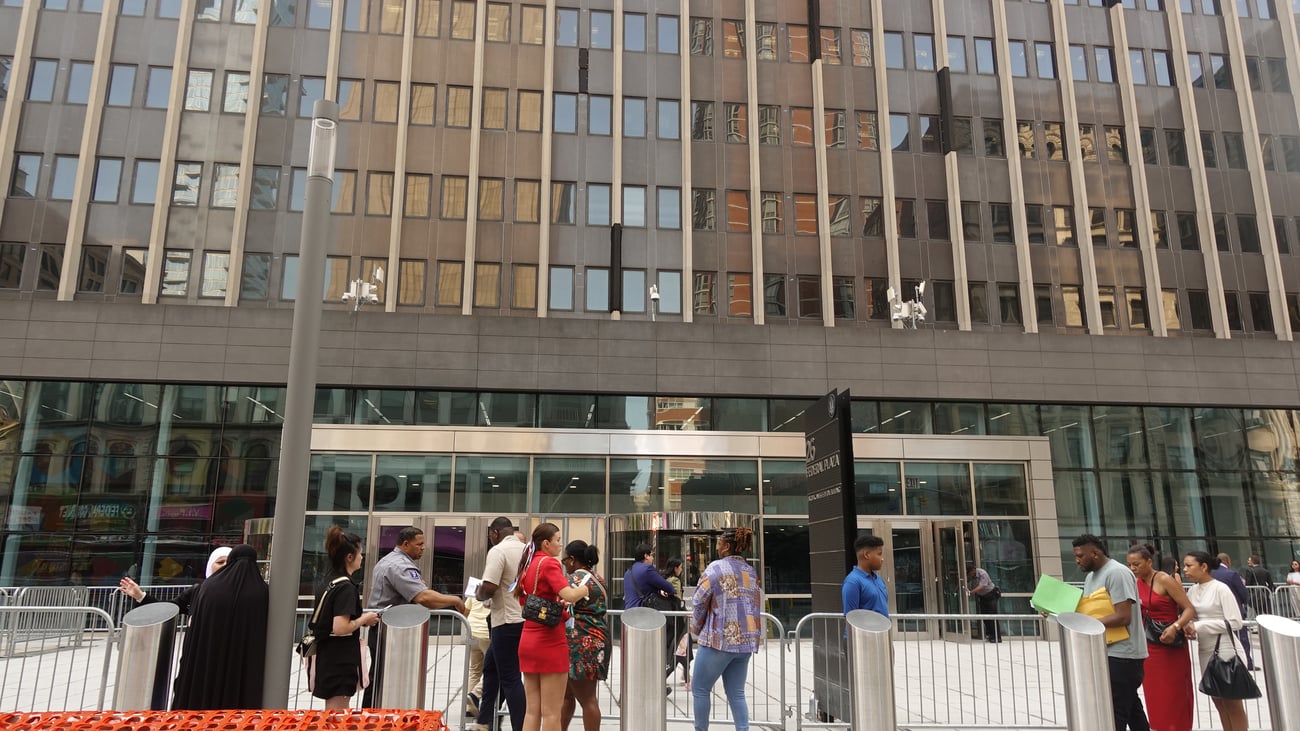
U.S. District Judge Lewis Kaplan entered a permanent injunction on behalf of detainees, granting them class certification and demanding the facility’s conditions be improved.MANHATTAN (CN) — A federal judge lambasted U.S. Immigration and Customs Enforcement on Thursday in a final order against the agency’s treatment of detainees at 26 Federal Plaza, a controversial immigrant detention center in New York City that has been subject to more than a year of litigation over its living conditions.In the scathing 127-page ruling, U.S. District Judge Lewis Kaplan describes the treatment of those jailed in the facility as “dreadful” and “squalid.” Kaplan pointed to trial evidence that suggested detainees were jam-packed into holding rooms far beyond capacity and for far longer than they were supposed to be.“Detainees often had to try to sleep while sitting upright given the overcrowding,” Kaplan wrote. “They simply did not have enough room to lay down. Some even resorted to sleeping next to the toilets, behind the half-wall partitions.”The Bill Clinton appointee previously issued temporary relief to the suing detainees, requiring ICE to improve the conditions inside the scrutinized holding rooms. But in his Thursday ruling, Kaplan chastised the agency for selectively flouting parts of what he’d demanded.“The court’s orders to some extent have worked,” the judge said, referencing crowding is down since last summer’s peak. “But, as described at length above, defendants have complied with its orders only when convenient for them and persistently have disregarded them in certain ways.”Capacity, at times, exceeded Kaplan’s requirements after his first order came down, according to trial evidence. Detainees also persistently complained of a lack of attorney access.In his initial injunction last year, Kaplan issued a hard space cap of one detainee for every 50 square feet. He also ordered inmates to get a clean bedding mat, hygiene supplies and private and accessible phone access to their attorneys within a day of being detained.His new, permanent order adds to those old requirements. Kaplan ordered ICE to give detainees pillows and dim the lights in the holding rooms between 9 p.m. and 7 a.m. — detainees have reported bright, fluorescent lights were typically kept on all night as they tried to sleep.The largest of four holding cells on the 10th floor of 26 Federal Plaza in Lower Manhattan. (Screenshot of federal court documents via Courthouse News)With the Thursday order, the judge also strengthened protections for legal calls within the facility, demanding every detainee be offered the opportunity to make a call within one hour of being detained. On-site medical services are also required, as are medical screenings of each detainee before they enter a holding room.These new requirements are backed by evidence that Kaplan saw during a one-day bench trial earlier this year, which offered an extensive look into what detainees actually face inside 26 Federal Plaza.Text messages from ICE officials revealed infectious diseases — including monkeypox and tuberculosis — permeated throughout the facility.“This week has been one gross contagion after another,” Nancy Zanello, an assistant field office director for ICE in New York, wrote in a 2025 email.Others remarked about the overcrowding, revealing even ICE’s own employees thought the head count in the holding rooms was unacceptable.“This is insane,” one ICE employee wrote to another in an email shown to the court. “We desperately need to get some detainees out of 26 Fed.”Kaplan ruled the treatment of inmates during this time was “inhumane and unconstitutional.”“By detaining far more persons in the hold rooms than ever was intended and for far longer than ever was intended, ICE objectively deprived detainees of sleep, sanitary living conditions, basic personal hygiene needs, sufficient food and water and adequate medical care,” he wrote. “ICE prevented detainees from accessing counsel, who might have stood in the way of what it was doing. Some of these deprivations impacted detainees immediately; others only after longer periods. ICE knew, or should have known, that how it was treating detainees was wrong, yet it continued to do it anyway.”The judge added ICE did this “to inflict punishment on detainees and induce them to self-deport.”Kaplan’s order also grants class certification for all immigration detainees inside 26 Federal Plaza, both currently and in the future. Doing so, he acknowledged, may allow detainees with little resources to bring actions that otherwise wouldn’t be possible, using this case’s framework.A spokesperson for the Department of Homeland Security, which oversees ICE, didn’t immediately respond to requests for comment.The federal building in Lower Manhattan has become a centerpiece of the Trump administration’s ongoing and unprecedented detention campaign against noncitizens. In addition to 26 Federal Plaza’s holding rooms, subject to Kaplan’s ruling in this case, the building also houses immigration courtrooms, where ICE agents have been seen waiting to detain immigrants on their way in and out of routine court proceedings.That practice is the subject of its own litigation around the country and has largely been deemed unlawful.Subscribe to our free newslettersOur weekly newsletter Closing Arguments offers the latest about ongoing trials, major litigation and rulings in courthouses around the U.S. and the world, while the monthly Under the Lights dishes the legal dirt from Hollywood, sports, Big Tech and the arts.Additional Reads
In final ruling against ICE, judge blasts ‘dreadful’ and ‘squalid’ conditions at 26 Federal Plaza
Full Article
Original Source
Read the full article at Courthousenews →KhanList aggregates and links to publicly available news content. We do not host full articles from third-party sources. Always verify important information with original sources.