
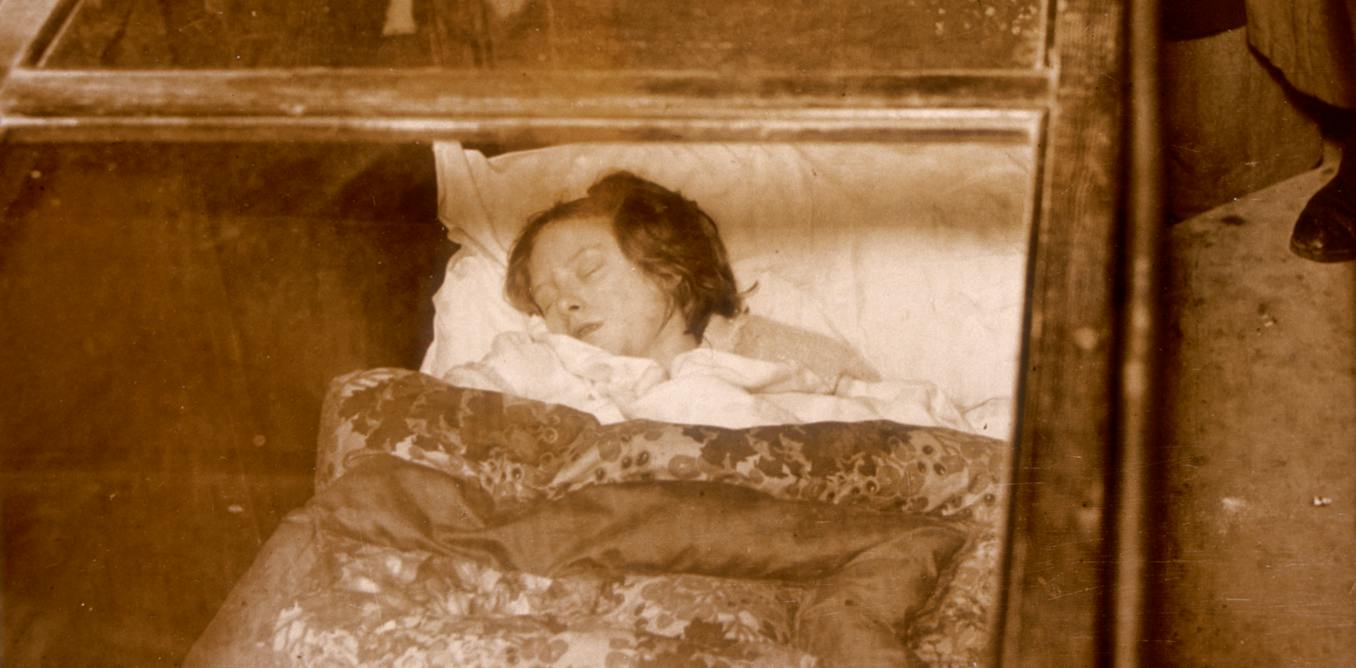
In The Starving Bride, the latest novel from internationally acclaimed New Zealand author Catherine Chidgey, the English town of Blackpool attempts to stave off the horrors of the present by returning to the past. Residents of the increasingly fractured and climate-ravaged United Kingdom flock to the seaside resort, drawn by the local council’s #ASimplerTime campaign. The once dwindling “Golden Mile” between the North and South piers has been revived with new arcades, sideshows and vaudeville acts that recall Blackpool’s heyday. But a simpler time isn’t necessarily an innocent one, and many of the revived amusements are troubling. Animal cruelty, blackface and Blackpool’s problematic “midget town” have all returned. As has the “Starving Bride”, an act from the 1930s, where young women would publicly starve themselves for the entertainment of the masses. Review: The Starving Bride – Catherine Chidgey (Penguin) Chidgey’s protagonist, Hazel Whitlock, is drawn to Blackpool following the loss of her job and collapse of her relationship. Initially hoping to join her childhood friend Gilda as one of the dancers in the Blackpool Circus, she is recruited instead as the new Starving Bride. Installed in a glass coffin in an enclosure beneath Blackpool’s iconic tower, Hazel is challenged to display herself for 40 days (a time limit which, perhaps deliberately, recalls Franz Kafka’s story A Hunger Artist), for the promise of a 40,000 pound reward. As an additional titillation, she will be locked in the enclosure with a lion from the circus, set to prowl around her casket. Hazel is assured she will not be at any real risk. She will not have to remain in the coffin at night and will be free to move around the tower once the punters have left. Nor will she need to really starve herself – her deteriorating condition will be conveyed largely through makeup, clothing and performed languidity. The lion, Xander, is fully trained and often sedated. Like many of the Blackpool acts, the Starving Bride relies, to a degree, on trickery and illusion. It provides something – a feat of endurance and public degradation – that audiences want to believe in. But not everything is as safe as it seems. The Showman, who manages the Starving Bride act, has ulterior motives. He won’t reveal why no other Bride has made it to the end of their 40 days. Xander the lion is more feral and unpredictable than he first appears. And outside, a solitary town councillor is becoming desperately worried about the rusted, eroding foundations of the tower. Finally, there is Hazel herself. She is scarred by childhood eating disorders, body dysmorphia and a shocking act of cyberbullying from her early adolescence. As her tenure as Blackpool’s Starving Bride begins, she increasingly immerses herself in the performance. To Gilda’s concern – and the Showman’s delight – she begins to forego food and genuinely starve herself, revelling in both her newfound sense of self-control and the growing fascination of her audience. Hazel’s all-too-real Starving Bride act soon becomes Blackpool’s signature attraction. It draws crowds of visitors and becomes an uncomfortable point of fixation for a mysterious group of teenage girls. As Hazel endures the days of starvation, she obsesses over her increasingly emaciated body, the erratic movements of Xander the lion, the trauma of her childhood and adolescence, and the anonymous whispers from her audience – sometimes solicitous, sometimes cruel. Concerned with an extreme future To some extent, the Starving Bride can be read as a companion piece to Chidgey’s 2025 novel, The Book of Guilt. A similarly dystopian narrative, The Book of Guilt explored an alternative 1970s Britain, whose history, culture and technology have all subtly shifted, following a different outcome to World War II. In contrast to the uncannily altered past in Chidgey’s previous work, The Starving Bride is concerned with the looming changes of a not-too-distant future. Hints about extreme weather events, mass unemployment and political turmoil creep in round the edges of Hazel’s experience. These concerns are pushed to the margins in Blackpool, where audiences and performers determinedly withdraw from a world that seems – much like the tower itself – to be on the brink of collapse. Catherine Chidgey. Ebony Lamb/Penguin Random House Don’t you long for the way things used to be? is the marketing slogan used to entice nostalgic holiday makers. They are drawn to Blackpool by the promise of long afternoons in deckchairs, cheap, plentiful food and drink, and undemanding entertainment. Novelty newspapers reprint the same comforting headlines each day (“Cricket Match Ends in Friendly Draw”, “Local Lad Wins Sandcastle Competition”), suggesting a town safely walled off from contemporary complexities and perils. In The Book of Guilt, the similarly sedate and idyllic seaside town of Margate was promised as an eventual reward to Chidgey’s exploited adolescent protagonists. The allure of its attractions – the sideshows, rides and arcades – was used to ensure their compliance, and to obscure their potentially grim fates. With its focus on Blackpool, The Starving Bride offers another examination of the seaside resort as an idealised space at once quintessentially British and positioned on both the literal and figurative margins of the country. Effectively partitioned from modern life, these resorts appear to offer a refuge from contemporary troubles and concerns. In both novels, the spectacle and carefully cultivated nostalgia permeating these towns is transformed into something sinister. Their promised respites are illusionary. Bodies, surveillance and public display In The Starving Bride, Chidgey connects the revived entertainments of a purposefully retro Blackpool to distinctly 21st-century concerns. The Starving Bride act itself may be a relic of the 1930s, but Hazel’s story emerges from very contemporary issues around body image, self-surveillance and public display. The crowds who gather beneath Blackpool Tower are deliberately paralleled with social media audiences. Repeatedly throughout the novel, bodies are either mocked and derided for their perceived imperfections, or rewarded with fascination and attention for increasingly extreme acts of self denial. Through Hazel’s trajectory, Chidgey suggests that while the mechanisms and platforms for spectatorship have evolved, the appetite for watching, judging and disciplining bodies remains consistent. What emerges is an often disturbing and occasionally bleakly funny portrait of a society attempting to distract itself from mounting disasters, determinedly holding to the delusion that obvious dangers can be safely caged or tamed. As the novel observes, even catastrophe itself can become a form of entertainment. Blackpool’s decaying infrastructure, Hazel’s self destruction and the wider consequences of climate change are all readily absorbed into the town’s parade of amusements. Nothing in the Starving Bride is allowed to simply be tragic. Everything can be repurposed, marketed – and eventually consumed.
In a society desperate for distraction, a woman performing starvation overcommits
Full Article
Original Source
Read the full article at Theconversation →KhanList aggregates and links to publicly available news content. We do not host full articles from third-party sources. Always verify important information with original sources.