
Jim Chalmers knows the government is under the pump and he says Labor must up its game to battle inflation, the unintended consequences of its May budget and keep voters’ trust through a painful period of interest rate rises.While the federal government is not yet in panic mode – and it would still beat the fractured right-wing if an election were held today – Labor MPs returning to Canberra this week described a level of voter frustration they have rarely encountered during Anthony Albanese’s prime ministership.The economic circumstances have shifted sharply against a government that had hoped to make its second term a story of fairness, reform and rising living standards. Donald Trump’s war in the Middle East has compounded Australia’s entrenched inflation problem. As ministers were putting finishing touches on its equity-focused budget, inflation was firing up again unexpectedly, putting a premium on fiscal restraint and growth.Chalmers, the public face of Labor’s boldest budget in a generation, is now the lightning rod for restless colleagues, frustrated ministers and an angry electorate.Prime Minister Anthony Albanese and Treasurer Jim Chalmers in question time on Wednesday.Alex EllinghausenMinisters and MPs say the caucus is more unsettled and irritable than at any point since Labor came to power, despite a thumping election win just last year and a remarkable period of stability by the standards of contemporary politics here and abroad.Some in Labor want a strategic reset on its economic settings rather than a fresh political sales job. They worry Albanese has lost his public authority. Many others lament a breakdown in relations between the caucus and Chalmers, who they say has alienated many by being too sensitive to feedback.“I do get the government is under political pressure right now on a whole range of fronts and I do take responsibility for my share of that,” Chalmers told this masthead on Friday when contacted for this story.“I like and respect my colleagues and I take the concerns they raise with me directly or express in other ways really seriously. I’ve always operated on the basis that nobody is above or beyond criticism and everybody can do better, me included.”Albanese did little to quiet speculation about tensions at the heart of the government on Tuesday when he suggested at the Australian Chamber of Commerce and Industry’s annual dinner that he had personally intervened to reverse an Australian Taxation Office ban on credit card payments.“Andrew did text me last Thursday morning, and by Friday morning we had an announcement,” Albanese said of ACCI chief executive Andrew McKellar.“That was an example of a relationship that takes time to develop. That trust, where you can have a discussion and say ‘it is in hand, I agree with what you are saying, and I will get it done’.”There was no mention of Chalmers, who announced the backflip alone last week. Albanese’s allies dismissed the comments as him simply flattering his audience.Regardless of intent, the optics were unmistakable: the treasurer had presided over another unpopular decision and the prime minister was taking credit for putting it right. Those close to Chalmers say he was “stung”. The moment was not unlike previous flare-ups, but poor polls and economic gloom have made the Albanese-Chalmers dynamic more salient.The Coalition picked up on tensions after a meeting with Angus Taylor and Albanese in August. The prime minister was grappling with another unintended consequence of Labor’s fiscal blueprint from May.The so-called widow’s tax, as critics had labelled it, threatened to strip bereaved partners and divorcees of tax concessions. A minor flaw had become emblematic of a budget that needed several carve-outs, which eroded goodwill for the brave attempt to reduce property speculation and concessions to wealthier Australians.The prime minister has been meeting more frequently with Opposition Leader Angus Taylor, pictured, than when Sussan Ley was Liberal leader. Alex EllinghausenChalmers had said publicly he was in no rush to patch up the widow’s tax. But after Taylor went public asking for a quicker change in return for supporting Labor’s NDIS reforms, Labor’s position switched.Sources familiar with the conversation on the Coalition side say the two leaders discussed repealing the widow’s tax and that Albanese indirectly reflected on Chalmers’ strategy during the exchange. Taylor and his office declined to confirm. Labor denied that Albanese said any such thing and it believes the Coalition is spreading untruths.But whispers about the Albanese meeting spread through the opposition.According to Labor sources fed up with news stories about budget barnacles, Albanese had also been critical in private conversations with Labor colleagues about the widow’s tax and another trusts proposal that had given rise to a misleading scare campaign on death duties.If Albanese and his allies have tried to shift blame onto Chalmers, this stands in contrast with a pre-budget story in this masthead in which Albanese loyalists, including Katy Gallagher, gave credit to Albanese for driving the reforms, angering the ambitious treasurer who had dragged Albanese to overhauling the stage three tax cuts last term.It has fuelled open debate among MPs and commentators about whether the treasurer’s standing is now so tarnished that Chalmers – once viewed as Albanese’s obvious successor – could be on the chopping block come the next cabinet reshuffle, though such a move is viewed as highly unlikely.“Caucus is pretty shitty,” one minister says. “Some are keen for promotion and getting antsy. Some are wetting the bed because they haven’t been here very long and don’t know what it’s like to have a rough period.“But I have been surprised at how many are a bit over the backflips and feel that we need a better message on the economy.”A wide range of Labor’s caucus and cabinet gave input for this story. A broad summary of their view is that the critique of Labor’s economic strategy is partly driven by ideological opponents in the media, “midterm blues”, internal jockeying to one day replace Albanese, and that it is partly justified.Inside Labor, the complaints are becoming harder to contain. At a meeting of the powerful NSW Right this week, MPs vented about the ATO controversy and the looming crackdown on trusts, warning that Labor was alienating small business owners already suspicious of the government.Attorney-General Michelle Rowland, a close Albanese ally, expressed concern, according to the Australian Financial Review. Andrew Charlton, a former economist and an MP viewed as a potential future treasurer, also acknowledged the political problem.Assistant minister Andrew Charlton is viewed as a future treasurer. Alex EllinghausenA former senior aide to Kevin Rudd, Charlton is an intriguing figure in the post-budget drama. Ministers were initially told to give Chalmers clear air to sell the May budget. But as Labor’s problems multiplied, Albanese’s office increasingly turned to Charlton to help prosecute the economic case.Charlton dismissed a question on his aspirations to become treasurer.“No, Jim Chalmers is doing a great job … in very difficult global circumstances,” he told News24 earlier this month.At another meeting of Labor’s broader Right faction, Chalmers suggested the opposition had pinned blame on Labor for the recent rate rises and argued that international forces were largely responsible for inflation. Most colleagues agree, but what troubled some was his insistence that there were still reasons for optimism. For MPs getting an earful from mortgage-holders and small business owners, optimism is proving a particularly hard sell.Given Albanese’s “extraordinary dominance” of his party, the Australian National University’s Marija Taflaga said it was notable that a narrative had formed on Chalmers’ “full responsibility” for economic woes.“If we’re going to give Anthony Albanese the strategic credit and foresight for crafting a very carefully calibrated narrative pitched at a disparate coalition of voters, then we’ve also got to give him the credit, or lack thereof, for his choices around how to frame the economic narrative,” the senior lecturer said.Central to the growing criticism of Chalmers internally is a deteriorating relationship with his colleagues. “He has bitten off too many heads, been too sensitive and unwilling to listen,” says one MP. “I think many colleagues are now too scared to raise issues with him.”A handful of senior MPs say they are tired of Chalmers’ internal style, which has become increasingly “surly”. One described it as a “tortured genius act that nobody buys”.They cited his isolation from other ministers and said he spent little time gauging the views of cabinet colleagues about the government’s economic policy or message, which they said was falling flat.Ministers say Albanese has been tense this week, under extreme pressure to get through to summer without Labor’s primary vote drifting any further below its current 27 per cent, nearly 8 points off its election result, and into more perilous territory.Several of Chalmers’ closer colleagues say the year of budget reform has taken its toll, and they say he is sensitive to the personal coverage of him in partisan, conservative media that has contributed to a fall in his popularity rating. But Chalmers, colleagues say, is politically gifted, a strong salesman who has been a key asset to the government. Nobody in the cabinet works harder and longer than Chalmers, allies say, often giving cover to Albanese when times are tough.But they say the 48-year-old, who revealed years ago that he’d given up alcohol because he drank too much, has since become more introverted and isolated.“He’s in a funk,” one says.The departure of his long-time chief of staff Claudia Crawford, to have her first baby, is also said to have added to Chalmers’ anxiety. Her replacement – his longtime friend Sam Crosby – is seen as a more political figure, whose most pressing job is now viewed as restoring fractured relationships within his Right faction.Communications around several issues, including the ATO’s credit card ban, have been sloppy. There is a blame game within the government on the surcharge ban, with suggestions of a paper trail proving Treasury and Chalmers knew much more about the ATO’s move than they let on, and others saying Albanese’s office was negligent in how it managed the supposed cost-of-living benefit.Criticism of the cabinet’s economic agenda is two-fold. The first relates to the government’s economic model. Labor’s brand, labelled “inclusive prosperity” by some internally, has relied on near-record levels of spending.Economist Saul Eslake said it was lazy to suggest the government was spending in a totally wanton manner. He said there was huge pressure to spend on “necessary” areas such as defence and disability and ageing, the latter two subject to royal commissions that demanded more investment. These pressures didn’t exist in the Howard era.Former prime minister John Howard and former federal treasurer Peter Costello endured years of rivalry.Penny BradfieldBut, Eslake said, Labor “should have been running budget surpluses” to bank the $400 billion revenue upgrade that economist Chris Richardson has said had made Chalmers one of the luckiest treasurers in history. The Coalition and the Greens’ decision to block a change to the private health insurance rebate this week, worth $3 billion, proved how difficult it is to bank savings.Pro-market Labor figures Bill Kelty, a key influencer in the Hawke-Keating era, and Lachlan Harris, who advised Kevin Rudd, have also issued urgent warnings to Labor on its economic trajectory.While savings might be tough for a centre-left government with an eye on equity and social fragmentation, John Curtin Research Centre executive director Nick Dyrenfurth said the “economic warning signs make the task before the government urgent”.“Inflation must come down without a needless hit to jobs and growth,” Dyrenfurth said. “The Morrison–Frydenberg years left a legacy of fiscal profligacy. The Albanese government made a start on repair, but left the job half done. Now Jim Chalmers should finish it and make it a whole-of-government effort.”Former treasurer Wayne Swan, Chalmers’ mentor, says the pressure from colleagues and right-wing press comes with the job.“It is the burden of a treasurer to get caught in the crossfire of structural reform,” he said. “Big changes are never easy.”Tensions between prime ministers and treasurers are hardly new. Malcolm Fraser replaced Phillip Lynch with John Howard. Bob Hawke famously fought Paul Keating and dumped John Kerin after six months. Howard and Peter Costello endured years of rivalry. Tony Abbott faced pressure to remove Joe Hockey after the disastrous 2014 budget.Taflaga says the current tensions as part of “general life cycle of the prime ministerial treasurer relationship”.Howard offered a more colourful explanation at former treasurer Josh Frydenberg’s book launch this week.“When I was treasurer, I thought prime ministers were a pain in the neck. And when I became prime minister, I thought treasurers, occasionally, were a pain in the neck.”But such is the mood internally that some MPs now openly speculate that Health Minister Mark Butler, coming into frame as a future leader if Albanese can organise a neat handover to a left-winger, could replace Chalmers as treasurer next year. Senior figures dismiss the prospect as highly speculative and politically untenable.“Unless we sort our shit out, that chat will only increase, I suspect,” says one top minister.Chalmers is something of a lone ranger who has fewer defenders than a prime minister focused on factional dominance of a majority Left faction. Key leaders of the Right are also in the prime minister’s grip. Albanese has protectors across the cabinet, from Penny Wong to Tim Ayres. Labor sources point to the lack of criticism of Gallagher, an Albanese ally, as evidence of the factional nature of some of the criticism.Those close to him say Chalmers has avoided obvious coat-trailing and tried not to curry favour in caucus in a way that would invite leadership speculation, and is paying the price for letting relationships drift.Supporters of Chalmers say he will weather the current storm of economic news and suggest midterm turbulence will ultimately lead to greater focus on Albanese, whose own popularity has fallen but who still retains a winning position.“There will be a reckoning for the prime minister,” one Chalmers supporter said.The danger for Labor is that while its two most powerful figures wrestle over the economic narrative, voters are reaching their own verdict.Cut through the noise of federal politics with news, views and expert analysis. Subscribers can sign up to our weekly Inside Politics newsletter.
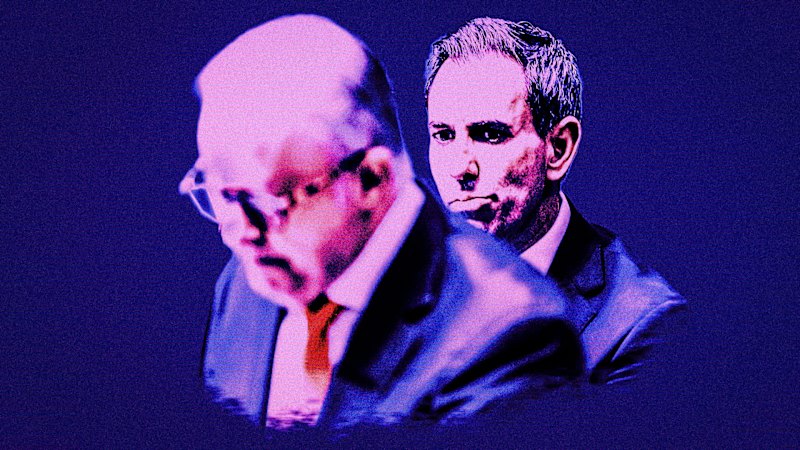
In a funk: How economic pain is straining the PM and treasurer’s relationship
Full Article
Original Source
Read the full article at Smh →KhanList aggregates and links to publicly available news content. We do not host full articles from third-party sources. Always verify important information with original sources.