
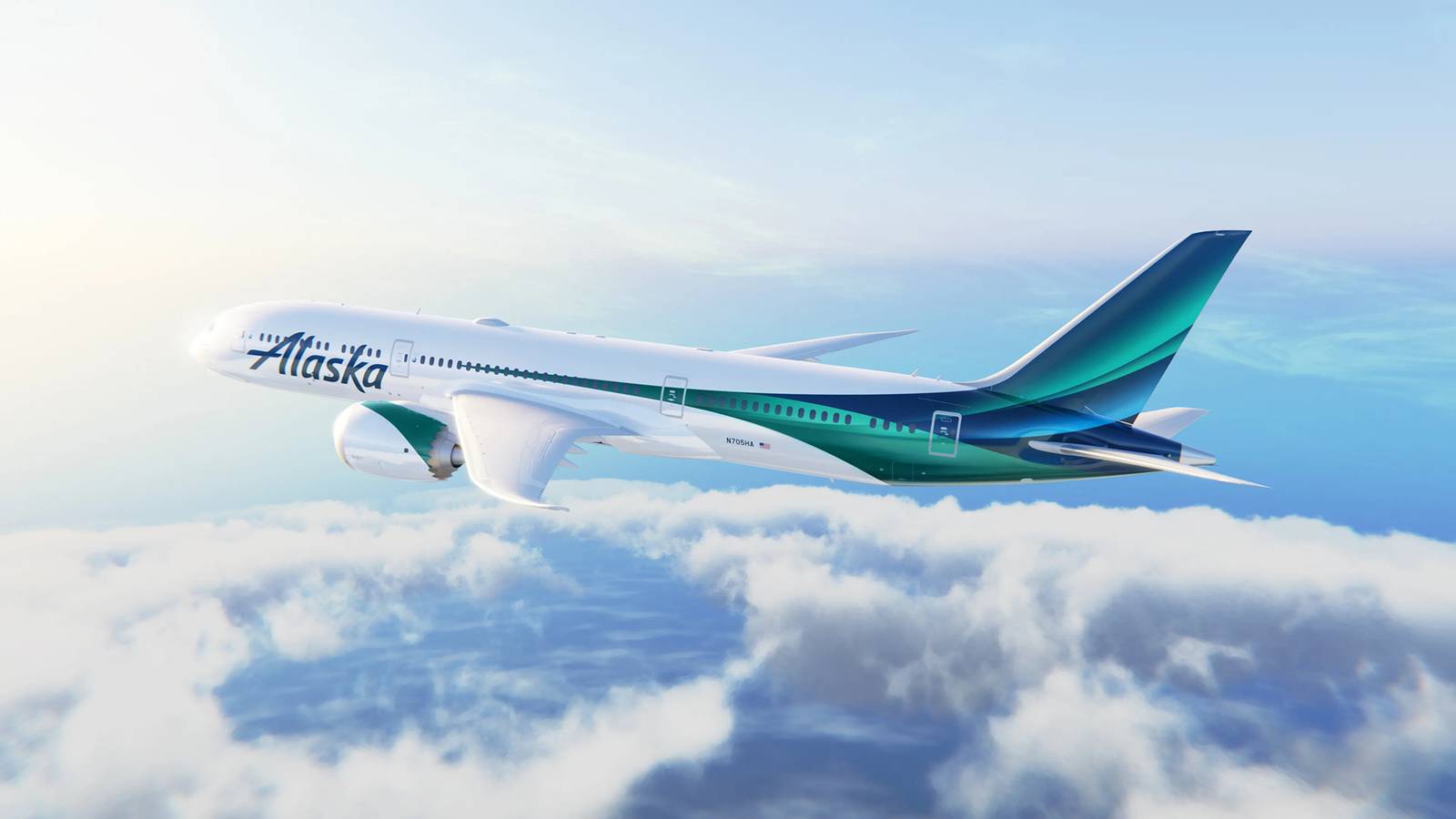
Published Aug 19, 2026, 4:05 AM EDT Luke has over a decade of experience as a travel writer and aviation analyst. As a passionate traveler based across the Middle East and Asia, Luke offers strong insights into the industry. Based in South East Asia. Flight attendants on Alaska Airlines' new long-haul Boeing 787-9 Dreamliner routes from Seattle-Tacoma International Airport (SEA) say the carrier is not maintaining sufficient staffing levels to support its Main Cabin service. The Association of Flight Attendants-CWA (AFA-CWA) has filed a formal grievance against the airline, accusing management of adding new food, drink and premium products to the economy cabin, but refusing to add the crew needed to deliver it. Among its additions to Main Cabin service are warm cookies, ice cream and an expanded drinks list, none of which the union says were properly tested and agreed upon. Recently-launched Alaska Airlines-branded Boeing 787 routes currently cover flights from Seattle to London Heathrow (LHR), Rome Fiumicino (FCO), Seoul Incheon (ICN) and Tokyo Narita (NRT). Alaska Airlines' Boeing 787s Are Reportedly Understaffed Credit: Alaska Airlines Both the aircraft and the crews working them were acquired from Hawaiian Airlines in 2024, and flight attendants are still covered by their old Hawaiian contract as a new agreement is being negotiated. AFA-CWA cites a clause in the Hawaiian Airlines flight attendant contract stipulating that the airline and union agree with each other on in-flight service models, rather than the airline setting them alone. Following the launch of the Alaska-branded service in April, management offered crews a 30-day observation period to provide feedback and adjust the service where needed. With this period ending in late May, the union claims Alaska Airlines has ignored repeated requests to reassess its Main Cabin service and "offered no resolutions to ease the demands of an operation they refuse to resource properly," instead telling staff to "make it work." The carrier successfully flew its first Alaska-branded long-haul 787 service in April with a flight between Seattle and Rome. Alaska Airlines' 787-9s can accommodate up to 300 passengers, with 34 lie-flat business class suites and 266 Main Cabin seats. The business class suites require four flight attendants, leaving just five or six crew to serve everyone else in economy. According to AFA-CWA, these staffing levels are not sufficient for the level of service on offer in the economy cabin: "Current main cabin staffing levels currently make it impossible to deliver on management’s promises. We will not stand by while our professional standards are compromised due to their unwillingness to invest the necessary resources needed to make their service model work." The Union Objects To Train Service In Economy Credit: Alaska Airlines The Main Cabin crew are required to conduct a 'train service,' which involves pushing carts from the front of the cabin to the back in one continuous run, rather than splitting the cabin into separate zones. Introduced by Hawaiian Airlines in September 2025 to address staff shortages, the solution was implemented after Hawaiian decided that dividing the cabin into zones was creating uneven workloads, leading to complications with catering and an inconsistent flow. Alaska Airlines took this model and developed its own version, but test flights were primarily focused on the business class product. As a result, the concept was never properly tested for the Main Cabin, and AFA-CWA claims it only agreed to the service on the understanding that nothing further would be added to economy. The union has now given Alaska Airlines two choices: to properly staff its long-haul flights, or to limit the service provided onboard. This would involve devising a new Main Cabin routine that would strip back some or all of the additions, bringing the duties into line with the capabilities of five or six crew working that cabin. Expanding The Long-Haul Network And Fleet Credit: Alaska Airlines Alaska Airlines has only been flying its own branded long-haul flights for four months and never flew any long-haul services before the Hawaiian acquisition in 2024. It has absorbed five Boeing 787-9s into its fleet, repainting all of the former Hawaiian airframes with its 'Global Livery' while retaining Hawaiian's former seating configuration for now. The 787s have been re-homed in Seattle, where they currently fly to London, Rome, Seoul and Tokyo, and are due to be fitted with Starlink inflight connectivity in the coming months. Alaska Airlines has an additional 12 Dreamliners on order, five of which are examples of the larger 787-10 variant. This will give the carrier a fleet of 17 Dreamliners once all deliveries are complete by 2035. The addition of further widebody capacity could see Alaska Airlines serving as many as 12 long-haul destinations from Seattle by 2030, according to the airline's CEO, Ben Minicucci. The plan would see Seattle turn into one of the country's major long-haul hubs, marking a rapid transformation for Alaska Airlines on the international scene.
"Impossible To Deliver": Alaska Airlines 787 Long-Haul Flights Are Understaffed, Crews Say
Full Article
Original Source
Read the full article at Simpleflying →KhanList aggregates and links to publicly available news content. We do not host full articles from third-party sources. Always verify important information with original sources.