
Wednesday’s judgment at the Western Cape High Court in Cape Town has provided legal clarity that the Section 89 independent panel report – the 2022 parliamentary inquiry that found President Cyril Ramaphosa may have violated the Constitution and had a case to answer over the Phala Phala farm theft – was unlawful, although that may change on appeal. Yet the ruling could never deliver political clarity in a saga that has cast a shadow over Ramaphosa for more than four years.Few people consider the official account credible: that a Sudanese businessman bought buffalo from Ramaphosa in December 2019 with $580,000 in cash, which was stashed in sofa cushions at Phala Phala because too many people had access to the safe. The money was stolen on 9 February 2020. The deal was never finalised with veterinary and export permits, as the South African Reserve Bank pointed out in its August 2023 report, which found no exchange control violations had occurred.Like the bank, tax authorities and the Public Protector also found no wrongdoing on Ramaphosa’s part. Earlier this month, Imanuwela David was found guilty of the theft, alongside Froliana Joseph, who worked on the farm. Before that, in early 2024, the SAPS cleared the presidential chief bodyguard, Wally Rhoode, and a constable of any wrongdoing in disciplinary proceedings that ActionSA described as wholly inadequate and subsequently challenged in court. It is this political stickiness that has caught up with Ramaphosa during repeated Q&A sessions in the House, and less visibly in political discussions across South Africa, from taverns to dinner tables.Opposition parties have made political hay from this presidential accountability failure. However, the ANC welcomed the judgment, saying it “finally puts to rest a matter that affected the highest office in the land which impugned upon the dignity of the President and his oath of office”.Impeachment committee unlawfulWednesday’s unanimous judgment has several immediate consequences.The impeachment committee ceased to exist when Western Cape Judge President Nolwazi Mabindla-Boqwana delivered the full Bench ruling declaring the Section 89 independent panel report “unlawful in its entirety”, setting it aside together with “any steps” the National Assembly took regarding that report, effectively the impeachment committee. Practically, however, the former impeachment committee might still want to meet on Thursday as planned – not to choose an evidence leader, but to share the legal advice that its ex-chairperson, Rise Mzansi MP Makashule Gana, asked parliamentary legal services to prepare. By Wednesday afternoon, discussions on whether to go ahead with the meeting were understood to be continuing.National Assembly Speaker Thoko Didiza could decide to just issue a statement, saying Parliament has disestablished the impeachment committee in line with the judgment. Appealing is not an option, as Didiza agreed to abide by the court’s adjudication on how Parliament conducts its business. Appealing is, however, an option for the losing side, a bouquet of political parties, including the African Transformation Movement (ATM), whose leader, Vuyolwethu Zungula, brought the impeachment motion in July 2022.ATM leader Vuyolwethu Zungula at the Western Cape High Court on 25 November. (Photo: Brenton Geach / Gallo Images) Immediately after the judgment, Zungula said, “The truth and the facts of Phala Phala ... since 2022 have not been established. It is the duty of Parliament to establish those facts.” He added that one law existed for Ramaphosa and another for the rest of South Africa.“Definitely we are engaging with the lawyers for the purpose of appealing. We are going to engage with other parties,” he declared.His impeachment motion led to the Section 89 independent panel report, which in late November 2022 found Ramaphosa had a case to answer. However, on 13 December 2022, the ANC used its parliamentary majority to vote down the report. In turn, the EFF returned to court, and in May 2026 the Constitutional Court set aside the December 2022 vote and the parliamentary rule that allowed it. Effectively, that Constitutional Court ruling revived the presidential impeachment process.EFF members ahead of the delivery of the Phala Phala judgment at the Constitutional Court on 8 May. (Photo: Luba Lesolle / Gallo Images) Later in May 2026, Ramaphosa launched his review of the Section 89 independent panel report, and when the impeachment committee declined his request to pause proceedings, in July 2026 he successfully obtained an interdict against public impeachment hearings.This swathe of litigation underscores how far legal proceedings are enmeshed in parliamentary processes and politics in South Africa.Panel ‘misconstrued its function’The Western Cape High Court judgment said it would stick to legal points, framing its ruling around the court’s consideration of “the existence of the alleged defects in the processes followed by the panel and determine whether those defects establish unlawfulness”. The panel report could not stand, it found: “The panel fundamentally misconstrued its function, the nature of the enquiry it was to conduct, and the recommendation it was required to make... It went beyond its lawful remit, asked itself the wrong questions and made several material errors in law.”Read the full judgment here.Central was whether the Section 89 independent panel’s decision that the President had a prima facie case to answer met the standard of “sufficient evidence” in the parliamentary impeachment rules. It did not, but the panel’s approach allowed it to “ignore or gloss over” the deficiencies of what was before them, the court found.“Applying ‘a prima facie case to answer’ standard allowed the panel to find that the President had to answer to an impeachment committee on charges with [which] it would otherwise have found, if properly weighed on all the available evidence, to not be sufficiently established.” Western Cape Judge President Nolwazi Mabindla-Boqwana during the court ruling on 25 November in Cape Town. (Photo: Brenton Geach / Gallo Images) The judgment cautions that because impeachment is a “momentous” and “punitive” step – an impeached president loses all benefits, under section 89 of the Constitution – the rules must be treated carefully.“The rules are not to be construed as permitting a panel or impeachment committee to conduct an unrestrained and unfettered inquisition on any possible issue or line of inquiry, which may implicate the President in some possible irregularity or wrongdoing,” the court found.With the possibility of an appeal, and fresh impeachment proceedings still in play, the judgment is less an end to the saga than another turning point. It’s the nature of South Africa’s politics. DM
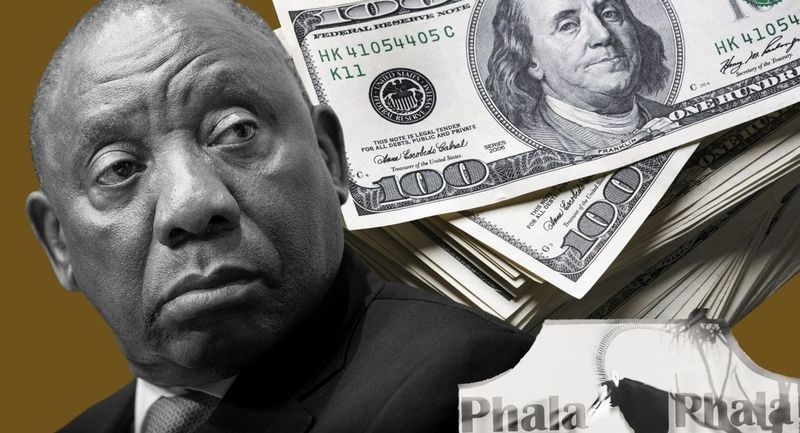
IMPEACHMENT REPORT: Ramaphosa wins in court, but the Phala Phala saga is by no means over
Full Article
Original Source
Read the full article at Dailymaverick →KhanList aggregates and links to publicly available news content. We do not host full articles from third-party sources. Always verify important information with original sources.