
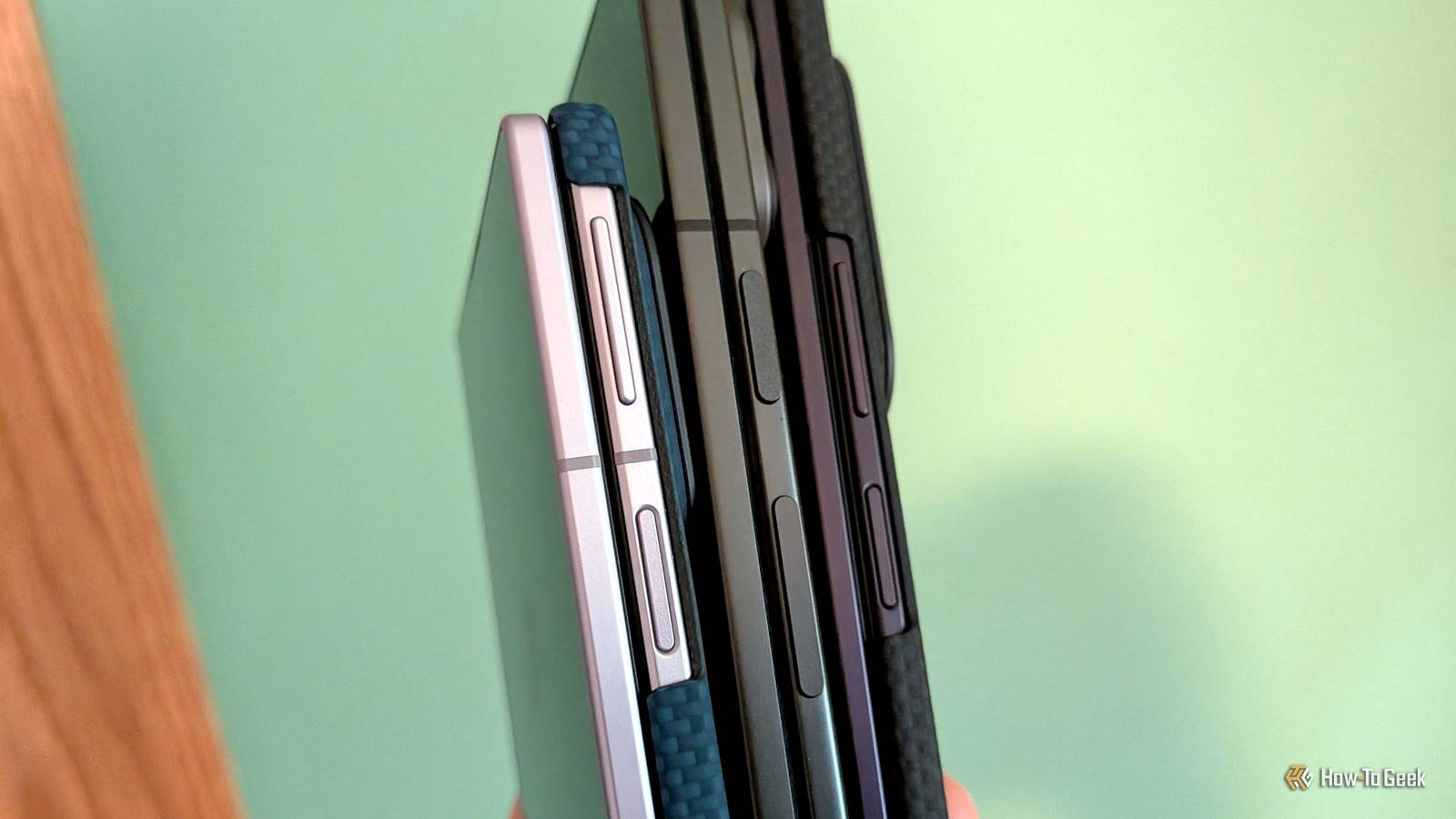
Published Sep 4, 2026, 9:00 AM EDT Joe Fedewa has been writing about technology for over a decade. Android and the rest of the Google ecosystem have been a focus for years, as well as reviewing devices, hosting podcasts, filming videos, and writing tutorials. Joe loves all things technology and is also an avid DIYer and food blogger. He has written thousands of articles, hundreds of tutorials, and dozens of reviews. Before joining How-To Geek, Joe worked at XDA-Developers as Managing Editor and covered news from the Google ecosystem. He got his start in the industry covering Windows Phone on a small blog, and later moved to Phandroid where he covered Android news, reviewed devices, wrote tutorials, created YouTube videos, and hosted a podcast. From smartphones to Bluetooth earbuds to Z-Wave switches, Joe is interested in all kinds of technology. After several years of jailbreaking and heavily modifying an iPod Touch, he moved on to his first smartphone, the HTC DROID Eris. He's been hooked ever since. As cutting-edge as they may seem, foldable phones have more in common with regular ‘ol slab phones than they don’t. One of the biggest differences I’ve noticed, however, has nothing to do with flexible screens, and it’s something that would instantly improve every regular phone. I’m talking about fingerprint sensors. We’re smack dab in the middle of foldable season right now, and I’ve been lucky enough to get my hands on the big three: Galaxy Z Fold 8 Ultra, Pixel 11 Pro Fold, and Galaxy Z Fold 8. All three of these devices have “old school” fingerprint scanners. In-display fingerprint scanners still aren’t great At this point, will they ever be good? Credit: Joe Fedewa / How-To Geek Smartphones with “in-display” or “under-display” fingerprint sensors have been around since 2018. Over the years, the way they work has changed. The first phones used optical scanners, which were essentially tiny cameras with a bright light. This low-tech approach wasn’t ideal for security purposes. Nowadays, most phones with in-display sensors use ultrasonic pulses to map out your fingerprint. These ultrasonic scanners are faster and much more secure. They can even qualify as Class 3 for biometric security, which allows you to scan your finger to make mobile payments and use sensitive apps. The idea of a fingerprint scanner that stealthily lives under the phone’s display sounds cool, and I was originally excited about it. However, it’s been nearly a decade. There has been plenty of time for the technology to mature, but we have to face facts. The old-style fingerprint sensors were—and still are—better. I complained about this exact thing three years ago, and the situation hasn’t changed much since then. It still takes me more attempts with an in-display fingerprint scanner than an old-style scanner. I can say this with certainty after my time with the trio of foldable phones I mentioned above. Foldable phones are stuck in the past in the best way I love power button fingerprint scanners The Galaxy Z Fold 8 Ultra, Pixel 11 Pro Fold, and Galaxy Z Fold 8 all have fingerprint scanners in their power buttons. Using these phones has reminded me of how much I miss when it was the standard practice. Before under-display technology, most Android phones put the fingerprint sensor in one of two places: the power button or on the back. Personally, I preferred the back, but both of these options were great for ergonomics. When I pick up a phone or pull it out of my pocket, my finger is usually already on the sensor unintentionally. These are simply natural places to grip a phone. The other big advantage of this style of fingerprint scanner is that they just flat out work better. On all three foldable phones mentioned above, the fingerprint scanners are faster and more reliable than any in-display sensor I’ve used in recent years. So, why do companies insist on using this inferior technology? It’s a great question. Apple has avoided in-display fingerprint scanners entirely with Face ID, but very few Android phones have even attempted to match the iPhone’s facial security level. We’re being forced to settle for the worst out of all the possible options. The answer to these questions usually comes down to financials, but in the case of under-display fingerprint sensors, they’re actually more expensive than the old-school capacitive scanners. That only makes the decisions more confusing, though. Initially, it was a cool, futuristic feature to advertise, but it rarely gets mentioned nowadays. Foldable phones don’t have much choice in sticking with the old style. The device needs to be unlockable when opened or closed, and putting the fingerprint scanner in the power button makes a lot more sense than having a sensor under both displays. I’m certainly not going to buy a $2,000 foldable phone just for it’s capacitive fingerprint scanner, but it sure is a nice little bonus.
I'm tired of in-display fingerprint sensors—foldables prove there's a better way
Full Article
Original Source
Read the full article at Howtogeek →KhanList aggregates and links to publicly available news content. We do not host full articles from third-party sources. Always verify important information with original sources.