
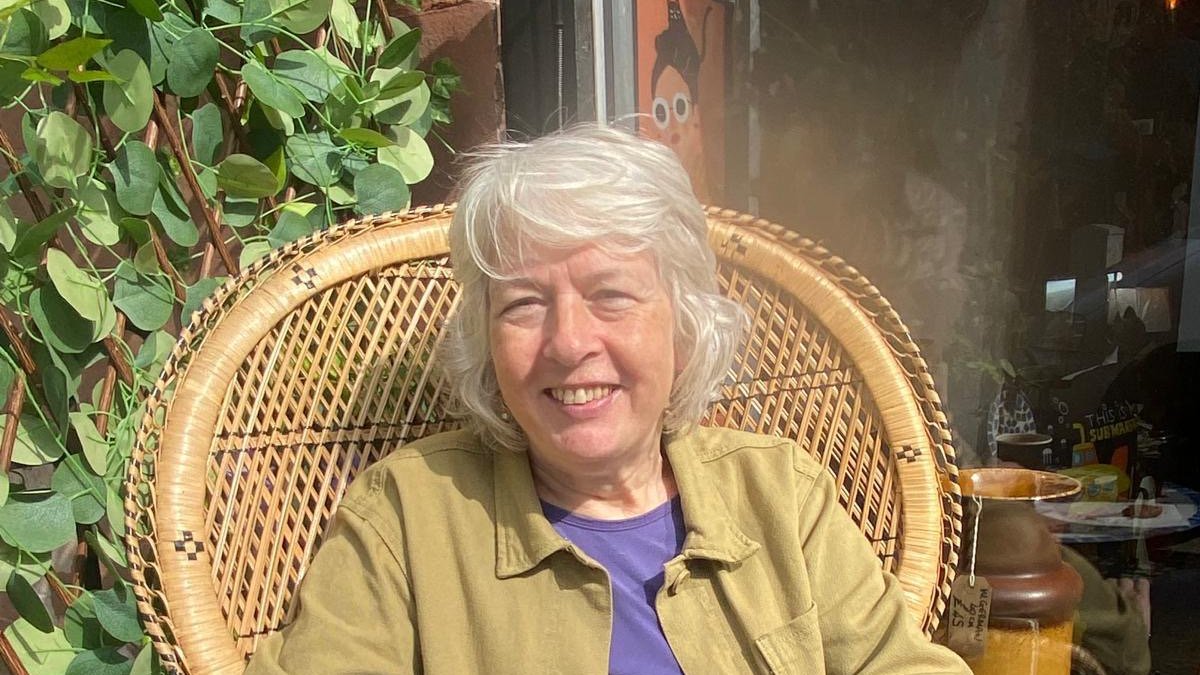
When Margaret Adam’s husband Allan died of cancer at the age of 58, she decided to retire early – but is now worried her pension pot could be depleted by inheritance tax. “We never had the chance to have the retirement we had planned together,” said Margaret, now 69. “I retired early at 57 very shortly after Allan passed away as I realised life is too short. My three sons had left home and then there was no Allan. It just didn’t seem right going to work and carrying on a life that no longer seemed real in many ways.” Shorts Margaret sold the family home in Aberdeen and moved back to Glasgow, where she and her husband were originally from, splitting the excess money from the sale of the family home four ways between her and her three sons. As such, she has not been bothered about leaving her children a lot of money and feels that if they inherit her home, that will be plenty. She has no mortgage on her two bed Glasgow flat, worth £400,000. “I am living comfortably on my pension and just want to enjoy my retirement – my sons want that for me as well. They have been to university and have all got their own incomes and families now.” Margaret, who also has four grandsons, receives her state pension, her own private pension from the civil service and a widow’s pension – all of which are defined benefit schemes and will not fall under the IHT net. Combined, the income from these pensions takes her into higher tax – which in Scotland is 42 per cent on taxable income from £43,663. Margaret did not want to say how much they were worth. However, she is concerned that a fourth, small defined contribution pension pot she has, worth £55,000, in addition to her other pensions, will be charged under inheritance tax. She has already taken a tax-free lump sum from this pot. The upcoming changes to inheritance tax mean unused pension funds and death benefits will be included in a deceased person’s estate and Margaret, a former tax auditor, is confused about what this means for her. “The three pensions I receive an income from now already take me into higher tax which I pay on that portion of income – so I don’t really want to draw down money from my defined contribution pension as well as I would have to pay higher tax of 42 per cent on it,” explained Margaret. “Inheritance tax has an allowance of £325,000 so if that is all I am entitled to with my estate, it means the value of my house alone would take me over that. “If I had the choice, I would leave this £55,000 pension for my sons. If they could get the full benefit from it, it would be worthwhile. But if it gets dragged into inheritance tax, that feels wrong.” She is also concerned about the fact that if she dies at age 75 or older, her sons will face an income tax charge at their marginal rate on the inherited sum. “I don’t want to leave behind any financial stress for my sons once I am gone. I have planned and paid for my funeral [already]. I would like to deal with everything before my death so my children have as little worry or concern as possible. “All these changes are very confusing. It feels like the ground is moving and I want to understand my position.” Margaret has multiple pensions but is unsure how these changes will affect her Angela Davis, chartered financial planner at Hymans Robertson Personal Wealth, looked at Margaret’s position and said that Margaret was unlikely to have an inheritance tax liability. This is because when Margaret’s husband passed away, as she was the sole beneficiary of his estate and, as transfers between spouses are generally exempt from inheritance tax, his unused nil rate band – the portion of his IHT allowance that was not used when they died – can potentially be transferred and used by Margaret’s estate, alongside her own nil rate band. In addition, his unused residence nil rate band – which is currently set at £175,000 per person when leaving a home to direct descendants – can also potentially be transferred. Angela said: “Based on current allowances, this could give Margaret’s estate a total inheritance tax threshold of up to £1m, which is made up of two nil rate bands of £325,000 each – total £650,000 – and two residence nil rate bands of £175,000 each – total £350,000. “The residence nil rate band is subject to certain conditions, including the home passing to direct descendants, for example children. “Based on the information Margaret has provided, the value of her estate is below this potential £1million threshold. I also included the value of her unused pension fund in the calculation and, on the figures provided, this did not change the overall position. “Therefore based on her current circumstances and the information available, her estate would not be expected to have an inheritance tax liability.” Angela says Margaret and other affected people should not rush to make any decisions. However, she says there are a few things people can do ahead of the changes, including ensuring that their death beneficiary, also known as Expression of Wish, is up-to-date with their pension provider and that they clearly file the details of their pension for the administration of their estate. They should also clearly detail all of their assets: house, savings, personal belongings, which make up their estate and then calculate if the total value of these combined with their pensions will cause a change to their estate’s position to IHT once allowances are taken into account.
I’m terrified my £55,000 pension pot will be slashed by inheritance tax
Full Article
Original Source
Read the full article at Inews →KhanList aggregates and links to publicly available news content. We do not host full articles from third-party sources. Always verify important information with original sources.